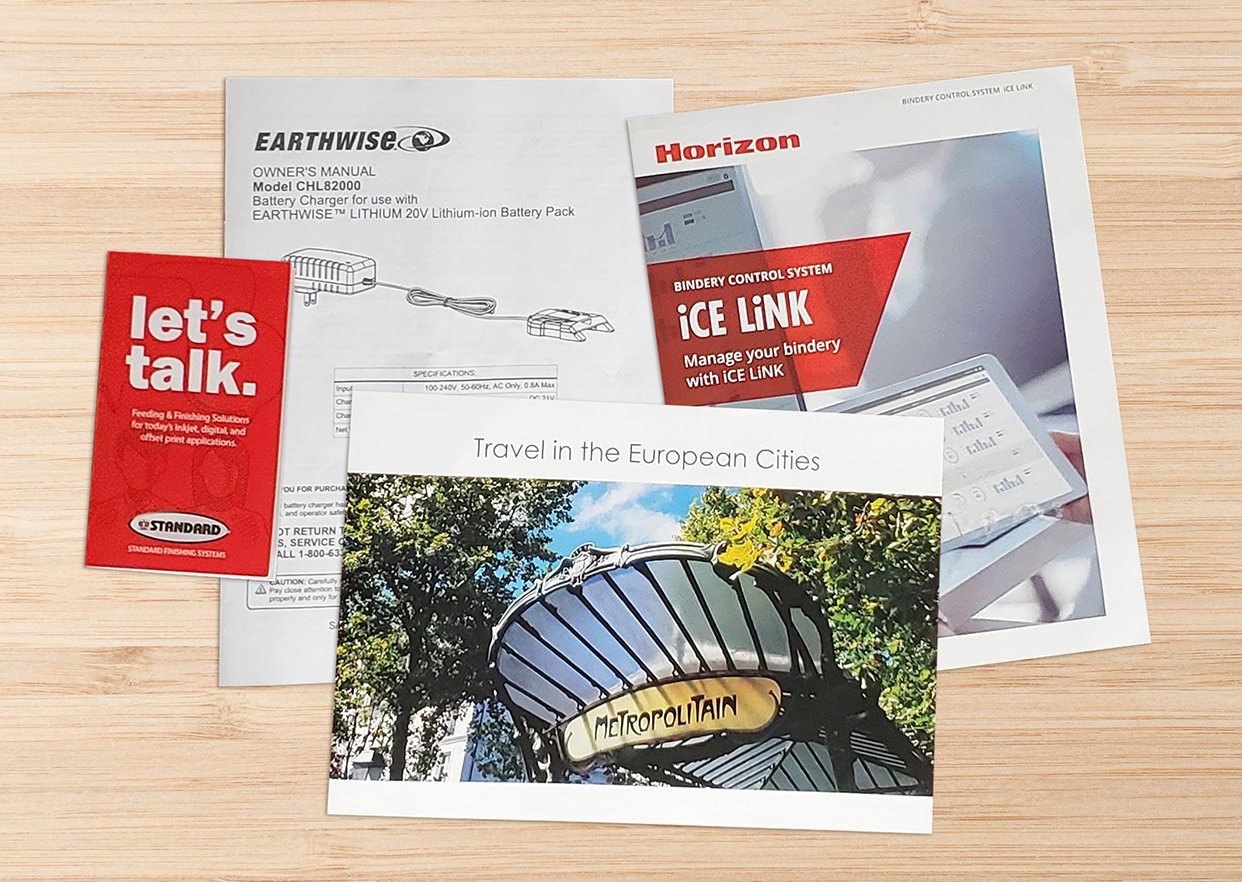
From cordless drills and lawnmowers to dishwashers, televisions and more, many of the consumer products you purchase are shipped with technical documents designed to guide, protect and empower the user. These technical documents — often overlooked or underappreciated — play a vital role in product safety, usability and customer satisfaction.
Whether you're a manufacturer, marketer or technical writer, it’s essential to understand the different types of technical documents and their distinct purposes. While the differences may seem small on the surface, technical documentation design is a big deal for anyone engaged in manufacturing complex or high-value consumer products.
This blog addresses the topic of technical documentation standards at a high level and describes the subtle — but important — differences between the various types of technical documents. It focuses on the following questions:
- What is a technical document?
- What are user manuals and why are they critical for product success?
- What is a user guide vs. a user manual?
- What is a product manual?
- What is an assembly manual?
- What is a warranty manual?
- What is a warranty registration card?
- What is one important element in the design of a technical document?
- What should a manufacturer look for when selecting a user manual printing service?
What is a technical document?
A technical document is any written material that communicates complex product information in a structured, accessible format. It’s designed to help users understand, operate, assemble, maintain or troubleshoot a product. These documents bridge the gap between product design and user experience.
Common types include user manuals, product manuals, assembly guides, warranty documentation, safety datasheets and quick-start guides. Regardless of the subtype, these technical documents all share a common purpose: to ensure safe, effective and compliant use of a product by translating technical specifications into user-friendly language.

What are user manuals and why are they critical for product success?
The question then becomes: What is a user manual and what function does it serve? Simply put, a user manual is a step-by-step guide that explains how to operate a product. It typically includes setup instructions, operating procedures, safety warnings, troubleshooting tips and maintenance advice.
User manuals matter because they reduce customer support calls by empowering users to solve problems independently. They also enhance safety by clearly outlining hazards and precautions, improve customer satisfaction by helping users get the most from their purchase, and ensure compliance with regulatory standards. Because user manuals are often the first point of contact between the product and the consumer, they are critical to long-term brand perception.
What is a user guide vs. a user manual?
A user guide is a type of technical document that provides detailed instructions on how to use a product, system or software application. It is designed to help users understand functionality, navigate features and troubleshoot common issues.
While the terms “user guide” and “user manual” are often used interchangeably, user guides tend to be more modular, visual and task-oriented — especially in the software and electronics categories. Typical contents of a user guide include:
- Introduction to the product or system
- Step-by-step instructions for key tasks
- Visual aids such as screenshots or diagrams
- Safety and usage tips
- Troubleshooting advice
- Glossary of terms or FAQs
The purpose of a user guide is to make the product accessible and usable for its intended audience. It should anticipate user questions and provide clear, actionable answers. In consumer products like power tools or appliances, a user guide might walk someone through setup, operation, cleaning and maintenance procedures.

What is a product manual?
A product manual is a comprehensive document that outlines the features, specifications and intended use of a product. While similar to a user manual, a product manual often includes more technical detail and may be targeted at technicians or advanced users. Key contents include:
- Technical specifications
- Component descriptions
- Performance data
- Environmental requirements
- Certifications or standards
Use case: A product manual for a power generator, for example, might include voltage ratings, fuel types and load capacities — information essential for safe installation and operation.
What is an assembly manual?
An assembly manual provides detailed instructions for putting a product together. Assembly manuals are especially common with flat-packed furniture. Features commonly include:
- Step-by-step instructions
- Exploded-view diagrams
- Required tools and parts
- Safety warnings
The ultimate purpose of an assembly manual is to ensure safe product assembly and reduce errors, thereby minimizing returns or warranty claims. Unlike user manuals, which focus on product operation and maintenance, assembly manuals focus on the build process itself.
What is a warranty manual?
A warranty manual outlines the terms and conditions of a product’s warranty coverage. It’s a legal document that protects both the manufacturer and the consumer. Warranty manuals typically include:
- Duration of coverage
- What’s covered and excluded
- Warranty claim procedures
- Service contact information
Warranty manuals clarify consumer rights, reduce disputes and encourage proper product use. For example, a warranty manual for a refrigerator might specify warranty coverage for compressor failure but reinforce that damage from product misuse is excluded.
What is a warranty registration card?
A warranty registration card is a form included with a product that allows the buyer to register their purchase with the manufacturer. It may be physical or digital. Its purpose is to activate warranty coverage, provide proof of purchase, enable product recalls or updates, and facilitate customer support. The difference between a warranty registration card and a warranty manual is that the card is a registration tool while the manual is a policy document.
Modern trend: Many brands now offer QR codes or online portals for warranty registration, streamlining the process and improving data collection.

What is one important element in the design of the technical document?
When it comes to technical documentation design, clarity and structure are paramount. Style guides for technical documentation emphasize audience-focused organization with headings, bullet points, terminology and visuals tailored to the reader’s skill level and context. Best practices include:
- Using plain language rather than technical language
- Providing diagrams and icons
- Applying consistent formatting throughout
- Prioritizing reader accessibility through the use of large fonts and language translations
Why it matters: A well-designed technical document reduces confusion, improves safety and enhances user confidence. In regulated industries, it also ensures compliance with standards like ISO and ANSI labeling requirements.
What should a manufacturer look for when selecting a user manual printing service?
Writing a product instruction manual is one thing; technical manual printing is another topic altogether. For the manufacturer in need of instruction manual printing services, finding the right printing partner is crucial. Here are the top issues to consider when sourcing user manual printing services.
Accuracy and quality control
Can the print provider reproduce complex technical documentation designs, such as elaborate diagrams? Do they offer proofreading and compliance checks?
Customization and scalability
Do they offer custom manual printing in multiple languages? Do they support variable data printing for serialized products?
Material and durability
Do their user manual printing services allow for the utilization of water-resistant or tear-proof paper stock? Do they offer binding options suitable for heavy use, such as by field repair technicians?
Regulatory compliance
Are they familiar with industry-specific standards such as UL and CE? Can they include the required safety symbols and disclaimers?
Logistics and integration
Do they offer just-in-time printing and fulfillment services? Can they integrate with your packaging and distribution workflows?
Industry specialization
Do they have special expertise in your industry — whether it’s healthcare, construction, consumer electronics or something else? Are they familiar with the unique terminology and compliance needs of your industry?
Ease of ordering
Do they offer online manual printing services? Can your technical manual printing needs be served through a modern online print portal or are they still using spreadsheets and email to support their customers?
Taylor: Custom manual printing services for technical documents
One of the largest global print and communications companies in North America, Taylor provides commercial print and document management services including the production of complex technical documentation. Manufacturers across a variety of industries look to Taylor for custom manual printing services for:
- User manuals
- User guides
- Product manuals
- Assembly manuals
- Training manuals
- Warranty manuals
- Warranty registration cards, and more
In particular, we specialize in just-in-time (JIT) technical document production utilizing our fleet of digital printing presses. Likewise, our vast network of warehouse facilities enables us to transform technical document fulfillment into a competitive advantage for your business. All of these services can be ordered, managed and monitored using Taylor’s state-of-the-art print portal.
Looking for a way to streamline the sourcing of custom manual printing services? Ready to realize the many benefits of online manual printing while also reducing your custom manual printing costs? Contact Taylor to learn about our special expertise with technical manual printing services.

.png)


.jpg)