

Direct Mail Marketing for Financial Services
Leverage rich audience data and precise segmentation to deliver direct mail with relevant and timely offers.
solutions using deeper customer insight and industry specific strategies.









What is financial services direct mail marketing?

Direct mail marketing for financial services is a targeted, data-driven approach that banks, credit unions, and credit card providers use to engage current and prospective customers through highly personalized printed communications.
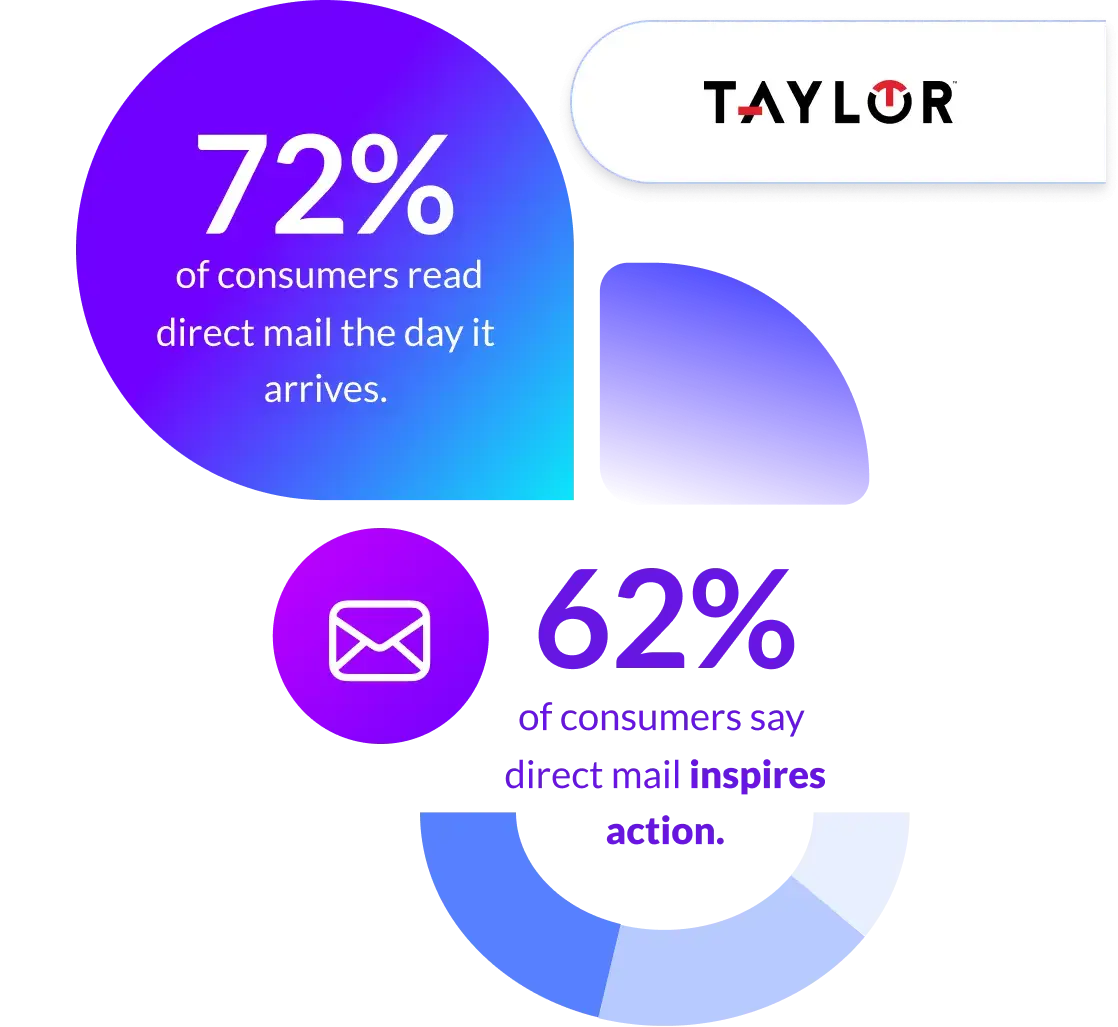
of marketers say direct mail delivers the best ROI and conversion rate.
of consumers say direct mail has inspired them to take action.
How do financial providers use direct mail?
Financial providers such as banks, credit unions and credit card issuers rely on direct mail marketing to achieve their most important goals. Whether it’s introducing a new credit card, highlighting a loan solution or presenting an investment opportunity, direct mail is a tangible and credible customer experience that builds trust and drives strong response in highly regulated, competitive markets.

New Customer Acquisition
Attract new checking, savings or credit card customers with precisely targeted campaigns.
Cross-Selling & Upselling
Present existing account holders with relevant offers like home equity loans, personal loans or wealth management solutions.
Member Engagement
Grow member relationships with benefit reminders, event invitations and educational content that addresses their financial needs.
Timely Notifications
Make sure customers receive critical updates such as account changes, legal notices or compliance requirements right when they need them.
Phased Approach
Introduce new card products, balance transfers or exclusive promotions.
Why is direct mail effective for finance?
Direct mail enables banks, credit unions and credit card issuers to personalize outreach at scale with data-driven
insights to craft the right message for each audience segment, which is especially critical when conveying sensitive
offers or complex financial information.
Trust & Tangibility
Physical mail offers credibility and helps complex or sensitive financial offers feel secure and personal.
High Response Rates
Financial providers experience response rates with direct mail that consistently outperform digital-only campaigns, especially for new credit card and loan offers.
Personalization at Scale
Data-driven processes power highly tailored messages, enabling true one-to-one engagement
Compliance-Ready
Direct mail is crafted to meet federal and state compliance standards, protecting both institutions and their customers.
What are the different types of direct mail
for financial providers?
There is a wide range of direct mail formats banks, credit unions and credit card issuers can use to enhance
response rates, reinforce key messages and continually improve customer acquisition and engagement
strategies.
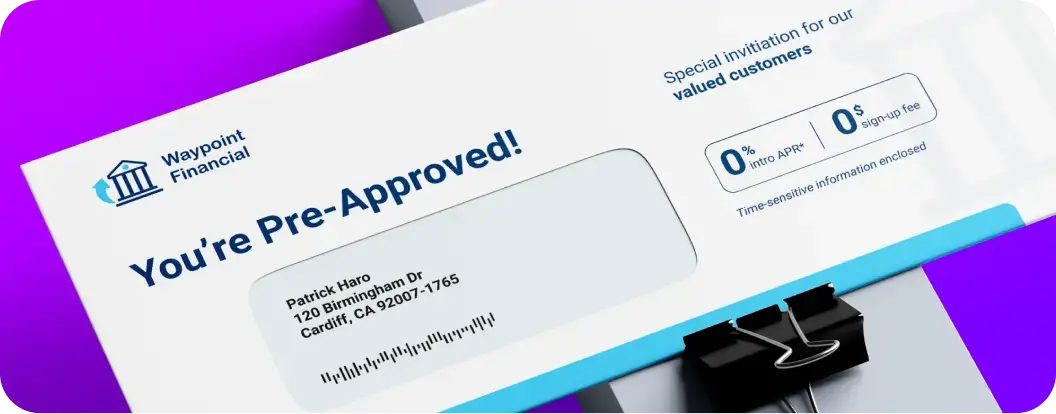
Credit Card Direct Mail
Deliver pre-approved offers, balance transfer invitations, and new product announcements in attention-grabbing envelopes.
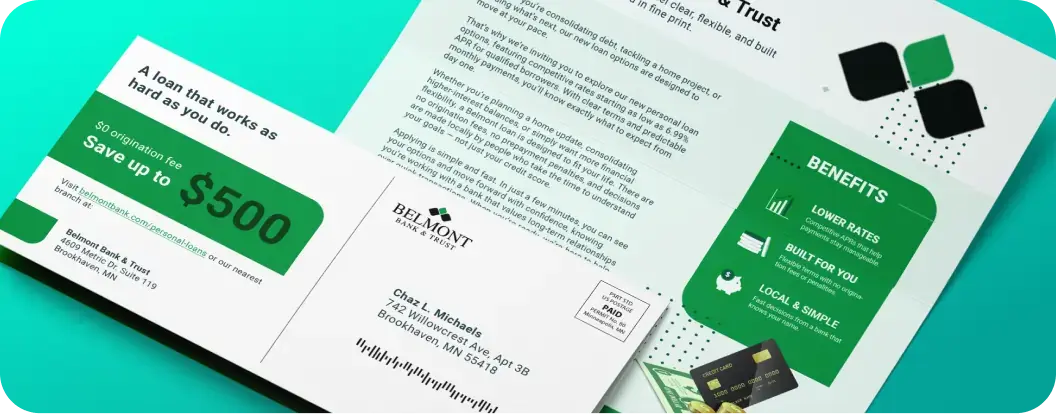
Self-Mailers & Brochures
Showcase loan programs, investment opportunities and services, or event details in a concise, reader-friendly format.
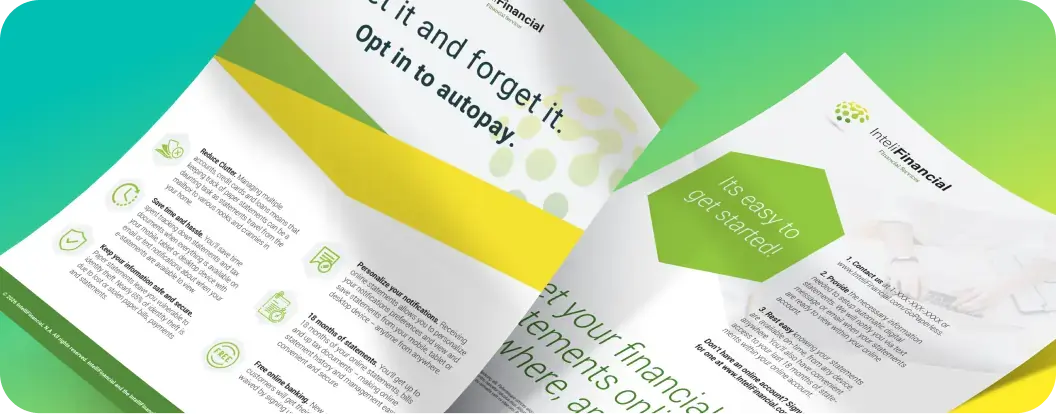
Statement Inserts
Promote additional services including plan change notifications and year-end tax notifications at minimal cost to current customers.

Bank Direct Mail Marketing
Provide annual reports, regulatory disclosures and feedback surveys to existing customers alongside welcome kits for new members.

Postcards
Send quick reminders about limited-time offers, product launches, upcoming events, loyalty program updates and seasonal promotions.

Credit Union Direct Mail Marketing
Announce new branch openings and member engagement programs, send annual meeting notifications and provide educational customer outreach.

Each of these direct mail types can be customized using sophisticated data analytics and variable printing technology, ensuring that
every piece remains personalized and relevant no matter the objective of your campaign.
How do we create data-driven
direct mail financial campaigns?
Reaching customers at the right place and time isn’t based on luck. There are ways
to learn how they behave, where they browse and buy and what motivates them to
seek your services.
Customer Profiles
Access existing copies of customer profiles to deliver more personalized experiences with deeper knowledge of your target audience.
Modeling
Discover complex relationships in your data using IBM SPSS neural networks modeling tools.
Segmentation
Organize your current and prospective customers into specific groups based on their preferences, buying behaviors and shared characteristics.
Marketing Data & Analytics
Collect and evaluate demographics, psychographics, household buying behaviors, life-stage triggers, geography and more.
Customer Journey Mapping
Your guide to determining where customers are on their buying journey and what pieces of information you need to send them.
Performance Marketing
Access your campaigns in real time and follow their progress and success rates.
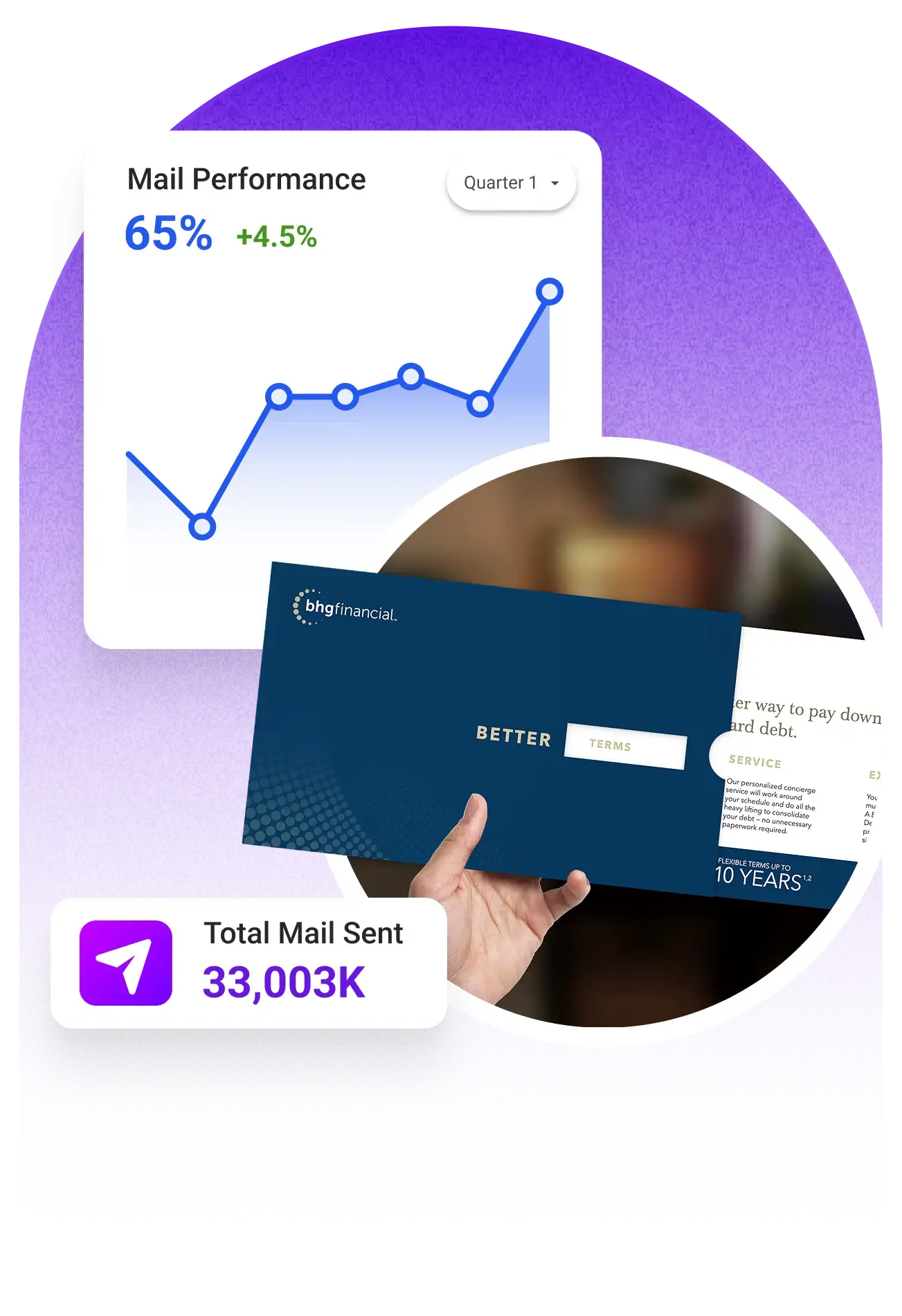
Your Direct Mail Automation Platform
Taylor’s direct mail software can transform how you execute financial direct mail campaigns. From data
intake, asset management, printing, sorting and postage optimization through mailing and final delivery,
Taylor can take your direct mail campaigns to the next level.
The Benefits of Direct Mail Automation
By automating your direct mail workflow with an all-in-one platform, you’ll have greater transparency and
accuracy in your direct mail efforts with real‑time access to data, campaigns and tracking.
Campaign Efficiency
-
 Easier campaign execution
-
 Faster access to results
Targeting & Insights
-
 More precise audience targeting
-
 More actionable insights that drive higher campaign ROI
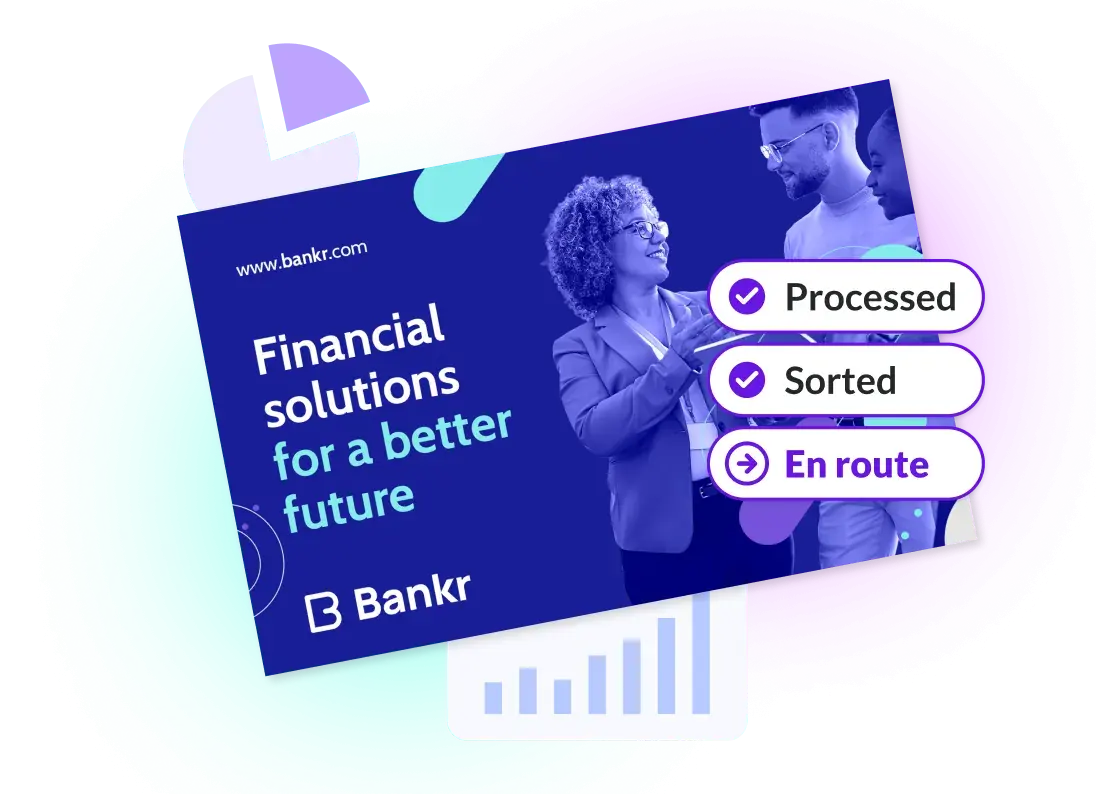
Workflow, Reporting & Analytics
Users have convenient and uninterrupted access to important information 24/7.
- Comprehensive tracking of each stage, from initiation to completion
- Continuous updates on production milestones
- Performance and reliability metrics throughout the USPS® journey
- Effective management of both outgoing and incoming mail
- Timely and accurate delivery for all mail pieces
How can customer data be used to
to find more financial members?
Marketers in the financial industry can leverage customer data to identify and
target consumers most likely to be in the market for new vehicles and services.
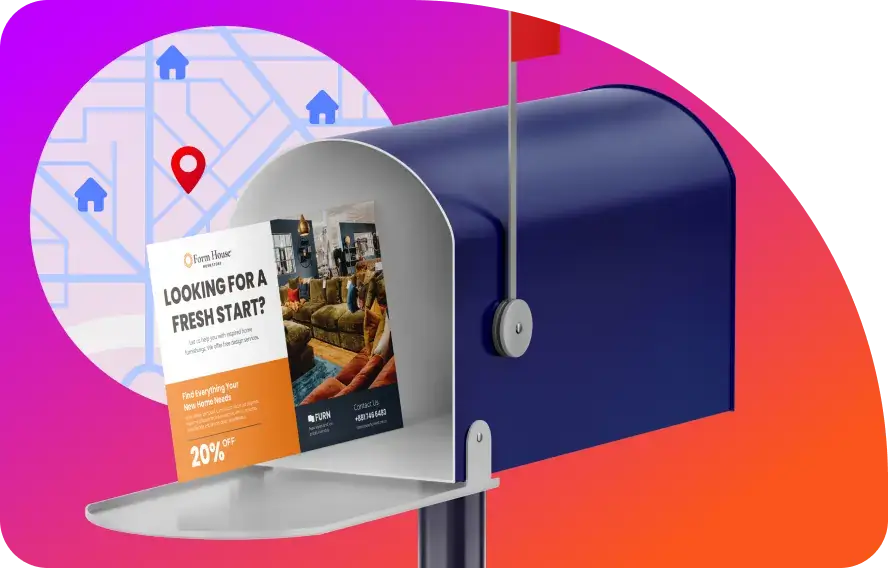
New Mover
When do people buy the most? Usually when they are moving. When people move, they spend almost $10,000 on new items and services in the first year. And the majority say they are open to trying new brands and service providers.
Our program helps you reach movers 14 days sooner than other new mover sources, and we have access to verified pre-movers with current and future addresses a month in advance of a move.

How does data-driven direct mail
improve ROI for financial providers?
Data-driven direct mail empowers financial providers to significantly improve their return
on investment by enabling precise targeting and hyper-personalized messaging.
Engagement
Advanced analytics identify high-value prospects and segment current clients by behaviors and financial goals, helping focus marketing efforts for maximum impact.
Resource Management
Resources are allocated more efficiently, increasing conversion rates while reducing unnecessary spend.
Flexibility & Scalability
Real-time data integration enables quick adjustments to campaigns, keeping messaging relevant as market conditions evolve.
Higher Visibility
Marketers gain full transparency into campaign performance through comprehensive tracking and attribution, making it easier to see what’s working.
Enhanced Reporting
Track responses in real time to gauge effectiveness and inform future strategies. Continuous measurement helps teams showcase results and support budget decisions. Direct mail becomes a high performing communication channel with a data-driven approach.
How does direct mail integrate with
financial omnichannel campaigns?
Direct mail has experienced a resurgence as a tangible way to connect with clients, but it can be even more powerful when it’s woven into a broader omnichannel strategy.
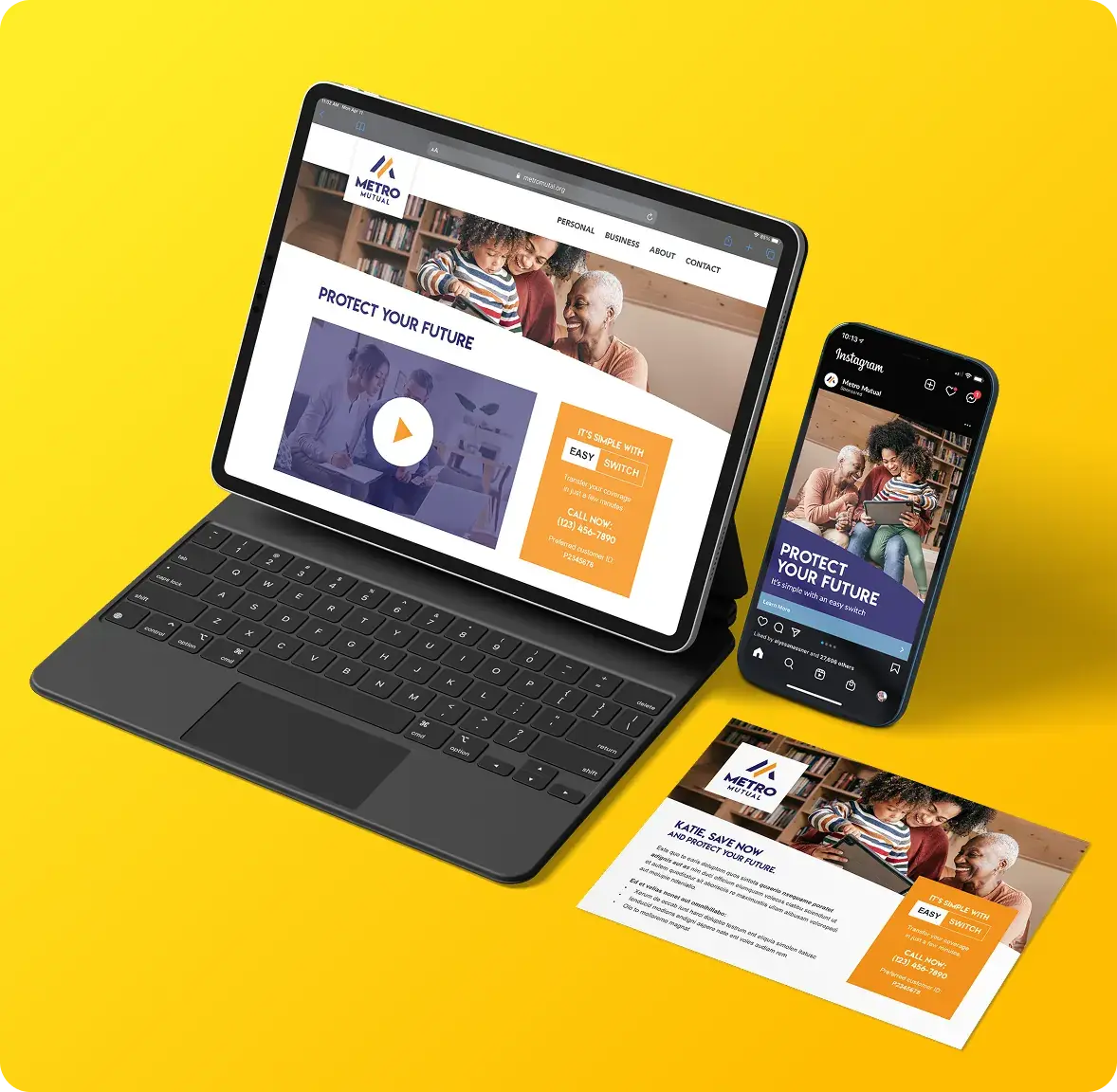
The most effective financial marketing strategies integrate direct mail with digital, mobile and contact center touchpoints to create seamless omnichannel experiences.

Targeted Direct Mail as Part of Omnichannel Strategies
Direct mail can trigger digital follow-ups, reinforce online campaigns and work in
sync with CRM workflows to deliver a consistent, cohesive customer journey.
Unified Engagement
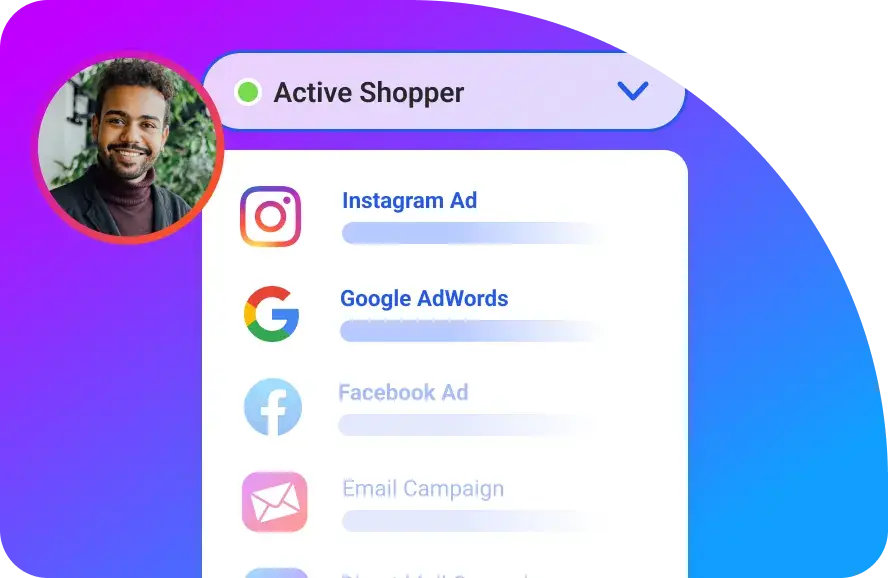
Direct mail, email, mobile, digital ads, websites and contact centers connect key touchpoints across every stage of the journey.
Customer Satisfaction
Combining communication channels allows you to reach clients through their preferred channels, increasing both response rates and customer satisfaction.
Digital Triggers
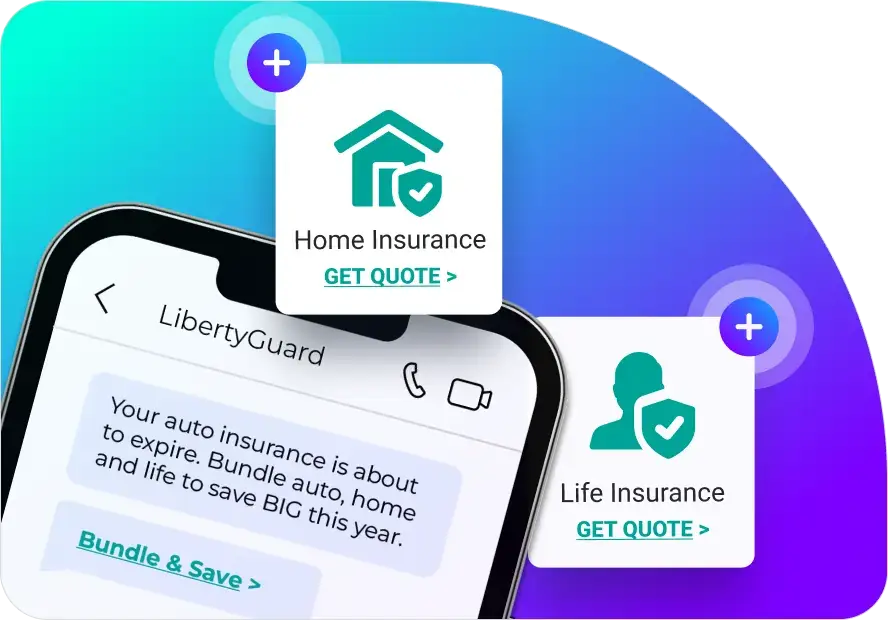
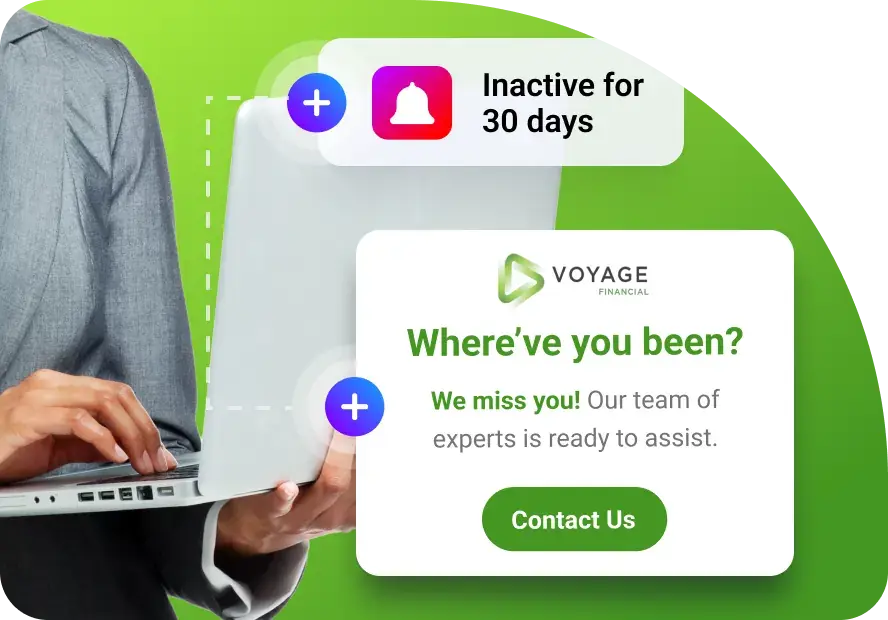
Digital messaging such as personalized emails or SMS reminders can be triggered based on physical mail delivery.
Reinforced Messaging
An omnichannel approach ensures that messaging is reinforced and consistent across platforms, increasing campaign relevance and recall.
CRM Integration
Omnichannel communications can integrate with CRM and data solutions for real-time tracking and personalized follow-ups, helping you stay responsive to client needs.
Marketing Analytics
Omnichannel campaigns offer actionable insights through robust analytics, so you can continuously fine-tune strategies for best-in-class results.
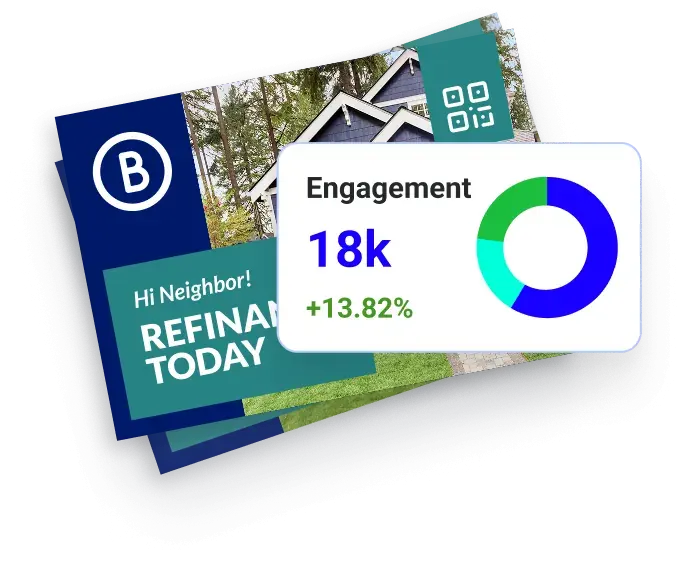
Acquisition & Retention
Omnichannel Marketing for Financial Services
Your customers’ lives are busy, and their attention is spread across digital, mobile and physical
channels. An omnichannel approach ensures your message is seen when and where it matters
most. By coordinating communications like direct mail, email, digital ads and more, you can boost
engagement and trust with every interaction.
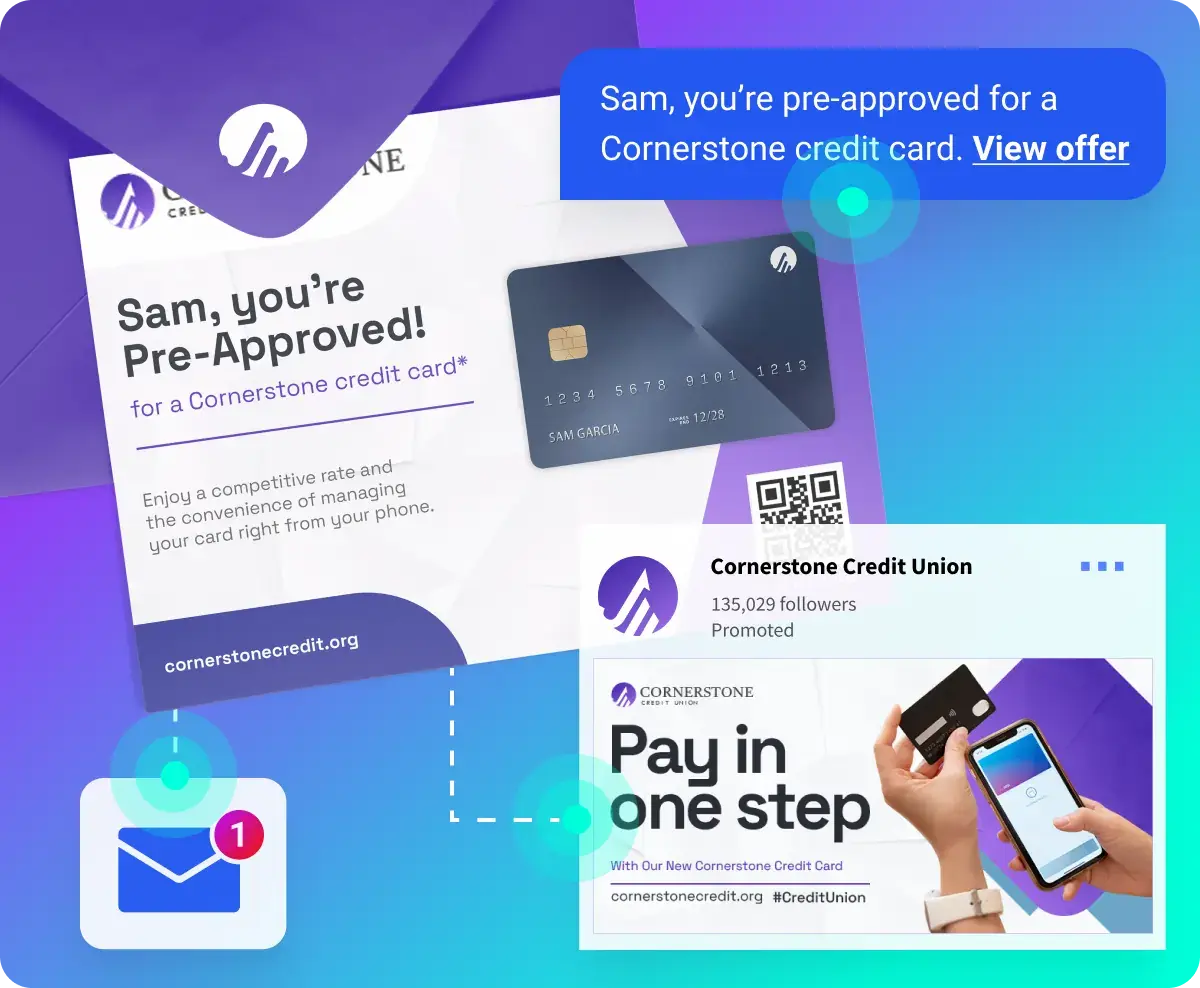
Direct Mail with Websites
Mailpieces connect the physical and digital worlds when used alongside your website.
QR Codes
Scannable codes that direct customers to your website or landing page and allow response tracking.
PURLS
Personalized URLs that bring each customer to their own landing page for a one-to-one experience.
Direct Mail with Email
Emails can be coordinated with mail delivery, alerting customers that a promotion or offer that is on its way to their physical mailbox.
Direct Mail with Social Media
Senders are notified when mail reaches its audience, enabling targeted paid social ads that align with the mail and its recipients.
Direct Mail & Digital Ads
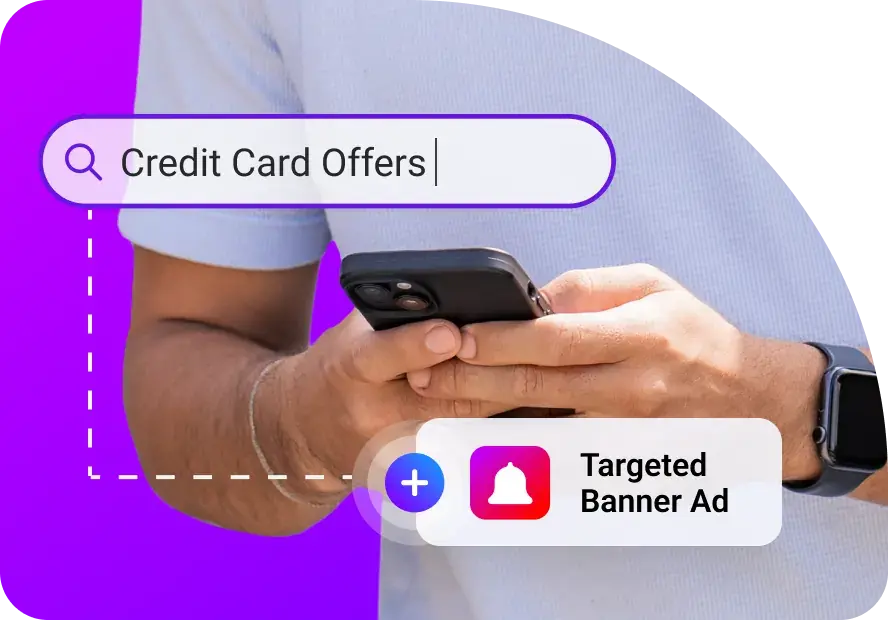
Pairing direct mail with digital ads broadens reach, strengthens recall, and boosts conversions by targeting recipients with print alongside display and social ads.
Direct Mail with SMS Text
Text offers drive high engagement and can trigger personalized direct mail tailored to each recipient.
Direct Mail & Geofencing
Creates a virtual boundary around key locations and delivers personalized digital and mail offers to customers when they enter those areas using GPS, Wi‑Fi, or cellular data.
