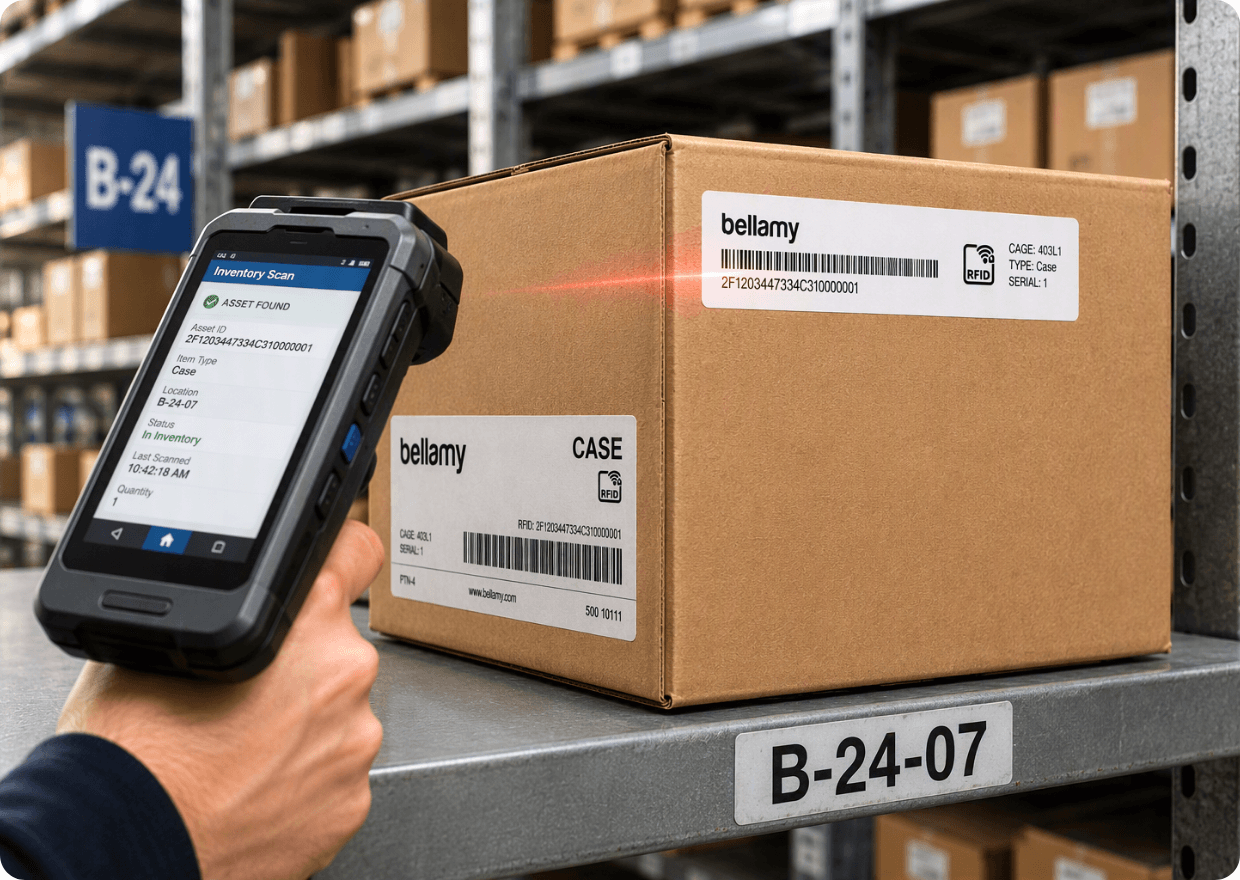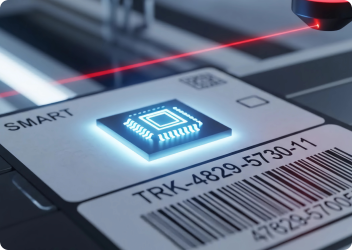
Radio frequency identification (RFID) has moved from a niche technology to a foundational tool for visibility, accuracy and automation across modern supply chains. What primarily began as an initiative at retailers like Walmart has quickly expanded into manufacturing, healthcare, food service, logistics and even government operations. As adoption accelerates, RFID mandates are becoming a defining force that shapes how products are labeled, tracked and verified throughout their lifecycle.
For manufacturers, compliance with these mandates requires integrating RFID into packaging lines, adopting GS1 data standards, and using EPC Gen2v2‑compliant tags. As RFID becomes a standard expectation rather than an optional enhancement, manufacturers that invest early will be better positioned to meet customer demands, improve operational efficiency, and compete in a rapidly evolving supply chain landscape.
This blog explores RFID industry adoption trends, why RFID mandates are emerging, and what manufacturers must understand to remain compliant with the RFID mandates of their customers. We will focus on the following questions:
- At a high level, how do industries use RFID?
- What are the benefits of adopting RFID?
- What industries have already begun to utilize RFID technology?
- RFID for retail & apparel industries
- RFID for logistics & supply chain industries
- RFID for healthcare industries
- RFID for manufacturing industries
- What are RFID mandates?
- Why are RFID mandates important?
- What is mandated source-tagging and how does it apply to manufacturers?
- RFID industry adoption
- Retailers and RFID mandates
- Manufacturers complying with RFID mandates
- Achieving compliance with RFID mandates
- What are the GS1 Data Standards?
- What are EPC Gen2v2 tags?
- ARC and ALEC: How is RFID compliance certified and validated?
At a high level, how do industries use RFID?
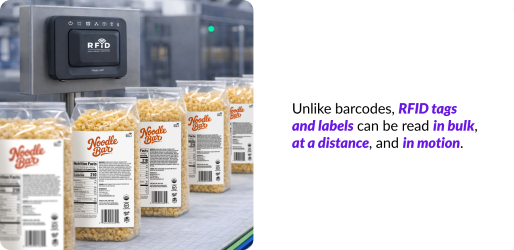
RFID solution systems use radio waves to identify and track items without requiring line‑of‑sight scanning. Unlike barcodes, RFID tags and labels can be read in bulk, at a distance, and in motion. This makes the technology ideal for environments where speed, accuracy and automation are essential.
Specifically, industries use RFID to:
- Track inventory at the item, case or pallet level
- Automate receiving and shipping
- Improve asset visibility
- Authenticate products
- Enhance traceability and recall management
- Support omnichannel fulfillment
- Strengthen quality control and compliance
RFID labeling’s versatility allows it to integrate into packaging, labels, equipment and even reusable containers, creating a digital identity for physical goods.
What are the benefits of adopting RFID?
The following benefits of RFID technology are commonly seen by organizations that adopt RFID labeling. These benefits help explain the industry adoption trends now being observed for RFID.
Inventory accuracy
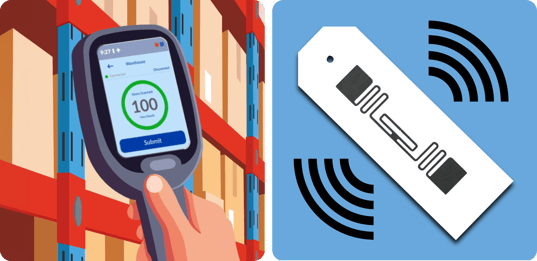
RFID label solutions routinely deliver 95% to 99% accuracy, far exceeding manual scanning or barcode‑based methods.
Operational efficiency
Automated scanning reduces labor, speeds up receiving, and eliminates bottlenecks.
Loss prevention
RFID implementation helps deter theft, reduce shrink, and authenticate high‑value items.
Traceability
Custom RFID labels support end‑to‑end visibility, which is critical for food safety, pharmaceuticals and regulated industries.
Customer experience
Retailers use RFID solution systems to improve shelf availability, support buy‑online‑pick‑up‑in‑store (BOPIS) and enable faster checkout.
Regulatory compliance
Industries like healthcare and defense rely on RFID technology to meet strict tracking and reporting requirements.
What industries have already begun to utilize RFID technology?
RFID adoption is no longer limited to early retail pilots or isolated supply chain experiments. The technology has matured, costs have decreased and standards have stabilized over the past decade — making RFID implementation practical for a wide range of industries.
As a result, industry sectors with very different operational needs are now integrating RFID into their workflows to improve accuracy, visibility and efficiency. From retail to healthcare and everything in between, organizations are discovering that item‑level tracking and automated data capture can solve long‑standing business challenges that barcodes and manual processes simply cannot. The following illustrates how the benefits of adopting RFID are being realized throughout the economy.
RFID for retail & apparel industries
Retail has been the largest driver of RFID adoption in the United States. Walmart, Target, Macy’s, Nordstrom and other major retailers have implemented RFID mandates that require suppliers to source-tag products at the item level. Walmart’s mandate, which began with apparel and footwear, has expanded into home goods, electronics, sporting goods and other categories. These mandates aim to improve inventory accuracy and support omnichannel fulfillment.
Amazon has also increased its use of RFID for logistics, warehouse automation and product authentication. While Amazon’s requirements vary by category, the company continues to expand its use of RFID in fulfillment centers and vendor programs.
Apparel brands and retailers have embraced RFID to reduce shrink, improve stock accuracy, and streamline returns. In fact, the apparel sector remains one of the most mature RFID markets in the world.
RFID for logistics & supply chain industries
RFID is widely used in logistics to track pallets, containers, returnable transport items, and high‑value assets. Carriers and 3PLs use RFID to automate receiving, reduce dwell time, and improve shipment visibility.
The U.S. Department of Defense (DoD) has required RFID tagging for certain shipments since the mid‑2000s. The DoD RFID mandate remains one of the earliest and most influential examples of large‑scale RFID adoption in government supply chains.
Food service companies, including Chipotle, have adopted RFID to track ingredients, improve food safety, and strengthen recall readiness. Chipotle’s RFID program is one of the first major item‑level food traceability initiatives in the restaurant industry.
RFID for healthcare industries
Hospitals and healthcare systems use RFID to track medical devices, pharmaceuticals, surgical instruments, and patient equipment. RFID supports compliance with regulatory requirements, reduces lost assets, and improves patient safety.
Pharmaceutical manufacturers use RFID to support serialization, anti‑counterfeiting and chain‑of‑custody tracking. RFID is also used in blood banks, laboratories and sterile processing departments.

RFID for manufacturing industries
Manufacturers use RFID to track components, tools, work‑in‑process materials, and finished goods. Automotive companies like Ford Motor Company use RFID to improve production sequencing, verify parts, and enhance quality control. RFID supports lean manufacturing by reducing errors, improving throughput, and enabling real‑time visibility.
If manufacturers wish to supply the leading retailers with RFID mandates, they must integrate RFID into packaging lines, labeling workflows and quality assurance processes.
What are RFID mandates?
RFID mandates are requirements issued by retailers, government agencies, or large organizations that compel suppliers to apply RFID tags and labels to products, cases or pallets before shipment. These source-tagging mandates (defined in greater detail below) typically specify:
- The type of RFID tag to use
- The data that must be encoded
- The placement of the tag on the product
- The verification steps required before shipping
RFID mandates shift responsibility upstream to manufacturers and suppliers, ensuring that products enter the supply chain already tagged and compliant.
Why are RFID mandates important?
Whether it’s for a retailer, food service brand, logistics company, hospital or some other organization, implementing RFID mandates is of strategic importance because it serves to:
- Standardize data across supply chains
- Improve inventory accuracy
- Reduce labor and operational costs
- Enable automation at distribution centers
- Support traceability and regulatory compliance
- Reduce shrink and improve product authentication
In retail, for example, RFID mandates are essential for omnichannel operations. However, for the manufacturers who supply those retailers, RFID mandates represent a new layer of compliance that must be integrated into packaging, labeling and production workflows.
What is source-tagging and how does it apply to manufacturers?
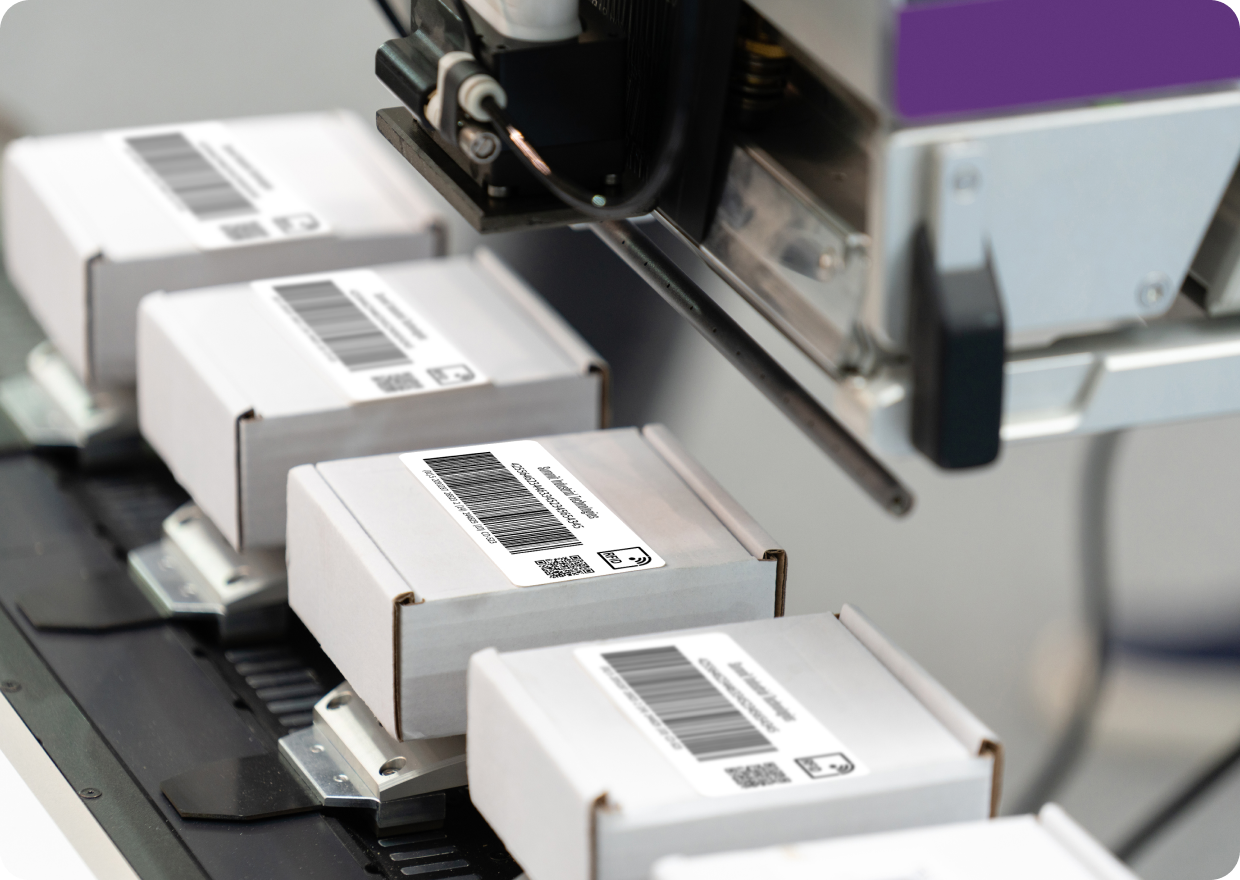
Source‑tagging is the practice of applying and encoding RFID tags at the point of manufacture. Instead of tagging products at a distribution center or retail store, manufacturers apply RFID tags and labels during production or packaging. Source‑tagging ensures that:
- Products arrive at retailers fully compliant
- Tags are applied consistently and accurately
- Encoding follows GS1 standards
- Readability is verified before shipment
Retailers mandate source‑tagging because it eliminates downstream labor and ensures uniformity. Manufacturers must adapt by integrating RFID labeling into their packaging lines, label printing systems, and quality control processes.
RFID industry adoption
As RFID mandates gain momentum, the broader industry landscape is shifting from optional adoption to expected compliance. As noted above, retailers, manufacturers, logistics providers and government agencies are all playing a role in accelerating this transition. Their requirements are reshaping how products are labeled, how data is structured, and how supply chains operate.
Understanding who is driving RFID adoption in various industries — and why — helps clarify the pressures suppliers face. The sections below highlight how both retailers and manufacturers are responding to this new environment.
Retailers and RFID mandates
Retailers are currently the primary drivers of RFID mandates in the United States. Walmart, Target, Macy’s and other major chains require suppliers to source-tag products at the item level. These mandates continue to expand into new categories as retailers seek higher inventory accuracy and improved supply chain visibility.
Manufacturers complying with RFID mandates
Manufacturers must integrate RFID into their operations to meet the requirements of the retailer or other organization they wish to supply. This includes:
- Selecting EPC Gen2v2‑compliant inlays
- Encoding tags using GS1 data standards
- Applying tags in consistent locations
- Verifying readability before shipment
- Maintaining compliance documentation
Referencing back to our prior examples:
- Automotive manufacturers like Ford Motor Company use RFID internally and must also comply with external mandates when supplying retailers or government agencies.
- Food manufacturers supplying Chipotle or major grocers must adopt RFID to support traceability and recall readiness.
- Industrial manufacturers supplying the DoD must follow strict tagging and data requirements.
Achieving compliance with RFID mandates
Maintaining compliance with RFID mandates is not simply a matter of applying a tag to an item. Compliance depends on using the correct technology, encoding data according to global standards, and verifying that every tag performs reliably before products leave the facility. Manufacturers must understand the technical foundations that support RFID programs, including the data structures defined by GS1 and the performance specifications of EPC Gen2v2 tags. These standards ensure that RFID works consistently across retailers, distribution centers and global supply chains.
The following sections break down the essential components of RFID solution system compliance and explain how they support successful RFID program implementation.
What are the GS1 Data Standards?
GS1 data standards define how product information is structured and encoded on RFID tags. These standards ensure that every partner in the supply chain can interpret the data consistently. Key GS1 identifiers include:
- GTIN (Global Trade Item Number)
- SGTIN (Serialized GTIN)
- SSCC (Serial Shipping Container Code)
- GRAI and GIAI for assets
RFID mandates typically require SGTIN‑96 encoding, which provides a unique identifier for every item.
What are EPC Gen2v2 tags?
EPC Gen2v2 is the global technical standard for UHF RFID tags used in retail, logistics and manufacturing. It defines how tags communicate with readers and ensures interoperability across systems. EPC Gen2v2 tags support:
- High‑speed bulk reading
- Serialized item‑level identification
- Enhanced security features
- Global frequency compatibility
Retailers and government agencies, in particular, generally require EPC Gen2v2‑compliant tags to ensure consistent performance across their supply chains.
ARC and ALEC: How is RFID compliance certified and validated?
Beyond using GS1‑compliant data and EPC Gen2v2 tags, many enterprises require formal certification and validation to ensure consistent RFID performance at scale. This is where independent testing and verification play a critical role. Auburn University provides two globally recognized programs that support RFID compliance and readiness: the ARC Program and the Auburn RFID Lab’s ALEC testing services.
- ARC (Auburn University RFID Lab Certification Program) focuses on certifying RFID tag quality and performance. Through standardized testing, ARC evaluates whether RFID inlays and tags meet defined performance thresholds for readability, durability and consistency. ARC certification gives manufacturers and retailers confidence that approved tags will perform reliably across real‑world environments, from production lines to distribution centers.
- ALEC (Auburn University RFID Lab Encoding and Compliance) addresses the item‑level application of RFID. ALEC validates that tags are properly encoded with the correct EPC data, applied in compliant locations, and readable in the context of the actual product and packaging. This includes verifying tag placement, orientation and encoding accuracy before goods are shipped.
Together, ARC and ALEC help close the gap between technical standards and operational execution. Certification and validation reduce the risk of RFID failures downstream by confirming that tags not only meet specifications on paper, but also perform as expected in the supply chain. For manufacturers and brand owners, this matters because proper validation:
- Reduces chargebacks and non‑compliance penalties
- Prevents failed reads at distribution centers and stores
- Confirms RFID readiness before products leave the facility
By incorporating ARC‑certified tags and ALEC‑validated encoding processes, organizations strengthen their RFID programs and improve the likelihood of long‑term compliance success.
Taylor: Unlock the benefits of adopting RFID
Taylor provides complete RFID solution systems that are customized to how industries use RFID technology today. Whether your organization is implementing RFID mandates or needs to achieve compliance with RFID mandates implemented by someone else, Taylor can help. We use our expertise with custom label printing and pressure-sensitive labels to create RFID tags and labels for applications in retail, apparel, manufacturing, logistics, healthcare and more.
Looking for an RFID labeling partner well versed in GS1 data standards, EPC Gen2v2 tags, and the finer points of source-tagging? Contact Taylor to learn more about our expertise with custom RFID label solutions.


.jpg)