For manufacturers across a wide range of industries, recurring issues like stockouts, missing tools and delayed shipments rarely happen in isolation. They are symptoms of deeper operational blind spots that often go unnoticed because they build slowly over time.
- Manual inventory counts introduce errors that ripple through production schedules.
- Underutilized equipment sits idle because no one has real-time visibility into where assets are or how often they are used.
- Supply chain tracking gaps lead to late-stage surprises that force teams into reactive firefighting.
These issues erode profitability long before they show up in financial reports. Every hour spent searching for a misplaced tool, every production run delayed by missing components, and every shipment held up due to incomplete documentation represents lost opportunity. Manufacturers that fail to address such inefficiencies risk slower lead times, higher labor costs and reduced competitiveness.
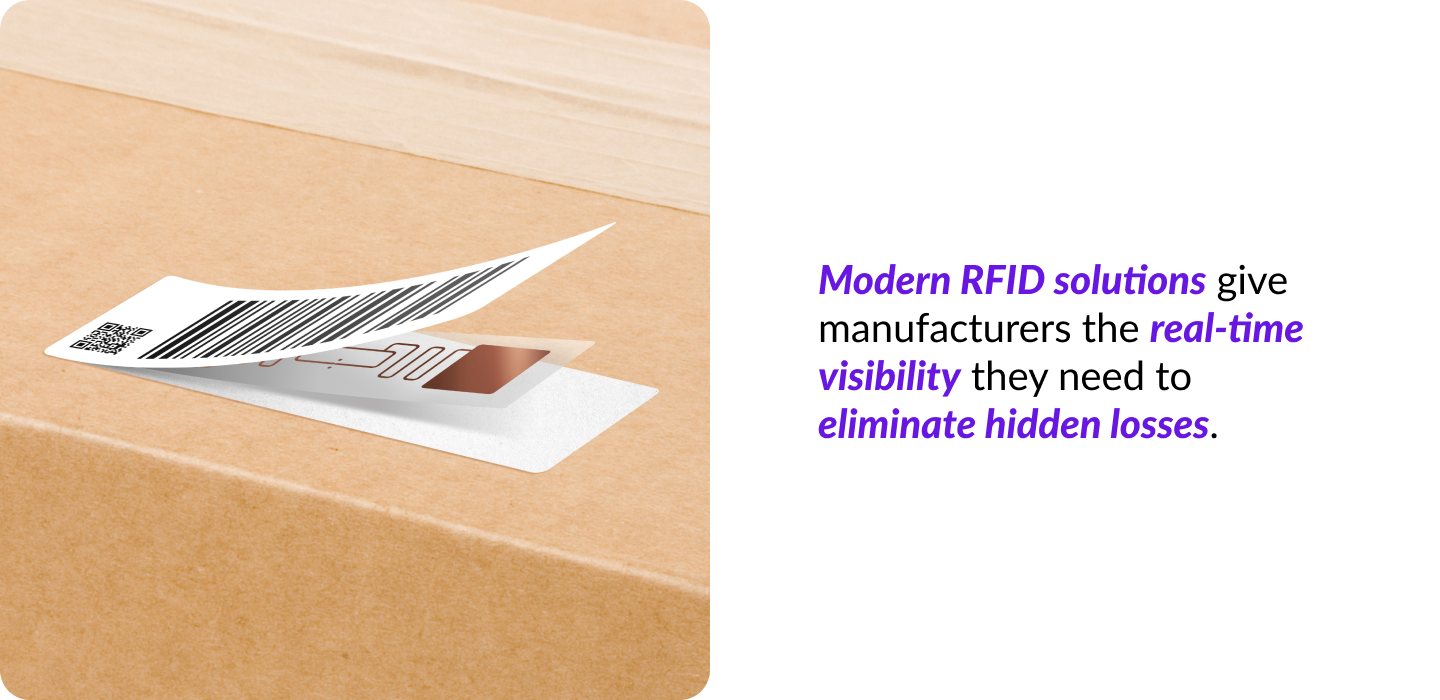
Using RFID technology in manufacturing is one of the most powerful ways to uncover and eliminate these hidden losses. By providing real-time visibility into inventory, assets and workflows, RFID labeling gives operations teams the data they need to make informed decisions and optimize production. The blog that follows explores the benefits of RFID technology in manufacturing and how using RFID technology in manufacturing can become a source of long-term competitive advantage:
The Benefits of RFID in Industry
- What are the advantages of RFID in manufacturing settings?
Applications of RFID in Manufacturing
- How is RFID used in inventory management?
- How does RFID asset tracking work?
- Can you use RFID in manufacturing automation?
Implementing RFID Solutions in Manufacturing
- What are durable UHF RFID labels?
- What are high-temperature RFID labels?
The Benefits of RFID in Industry
Using RFID technology in manufacturing strengthens core operations by automating data capture, improving accuracy and delivering real‑time visibility across inventory, assets and workflows. As explained below, these capabilities reduce labor demands, enhance traceability and give teams the reliable insights they need to prevent disruptions and optimize production performance.

What are the advantages of RFID in manufacturing settings?
Industrial RFID applications offer several advantages over traditional barcodes and manual tracking methods. In manufacturing environments where speed, accuracy and reliability are essential, these advantages translate directly into operational gains.
1. Automated data capture
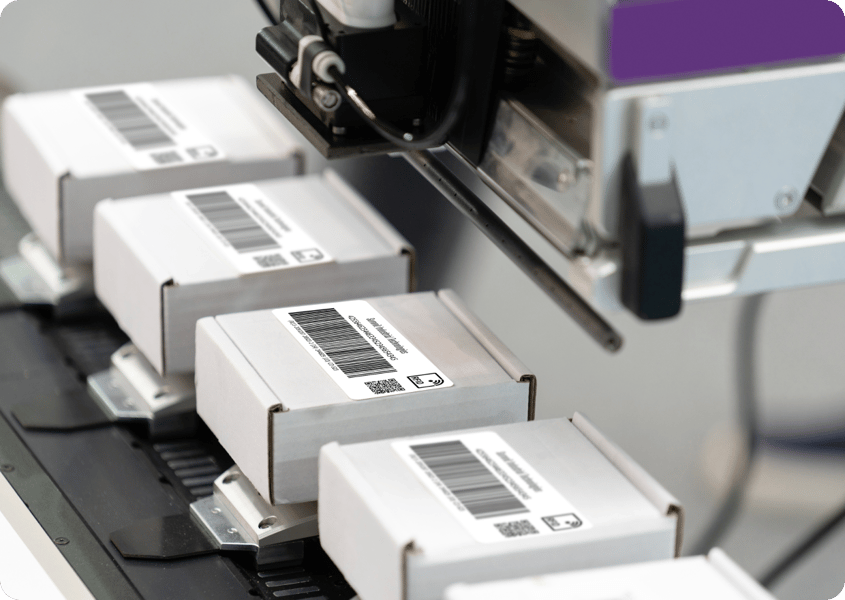
RFID smart labels do not require line-of-sight scanning. Readers can capture hundreds of tags per second, even if they are inside boxes, behind materials or moving on conveyors. This eliminates the bottlenecks associated with manual barcode scanning.
2. Real-time visibility
RFID manufacturing solutions provide continuous updates on the location and status of inventory, tools, equipment and finished goods. This visibility helps teams identify shortages, bottlenecks and delays before they impact production.
3. Improved accuracy
Manual data entry and barcode scanning are prone to human error. RFID labeling reduces these errors by automating data collection, ensuring that counts and locations are always up to date.
4. Enhanced traceability
RFID in manufacturing enables end-to-end tracking of materials and components throughout the production process. This is especially valuable for industries with strict compliance requirements or complex supply chains.
5. Labor efficiency
By reducing the time spent searching for items or performing manual counts, RFID technology frees workers to focus on higher-value tasks. This leads to more efficient use of labor and improved throughput.
6. Better decision-making
With accurate, real-time data, operations managers can make informed decisions about scheduling, procurement and resource allocation. This reduces downtime and improves overall equipment effectiveness.
Applications of RFID in Manufacturing
As we’ll see next, the use of RFID technology in manufacturing strengthens core operations on a variety of levels. RFID inventory tracking systems automate inventory counts, streamlining receiving and providing real-time visibility into materials, tools and work-in-process. RFID asset tracking applications are used to monitor tool usage, equipment performance and maintenance needs. The use of RFID in manufacturing automation enables smarter routing, sequencing and quality control. Working together, these RFID capabilities reduce errors, prevent delays and keep production flowing with greater accuracy and efficiency.
How is RFID used in inventory management?
RFID inventory management is one of the most common and impactful applications of RFID in manufacturing. Traditional inventory processes rely heavily on manual counts, which are time-consuming and often inaccurate. RFID inventory tracking systems transform this process by enabling automated, real-time tracking.
Cycle counting and audits
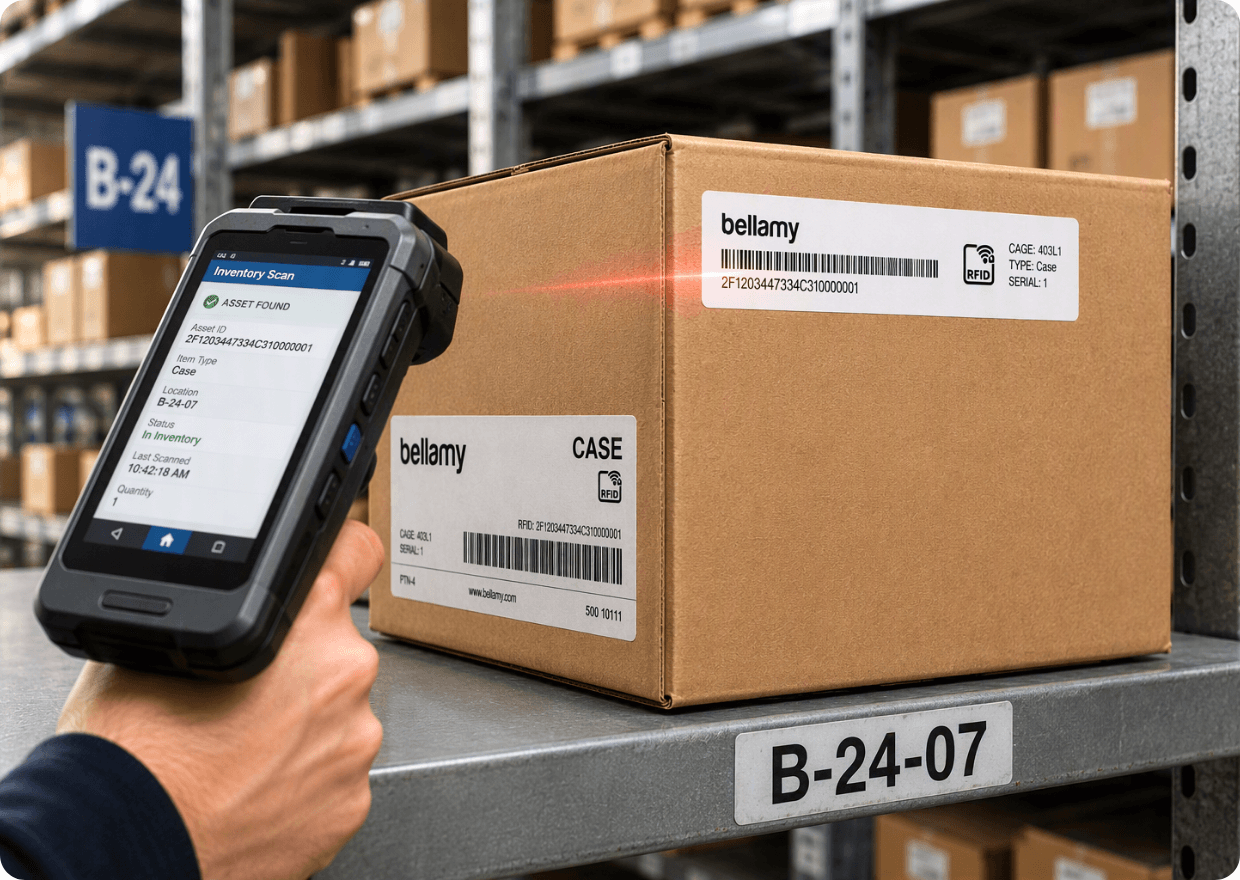
RFID smart labels allow teams to perform cycle counts in minutes rather than hours. Workers can walk through a warehouse with a handheld reader and capture thousands of items instantly.

Material replenishment
Real-time visibility into inventory levels helps prevent stockouts and overstocking. RFID-enabled systems can trigger automatic replenishment when materials fall below predefined thresholds.
Receiving and put-away
Using RFID in manufacturing settings streamlines receiving by automatically identifying incoming shipments from 3PL logistics partners as they pass through dock doors. This reduces check-in time and ensures materials are routed to the correct locations.
Work-in-process tracking
RFID labeling attached to components or subassemblies allows manufacturers to track progress through each stage of production. This helps identify bottlenecks and ensures that production stays on schedule.
How does RFID asset tracking work?
RFID asset tracking is another critical application of RFID technology in industrial environments. Tools, equipment and machinery represent significant investments for the manufacturer. Losing track of them can lead to costly delays.
Tool tracking
RFID smart labels attached to tools allow teams to monitor their location and usage. This reduces time spent searching for misplaced items and helps ensure that tools are calibrated and maintained on schedule.
Equipment utilization
RFID asset tracking can monitor how often equipment is used, helping operations managers identify underutilized assets or justify new purchases.
Maintenance management
RFID labeling can be used to store maintenance histories and service intervals. When a tagged asset passes a reader, the system can automatically log usage and trigger maintenance alerts.
Access control
In environments where certain tools or equipment require authorization, RFID tags can ensure that only trained personnel use them.
Can you use RFID in manufacturing automation?
The use of RFID in manufacturing automation is a fast-growing trend, making it a valuable component of modern manufacturing automation strategies.
Automated material handling
Conveyors, robotic arms and automated guided vehicles can use RFID labeling to identify materials and route them correctly without human intervention.
Quality control
RFID smart labels can store production data that automated systems then use to verify that components meet specifications. If a part fails inspection, the system can automatically divert it for rework.
Production sequencing
RFID tags for manufacturing help ensure that components arrive at assembly stations in the correct order. This is especially important in automotive and electronics manufacturing where sequencing errors can cause significant delays.
Smart workstations
RFID-enabled workstations can automatically adjust instructions or tooling based on the item being processed. This reduces setup time and improves consistency.
Implementing RFID Solutions in Manufacturing

What are durable UHF RFID labels?
Durable UHF RFID labels are designed specifically for industrial environments where exposure to chemicals, abrasion, moisture and extreme temperatures is common. These labels use UHF (ultra-high frequency) technology, which offers long read ranges and fast data capture, making them ideal for tracking inventory, assets and equipment across large facilities.
Key characteristics of durable UHF RFID labels include:
- Industrial-grade facestocks such as polyester, polyimide or synthetic films that resist tearing and abrasion
- Aggressive adhesives that bond to metals, plastics and textured surfaces
- Encapsulated inlays that protect the RFID chip and antenna from environmental stress
- Compatibility with metal surfaces through specialized on-metal constructions
Durable UHF RFID labels are essential for applications like warehouse inventory, tool tracking and equipment identification where standard RFID labels would fail.
What are high-temperature RFID labels?
High-temperature RFID labels are engineered to withstand environments where heat would damage standard RFID tags. These labels are commonly used in metal fabrication, automotive manufacturing, aerospace and other industries where components pass through ovens, paint lines or curing processes.
Typical features of high-temperature RFID labels include:
- Heat-resistant materials such as polyimide films that can endure temperatures exceeding 500°F
- Specialized adhesives that maintain bond strength under extreme heat
- Thermally stable inlays that protect the RFID chip from thermal shock
- Resistance to chemicals and solvents used in industrial finishing processes
High-temperature RFID labels enable manufacturers to track components throughout processes that were previously too harsh for electronic identification. This ensures full traceability from raw material to finished product, even in the most demanding production environments.
Taylor: Comprehensive RFID Manufacturing Solutions
RFID labeling has become a cornerstone of modern manufacturing and Taylor is leading the way. Among the most sophisticated providers of custom label printing and warehousing and fulfillment solutions in North America, Taylor supplies RFID smart labels to manufacturers in a variety of industry categories.
Everything you need to realize the many benefits of RFID technology in manufacturing can be sourced through a single RFID label manufacturer. We will consult with you up front and help you choose from the many options available to you:
- Low frequency, high frequency and ultra-high frequency RFID systems
- Active, passive and semi-active (semi-passive) tags
- Hundreds of tag materials including BOPP, PET and DT film and paper
- Antennas, RFID readers, printer encoder systems, label stock and more
Looking for an RFID label manufacturer who can help you implement RFID asset tracking, RFID inventory management systems, RFID manufacturing automation, or other strategic applications of RFID in manufacturing? Contact Taylor to learn more about our expertise with RFID solutions and applications in industry.

.jpg)