In recent blogs, we’ve described how manufacturers across a wide range of industries have embraced RFID smart labels as a way of enhancing inventory management practices. However, multi-location retailers, restaurant chains and franchised operations in a variety of industries are rapidly discovering that contactless feedback tools — based on the same basic technologies — can provide a real-time guest feedback platform unlike anything possible before.
Customer expectations continue to rise and brands are under pressure to understand how guests feel at the exact moment an experience occurs. Contactless feedback tools have emerged as one of the most effective ways to capture real-time sentiment, reduce friction, and turn everyday interactions into measurable insights. Two technologies dominate this space: Near Field Communication (NFC) and Radio Frequency Identification (RFID). While they share a technical lineage, they serve different purposes and offer distinct advantages.
This blog explores how such contactless feedback tools work, how NFC and RFID compare, and how multi-location brands can use these systems to increase customer satisfaction and drive more Google reviews at the point of experience. We will focus on the following questions:
- What are the 3 Cs of customer satisfaction?
- How does instant customer feedback influence customer satisfaction?
- What are some real-world examples of in-store customer feedback solutions?
- What does implementing contactless feedback solutions entail?
- NFC tap feedback explained
- RFID contactless feedback explained
- Which is better, NFC or RFID?
- The benefits of NFC feedback systems
- How RFID enhances feedback collection
- How can you get more Google Reviews in-store?
What are the 3 Cs of customer satisfaction?
Consultants agree that most customer experience frameworks revolve around three core pillars:
1. Consistency
Customers expect predictable experiences across locations, channels and visits. A consistent experience builds trust and reduces friction.
2. Convenience
Customers reward brands that make interactions fast and effortless. Contactless feedback tools and so-called “tap feedback systems” excel here because they eliminate barriers to sharing opinions.
3. Communication
Customers want to feel heard. When businesses collect feedback instantly and act on it, they close the loop and strengthen loyalty.
These three Cs form the foundation for understanding why instant, contactless feedback has become so valuable to evaluating in-store, face-to-face interactions.
How does instant customer feedback influence customer satisfaction?
Instant, tap feedback systems allow brands to capture sentiment at the exact moment a customer forms an impression. This immediacy produces richer, more accurate data and enables faster operational responses. Capturing such effortless customer feedback via contactless methods, in turn, delivers business benefits on five levels.
1. Localized Insights
A real-time guest feedback platform enables retailers, restaurants and other businesses with multiple locations to compare performance across regions and store formats. NFC feedback solutions, for example, allow customers to tap a phone to leave feedback, creating a consistent measurement method across stores. NFC feedback systems are widely used in retail to enhance customer engagement and streamline interactions, making it a natural fit for feedback collection.
2. Operational Metrics
Contactless feedback tools can track wait times, product quality and overall satisfaction. NFC feedback solutions are already used in retail to support operational efficiency, including checkout and product interactions, which makes them well suited for capturing operational data across the enterprise.
3. Employee Performance
Instant customer feedback helps managers of retail stores, restaurants and other multi-unit “chain” businesses to identify top performers and uncover training needs. Because NFC tags can be placed at service counters or tables, customers can quickly rate their experience without downloading an app or scanning a code.
4. Crisis Detection
Real-time alerts can flag safety issues, service breakdowns or product defects. RFID feedback collection systems, which are widely used for inventory and security, can also support feedback workflows by linking customer interactions to specific products or zones. RFID tags are already used to track movement and trigger alerts in retail settings, demonstrating their ability to support real-time monitoring.
5. Marketing Impact
Marketing teams can adjust campaigns, offers and pricing based on real-time guest feedback. NFC feedback systems are already used for personalized promotions and product information, which can extend naturally into feedback-driven marketing adjustments.
What are some real-world examples of in-store customer feedback solutions?
While many brands keep their feedback technologies a closely guarded secret, the following examples illustrate how companies can boost business with NFC and RFID feedback solutions.
NFC-powered retail experiences
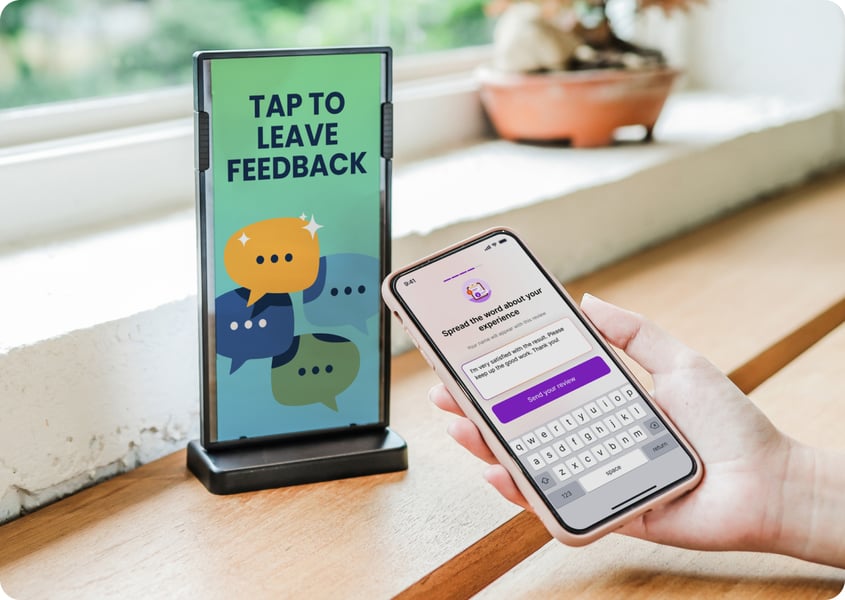
Large retailers often use NFC tags to let customers access product information, promotions or digital experiences with a tap. For example, NFC stickers placed on shelves or displays can link directly to feedback forms. These NFC feedback systems enable seamless, in-the-moment interactions with loyalty programs and other customer engagement tools.
RFID-enhanced customer journeys
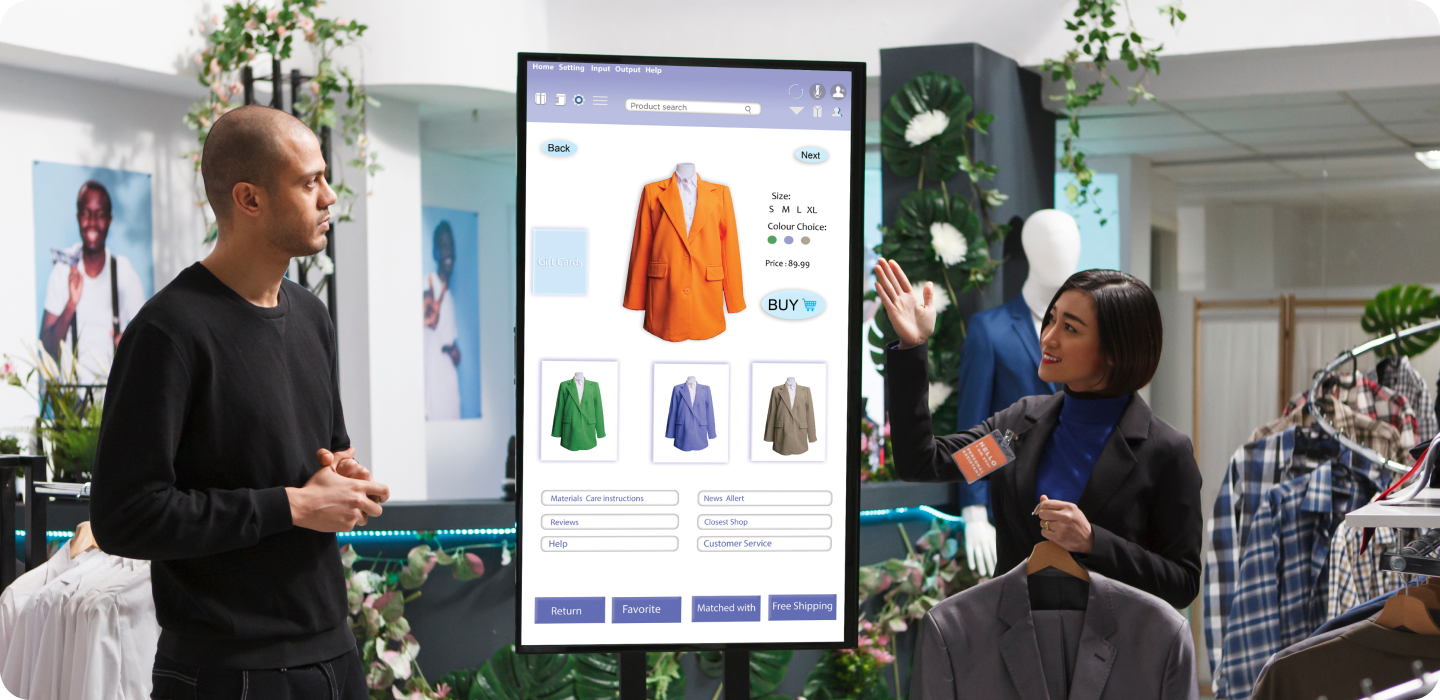
RFID is commonly used in the retail industry to authenticate products, track inventory and support interactive experiences. For example, RFID smart labels can trigger interactive displays to launch custom content when a tagged item is picked up. This same infrastructure can support feedback prompts tied to specific products or departments. RFID tags are a powerful tool for verifying authenticity and tracking product movement, demonstrating their ability to support contextual feedback.
QR code hybrids
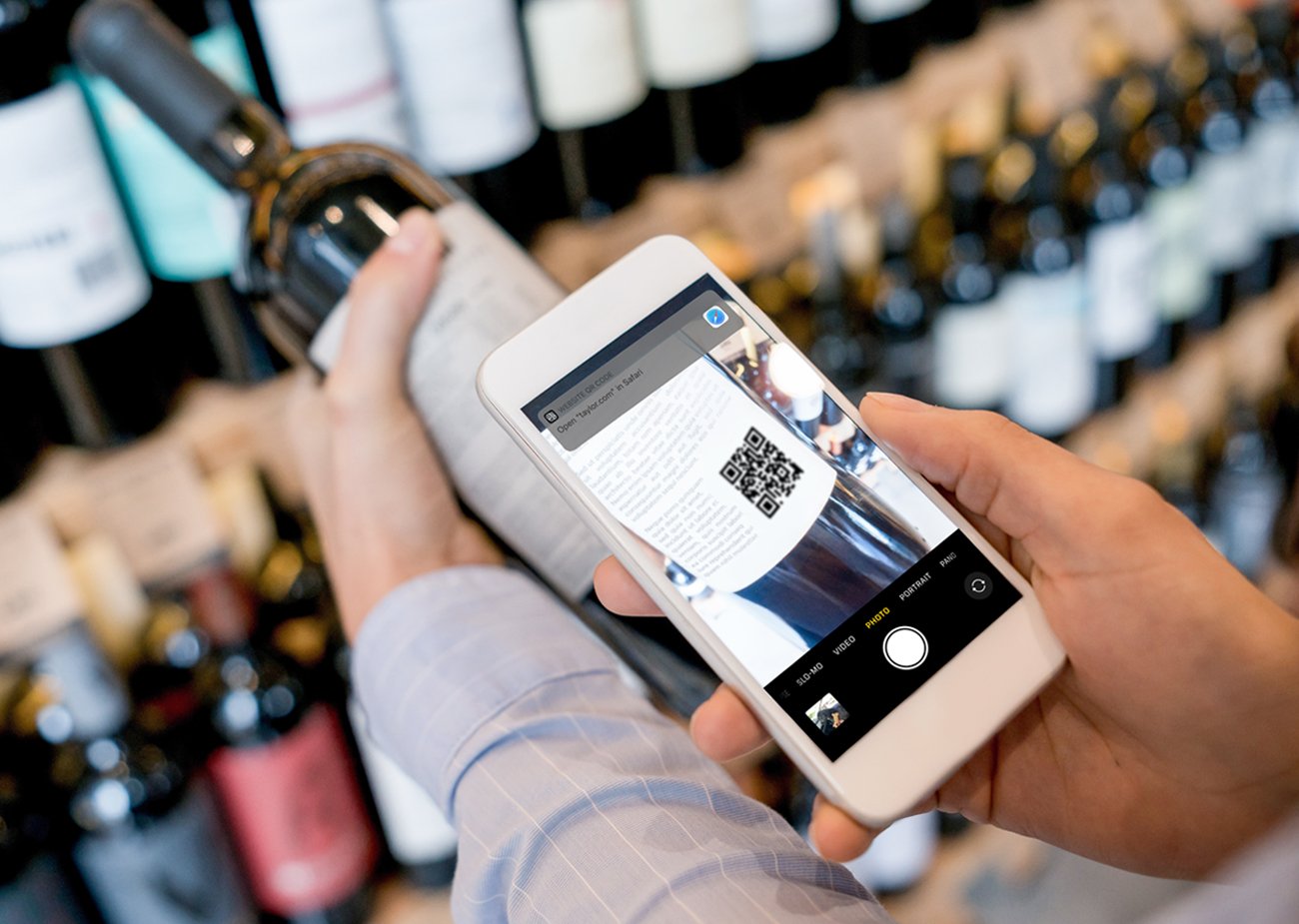
Some multi-location chains use QR codes alongside NFC or RFID. QR codes can link to surveys or review pages, including Google reviews. Though cost-effective and easy to deploy, it’s important to remember that QR codes require the customer to make the extra effort to scan a code versus simply tapping. This may influence how and when QR codes can be deployed to maximum effect.
What does implementing contactless feedback solutions entail?
NFC and RFID both play important roles in modern contactless customer feedback solutions. While the technologies are similar conceptually, they are actually quite different technologically. Below, we explain how NFC and RFID systems work and in what types of settings.
NFC tap feedback explained
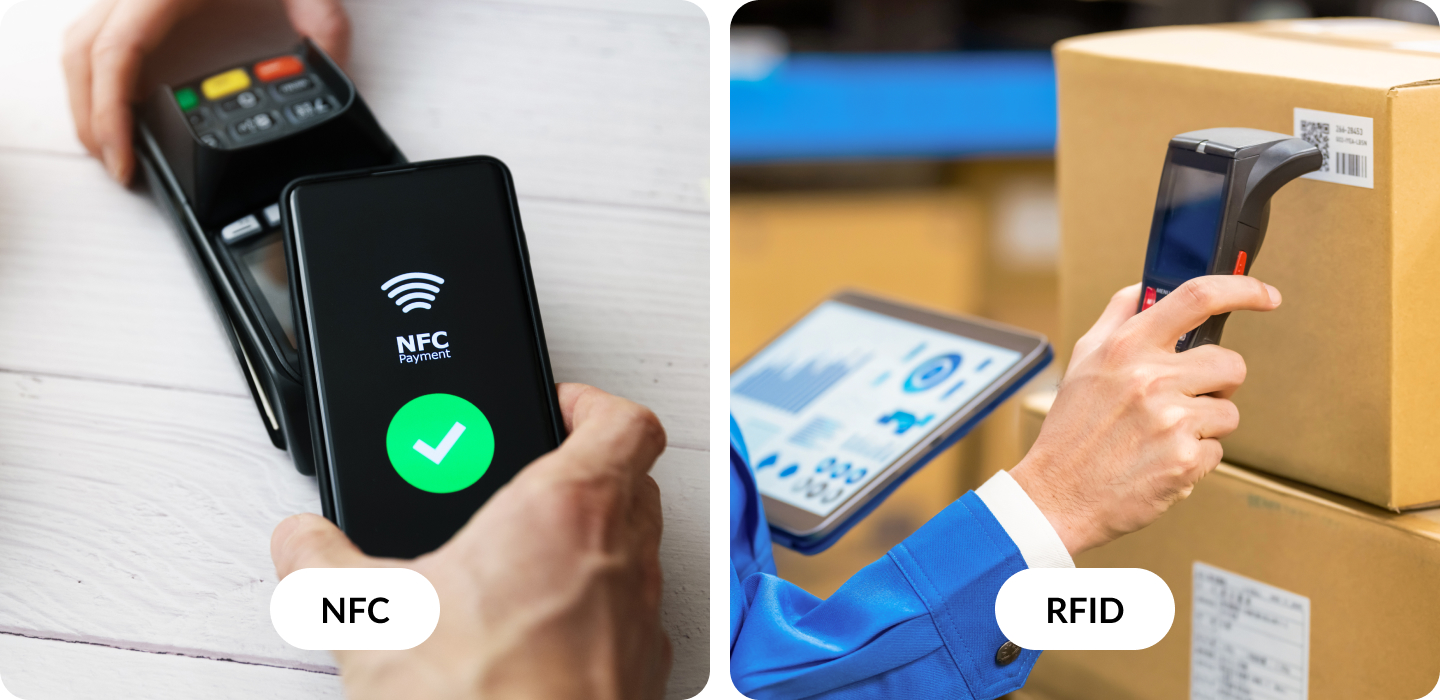
NFC is a short-range wireless communication technology that allows a smartphone to exchange data with a tag when held within a few centimeters. NFC operates on the same principles as RFID but is designed for consumer devices. NFC is widely used for contactless payments, loyalty programs and real-time feedback collection.
In a feedback context, NFC tags can be placed:
-
- At checkout counters
- On tables or menus
- Near product displays
- At store exits
With NFC feedback systems, a customer simply taps their phone and a feedback form or Google review link can be opened instantly. NFC requires no app, no pairing and no scanning.
RFID contactless feedback explained
RFID uses radio waves to identify and track tags. Unlike NFC, RFID can operate at longer ranges and does not require a smartphone. For these reasons, RFID is used extensively for inventory management, anti-theft systems and product authentication.
In feedback systems, RFID can:
-
- Trigger prompts when a customer interacts with a product
- Link feedback to specific items or zones
- Support automated feedback workflows tied to inventory or service events
Simply put, RFID is less consumer-facing than NFC but is more powerful for capturing operational data.
Which is better, NFC or RFID?
As the information above suggests, the answer to whether NFC or RFID is “better” depends on the goal. Both technologies are rooted in the same family of wireless communication but they serve different purposes.
The benefits of NFC feedback systems
NFC is ideal for real-time guest feedback platforms because:
-
- It works with smartphones
- It requires no app or setup
- It supports secure, short-range interactions
- It is intuitive for customers who already use tap-to-pay
NFC is widely used by multi-location enterprises to create seamless, personalized interactions, making it a natural fit for feedback collection.
Key point to remember: NFC is generally the best tool for capturing Google reviews at the point of experience. A simple tap can open a Google review page instantly, reducing friction and increasing review volume.
How RFID enhances feedback collection
RFID is better suited for operational and automated feedback scenarios because:
-
- It can track products and assets in real time
- It can trigger events without customer action
- It integrates with inventory and security systems
- It supports large-scale data collection across multiple store locations
For these reasons, RFID is widely used for inventory management, anti-theft and product authentication — demonstrating its ability to support data-rich feedback environments.
Key point to remember: RFID is not typically used for Google review capture because it does not interface directly with smartphones. However, it can enrich the feedback gathered by linking customer sentiment to product movement or in-store activity.
How can you get more Google reviews in-store?
No blog on this topic would be complete without a brief mention of Google review generation for multi-unit business operations. Contactless feedback tools can dramatically increase Google review volume by reducing friction. Strategies include:
-
- Placing NFC tags at checkout with a direct link to the Google review page
- Using QR codes as a backup for customers without NFC-enabled devices
- Training staff to invite customers to tap before leaving
- Integrating customer review prompts into loyalty program or checkout receipt workflows
Here again, NFC survey technology is particularly effective because it opens the review page instantly, without scanning or typing.
Taylor: NFC and RFID Feedback Systems
Taylor is a leading provider of RFID smart labels and NFC labels for in-store customer feedback solutions like those described above. We use our expertise with custom label printing and pressure-sensitive label constructions to support real-time guest feedback platforms that enable retailers, restaurants and multi-location enterprises in other industries to capture Google reviews at the point of experience.
One example is our proprietary Pulse Tap™ NFC labeling technology. Taylor’s custom Pulse Tap NFC labels facilitate the capture of real-time, contactless feedback in virtually any setting. Pulse Tap is only the beginning, however. Our smart label expertise extends to other technologies and applications including:
- RFID tags
- QR code labels
- Data-embedded barcodes
- Time-temperature indicators (TTI)
- Electronic shelf labels
- E-ink labels
- PLUS: Custom software applications as well as encoding and validation hardware
Looking for a way to maximize feedback with NFC/RFID feedback collection technology? Contact Taylor to learn more about our expertise with contactless customer feedback solutions.

.jpg)