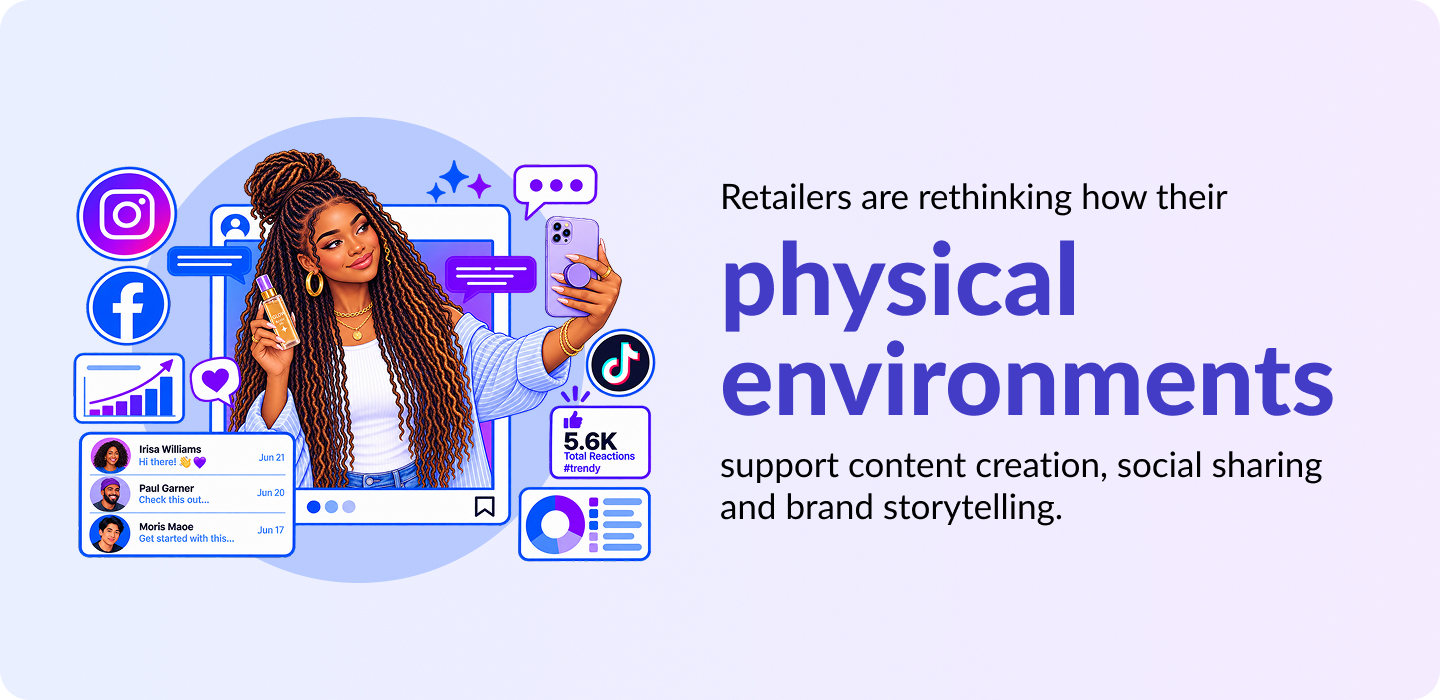
The convergence of physical retail, social media and creator culture is reshaping how brands think about the in-store experience. As in-store influencer marketing continues to evolve, retailers that invest in visual merchandising for influencer marketing, compelling retail signage, and immersive influencer-friendly retail environments will be better positioned to turn store visits into powerful marketing assets.
This blog explores how the most successful retail spaces no longer function solely as places to transact. Rather, they serve as active storytelling environments where shoppers, influencers and brands collaborate to create authentic content that drives engagement, foot traffic and sales across every channel. Keep reading below to learn how retail influencer marketing strategies, creator-focused visual merchandising, and content-friendly store displays represent the future of retail store display design.
- What is visual merchandising in retail?
- What is in-store influencer marketing all about?
-
- What is a micro-influencer?
- What is user-generated content (UGC)?
- What is social commerce?
- What is experiential retail?
- How does visual merchandising support in-store influencer marketing?
-
- Branded product walls and photo-worthy displays
- Seasonal and limited-time retail installations
- Interactive product demonstration stations
- Influencer-hosted in-store events
- Product sampling and trial experiences
- What makes a retail environment influencer-friendly and shareable on social media?
- How can brands use influencer-generated content from retail stores to drive foot traffic and sales?
- When should a retailer use influencer marketing for in-store visual merchandising?
-
- Increasing social sharing from physical retail locations
- New products that benefit from creator-generated content
- Driving foot traffic to brick-and-mortar stores
- Encouraging user-generated content (UGC) and brand advocacy
- Supporting social commerce and omnichannel marketing efforts
- Promoting seasonal campaigns, limited-time offers, or store activations
- What are the trade-offs of using influencer marketing for in-store visual merchandising?
-
- Aesthetic appeal vs. product accessibility
- Influencer appeal vs. everyday shopper experience
- Brand consistency vs. creative flexibility
- Immersive experiences vs. implementation costs
- Micro-influencers vs. macro-influencers
- Temporary activations vs. permanent displays
What is visual merchandising in retail?
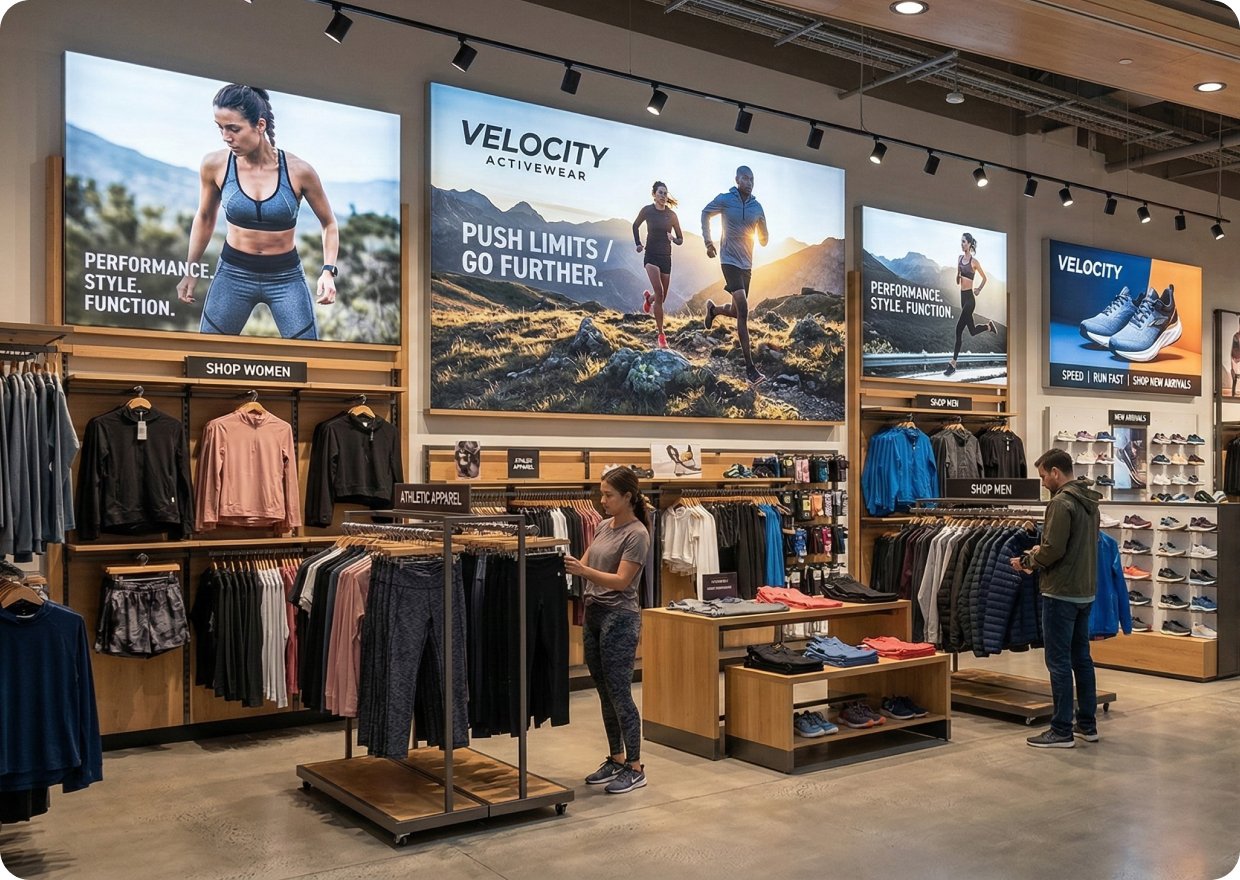
Visual merchandising is the practice of designing retail environments to attract attention, communicate brand identity, influence shopper behavior and increase sales. It includes everything from window displays and product presentation to lighting, store layouts, displays, fixtures and retail merchandising signage.
Historically, visual merchandising focused primarily on helping shoppers discover products and navigate stores. Today, however, the rise of social media has expanded its role. Modern retail store display design must appeal both to shoppers physically present in a store and to audiences viewing content through social platforms.
What is in-store influencer marketing all about?
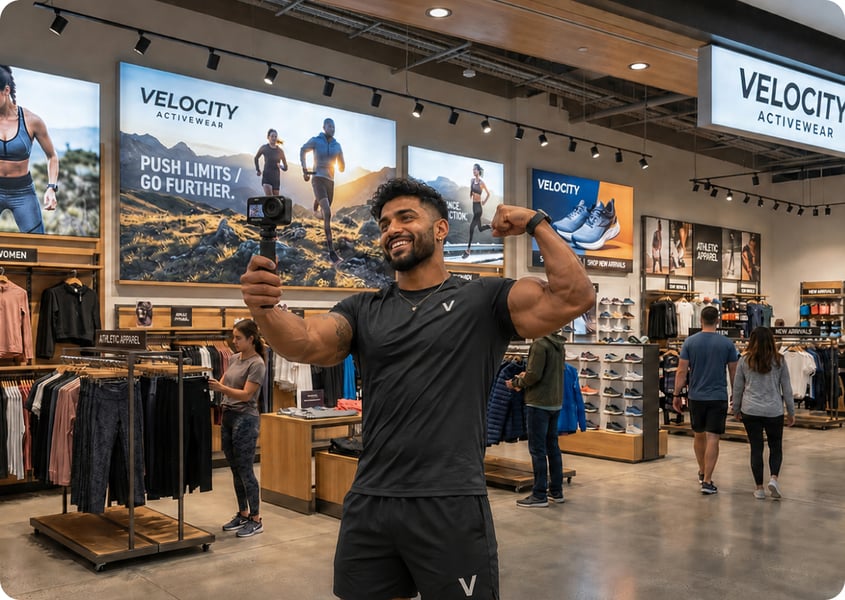
In-store influencer marketing combines influencer partnerships with physical retail experiences. Rather than promoting products exclusively online, creators visit stores, attend events, interact with displays and produce content within retail environments that showcases both products and brand experiences. Such retail influencer marketing strategies are especially common in the health and beauty category.
For retailers, this approach helps bridge the gap between digital discovery and in-store purchases. Consumers can see creators authentically engaging with products in a real setting, making the shopping experience feel more accessible and trustworthy. Make sure you’re familiar with the following concepts and how they relate to retail influencer marketing strategies.
What is a micro-influencer?
A micro-influencer is typically a creator with a smaller but highly engaged audience. While exact follower counts vary, these creators often have stronger community relationships and higher engagement rates than larger influencers.
For retailers, micro-influencers can be particularly effective because their recommendations often feel more authentic and relatable. Their audiences frequently view them as trusted peers rather than celebrities.
What is user-generated content (UGC)?
User-generated content (UGC) refers to photos, videos, reviews, testimonials and social posts created by customers rather than brands. UGC can be produced by influencers, brand advocates, or everyday shoppers.
Retailers value UGC because it provides authentic social proof. When consumers see real people interacting with products and store environments, they often perceive the content as more credible than traditional advertising.
What is social commerce?
Social commerce is the integration of social media and shopping experiences. Consumers can discover products through creator content and increasingly complete purchases directly through social platforms or connected e-commerce experiences.
Influencer content created inside retail stores often serves as a catalyst for social commerce by demonstrating products in action. These experiences help shorten the path between inspiration and purchase.
What is experiential retail?
Experiential retail focuses on creating memorable, interactive shopping experiences that extend beyond traditional product displays. These environments encourage customers to engage with products, participate in activities, and form emotional connections with brands.
Many retailers use experiential retail strategies to create content-worthy moments that inspire both shoppers and influencers to share their experiences online.
How does visual merchandising support in-store influencer marketing?
Planful, thoughtfully conceived visual merchandising for influencer marketing gives creators a compelling backdrop for storytelling. The right environment can elevate content quality, encourage social sharing, and make products more visually appealing across digital channels.
When stores are intentionally designed for content creation, marketers gain an opportunity to extend the value of every influencer visit. A single store activation can generate content that reaches audiences long after an event concludes. See below for practical examples of how retail store display design and influencer-friendly store design go hand in hand.
Branded product walls and photo-worthy displays
Bold product walls and visually striking displays naturally attract creators seeking engaging backgrounds. These installations provide recognizable brand elements while keeping products front and center.
Well-designed social media-ready retail displays can transform a simple shopping trip into a content creation opportunity. Whether featuring cosmetics, apparel, food products or home goods, these displays encourage influencers to stop, film, photograph and share.
Seasonal and limited-time retail installations
Limited-time activations create a sense of urgency that motivates both shopping and content creation. Consumers and influencers are often eager to document experiences that will not be available indefinitely.
Seasonal displays also give brands a reason to refresh store environments throughout the year. New visual experiences help maintain audience interest while supporting ongoing influencer campaigns.
Interactive product demonstration stations
Interactive displays encourage creators to demonstrate product benefits rather than simply discuss them. Hands-on engagement often results in more authentic and persuasive content.
For example, health and beauty influencers may test cosmetics at demonstration stations while food creators might showcase meal preparation or sampling experiences. These moments provide richer storytelling opportunities than static product shots alone.
Influencer-hosted in-store events
Special events allow creators to interact directly with consumers while generating exclusive content. These experiences often produce a mix of influencer-created content, customer photos, livestreams and UGC.
Strategically designed event spaces can amplify the impact of these experiences. Branded displays, experiential zones and effective retail signs help guide attendees while creating visually cohesive content opportunities.
Product sampling and trial experiences
Product trials give creators an opportunity to share genuine reactions and firsthand impressions. This authenticity often resonates strongly with audiences.
Sampling experiences also create opportunities for shoppers to engage with products alongside influencers. The result is an environment where content creation and purchasing decisions happen simultaneously.
What makes a retail environment influencer-friendly and shareable on social media?
Creating influencer-friendly retail environments requires more than adding a few visually appealing displays. Successful environments balance aesthetics, functionality, brand consistency and shopper convenience.
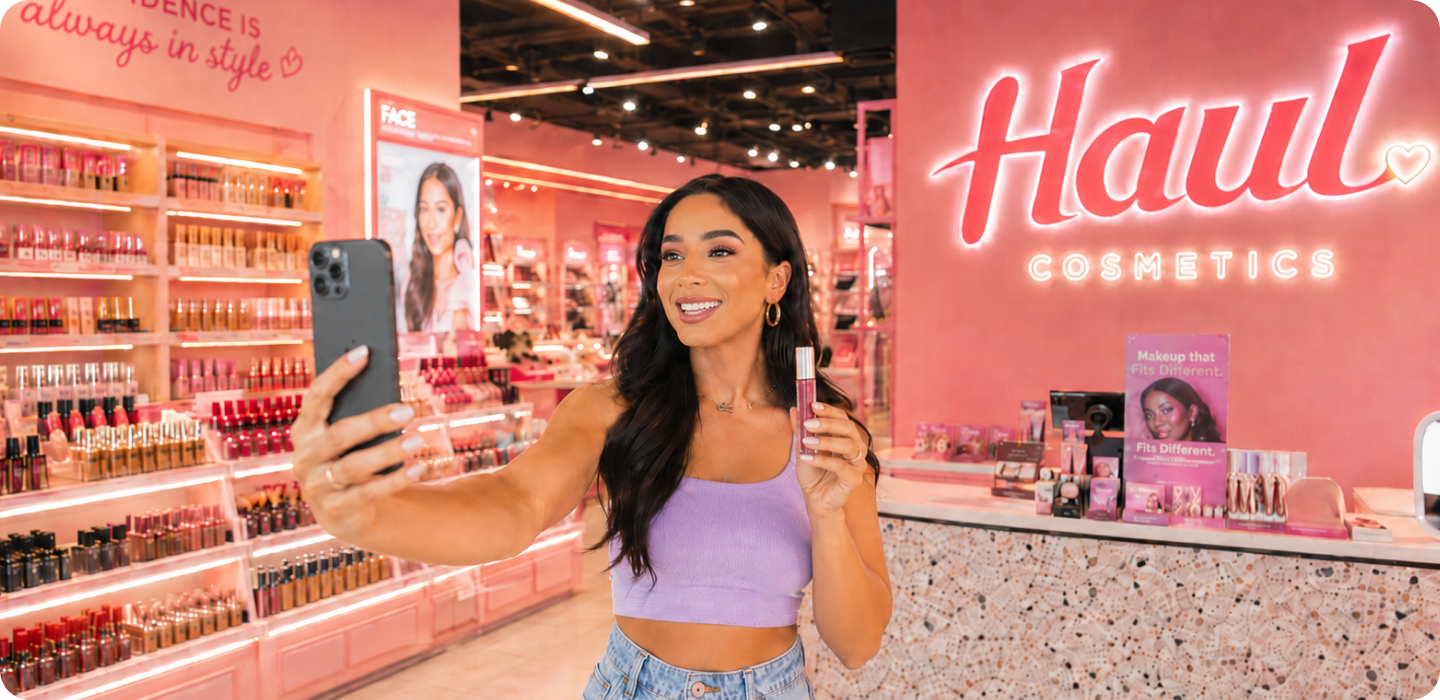
Influencers generally look for attractive lighting, strong visual focal points, clean sightlines, interactive experiences and clear brand storytelling. These elements make content creation easier while improving the overall in-store experience. An effective influencer-friendly store design also considers practical needs. Creators benefit from spaces that accommodate photography and video production without disrupting normal store operations.
Thoughtful retail signage can further enhance content creation by highlighting campaigns, product features, hashtags or event themes. Signage helps reinforce messaging while encouraging shoppers to participate in social conversations.
Ultimately, the most successful retail spaces for content creation feel authentic rather than staged. Consumers respond positively when content reflects real experiences within engaging retail environments.
How can brands use influencer-generated content from retail stores to drive foot traffic and sales?
Content captured in physical stores can deliver value across multiple marketing channels. Retailers can repurpose influencer assets through social campaigns, paid media, websites, email marketing and digital advertising.
When creators showcase real store experiences, they provide potential shoppers with a preview of what they can expect in person. This helps reduce uncertainty and motivate store visits.
Brands can also use influencer content to support product launches, local events and seasonal promotions. By highlighting immersive experiences and compelling displays, marketers create additional reasons for consumers to visit physical locations.
Influencer-generated content can also strengthen social commerce initiatives by connecting digital inspiration with immediate purchasing opportunities. As audiences discover products through creator content, retailers can guide them toward online or in-store transactions.
When should a retailer use influencer marketing for in-store visual merchandising?
Influencer marketing is most effective when retailers want to extend the reach of their physical environments beyond the store's four walls. By combining compelling displays, experiential activations and creator partnerships, brands can transform visual merchandising investments into ongoing streams of social content — generating awareness and engagement long after shoppers leave the store.
The strategy is particularly valuable when a retailer wants to build excitement around new products, drive foot traffic, encourage user-generated content, or connect in-store experiences with broader social commerce and omnichannel marketing initiatives. When thoughtfully integrated with visual merchandising, influencer campaigns can help retailers turn physical shopping experiences into highly visible brand storytelling opportunities. Consider the following scenarios and how they align with your potential retail influencer marketing strategies.
Increasing social sharing from physical retail locations
Retailers seeking greater social visibility can use influencer partnerships to encourage content creation inside stores. Creators help amplify displays, experiences and campaigns to audiences that may never physically visit a location.
Every shared post, video or reel extends the reach of the store environment beyond its physical footprint. This can significantly increase brand awareness and campaign exposure.
New products that benefit from creator-generated content
Product launches often require education, demonstration or visual storytelling. Influencers can help communicate product benefits through authentic experiences captured within retail environments.
Interactive displays and strategic visual merchandising for social media can make new products easier to showcase, understand and remember.
Driving foot traffic to brick-and-mortar stores
Exclusive experiences, influencer appearances and social-worthy displays can give consumers a reason to visit stores. For retailers competing with e-commerce, these experiences help differentiate physical shopping.
Influencers can build anticipation before an event while encouraging audiences to visit locations and participate firsthand.
Encouraging user-generated content (UGC) and brand advocacy
Creators often inspire customers to become creators themselves. When shoppers encounter visually engaging displays, they are more likely to take photos, post videos and share experiences.
This expanded content ecosystem increases social reach while generating valuable brand advocacy from real customers.
Supporting social commerce and omnichannel marketing efforts
Modern retail journeys frequently move between online and offline channels. Influencer content created in physical stores helps create a seamless transition between social discovery and purchase.
This alignment supports broader retail influencer marketing strategies by connecting store experiences with digital engagement and conversion goals.
Promoting seasonal campaigns, limited-time offers, or store activations
Temporary campaigns often benefit from influencer attention because urgency encourages both content creation and immediate action. Creators can highlight unique installations, exclusive merchandise and event-based experiences.
These campaigns also give brands opportunities to experiment with new forms of creator-focused visual merchandising without committing to permanent store changes.
What are the trade-offs of using influencer marketing for in-store visual merchandising?
While influencer-driven visual merchandising can generate significant social engagement and brand exposure, it requires retailers to balance multiple competing priorities. Displays optimized for content creation may not always deliver the most efficient shopping experience. Likewise, immersive activations that attract influencers often require additional investments in design, installation, staffing and maintenance. Retailers must also consider how much creative freedom to give influencers while maintaining brand consistency across locations and campaigns.
The most successful programs find a balance between creating visually compelling environments that encourage sharing and ensuring the store remains functional, accessible and focused on driving product discovery and sales. Discuss the following trade-offs with your team before committing to a creator-focused visual merchandising strategy.
Aesthetic appeal vs. product accessibility
Visually striking displays can generate attention and social engagement. However, overly elaborate installations may make products harder for shoppers to access. The most effective designs maintain visual impact while supporting a seamless shopping experience.
Influencer appeal vs. everyday shopper experience
A display optimized for content creation may not always align with practical shopping needs. Retailers must ensure that influencer-focused features enhance rather than disrupt the customer journey. Successful programs retain a customer-first mindset while accommodating creators.
Brand consistency vs. creative flexibility
Brands benefit from maintaining a consistent visual identity across locations and campaigns. At the same time, influencers often need creative freedom to produce authentic content. Finding the right balance allows brands to preserve standards while encouraging genuine storytelling.
Immersive experiences vs. implementation costs
Experiential activations can create memorable moments that generate significant online engagement. However, as noted above, they often require investments in design, installation, staffing and maintenance. Retailers must evaluate whether anticipated exposure, traffic and sales justify these costs.
Micro-influencers vs. macro-influencers
Macro-influencers may deliver larger audiences and broader visibility. Micro-influencers often provide stronger engagement and deeper community trust. The right choice depends on campaign goals, budget considerations and target audience characteristics.
Temporary activations vs. permanent displays
Temporary activations create excitement and urgency that support social sharing. Permanent installations can provide long-term brand value and consistent content opportunities. Many retailers benefit from combining both approaches, using permanent infrastructure supplemented by seasonal experiences and rotating campaigns.
Taylor: Retail signage for influencer-friendly store designs
Taylor is a leading provider of retail signage solutions for retailers throughout North America. Everything from experiential and event signage, point-of-purchase (POP) displays and custom-fabricated acrylic signage installations to specialty solutions like backlit SEG fabric signage, lenticular-printed signage and 3D dimensional displays is available through a single provider.
We are particularly proud of our leadership in the adoption of more environmentally conscious retail signage materials and methods:
- Recrylic® certified recycled acrylic sheeting helps to reduce carbon emissions by up to 90% across a wide range of retail store display designs.
- Taylor is one of the first U.S. companies to embrace recycled fabrics as its standard offering for fabric signage. Our rSERIES™ fabrics can be used for outdoor feather flags, table throws, SEG signage and more.
- Recycling by Taylor, our opt-in recycling program for both rigid and fabric retail signs and graphics, helps to keep obsolete materials out of landfills.
Looking to explore a creator-focused visual merchandising strategy? In need of a retail merchandising signage partner who is well-versed in in-store influencer marketing? Contact Taylor to learn more about our expertise with custom retail signage solutions.