 Print remains a core channel for marketing, publishing and operations, even as digital media continues to grow. When organizations plan a print project — such as for business forms or operational documents — the most common decision they face is not whether to print, but how to print. That choice often comes down to two key questions:
- Is digital or offset printing more cost-effective?
- When should you use digital printing vs. offset printing?
Each printing method has clear strengths and limitations. Understanding how they differ, where they overlap, and how they are actually used in the real world can help teams avoid unnecessary cost, delays and compromises in quality.
This blog will explore digital printing vs. offset printing differences, which printing method is best for small runs, and which constitutes the best printing method for bulk orders. We will break down the topic as follows:
- What is short-run vs. long-run printing?
- What is the difference between digital and offset printing?
- What is digital printing?
- What is web offset printing?
- What are the trade-offs between digital and offset printing?
- Cost per unit
- Setup costs
- Turnaround speed
- Print quality & consistency
- Flexibility & customization
- What are jumbo rolls and how do they factor into the equation?
- When should you use digital printing vs. offset printing?
- When to use digital printing
- When not to use digital printing
- When to use offset printing
- When not to use offset printing
What is short-run vs. long-run printing?
Short‑run printing generally refers to lower‑quantity print jobs produced in small batches, often ranging from a single piece to a few thousand. These runs are typically ordered to meet immediate needs, support testing or accommodate frequent content changes. Short runs are common in marketing campaigns, internal communications and localized promotions where flexibility matters more than cost per unit.
Long‑run printing refers to high‑volume production, often in the tens or hundreds of thousands or more. These jobs are designed to maximize efficiency, reduce cost per unit and maintain visual consistency across a large audience. Long-run printing is common for bulk business forms, magazines, catalogs, newspapers, packaging inserts and national direct mail campaigns.
The distinction is not rigid, but it strongly influences the printing method that makes the most sense. Digital printing tends to support short runs more efficiently, while web offset printing is built for scale. Keep reading to learn how digital printing and web offset printing are different.
What is the difference between digital and offset printing?
Digital and offset printing differ not just in equipment but in workflow, economics and how content is handled. Understanding these differences helps clarify why each method fits certain applications better than others.
What is digital printing?
Digital printing is a process that transfers digital files directly onto a substrate using toner‑based or inkjet technology. There are no printing plates and minimal setup, which allows jobs to move quickly from file to finished piece. Each impression can be identical or different without additional preparation.
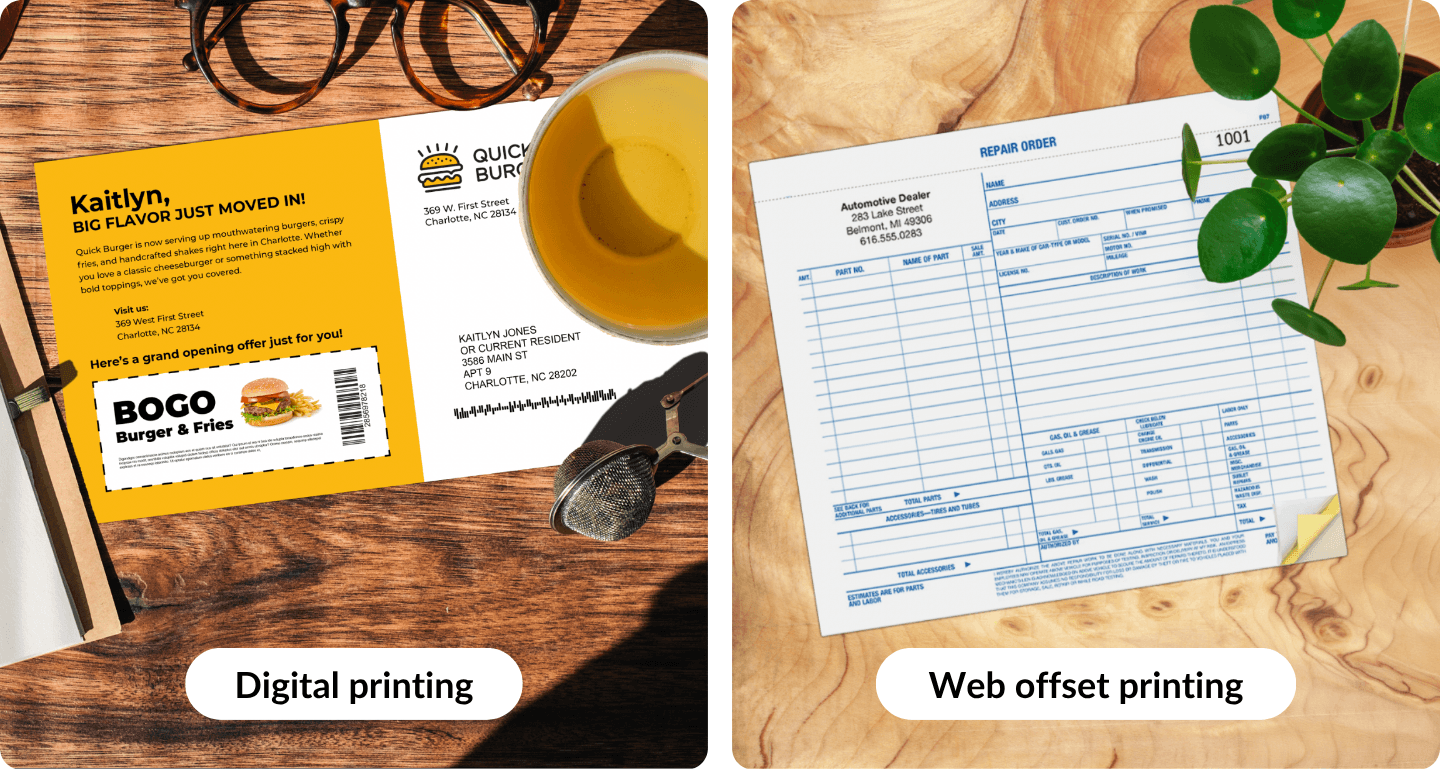
In real‑world use, digital printing is commonly applied to personalized direct mail, short‑run brochures, training manuals, event signage and on‑demand book printing. A retailer might digitally print 1,000 store‑specific posters with localized pricing, or a healthcare organization might produce patient materials customized by region or department.
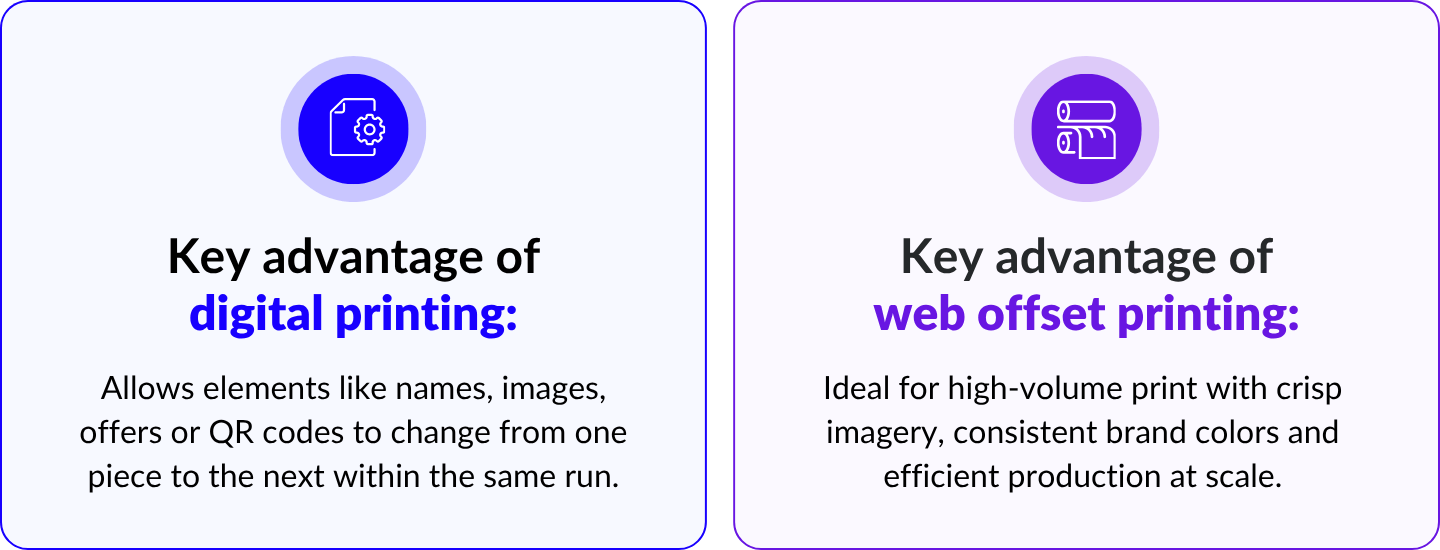
Key advantage of digital printing: Because each printed piece is generated directly from the data stream, digital printing supports variable data printing. This allows elements such as names, images, offers or QR codes to change from one piece to the next within the same print run.
What is web offset printing?
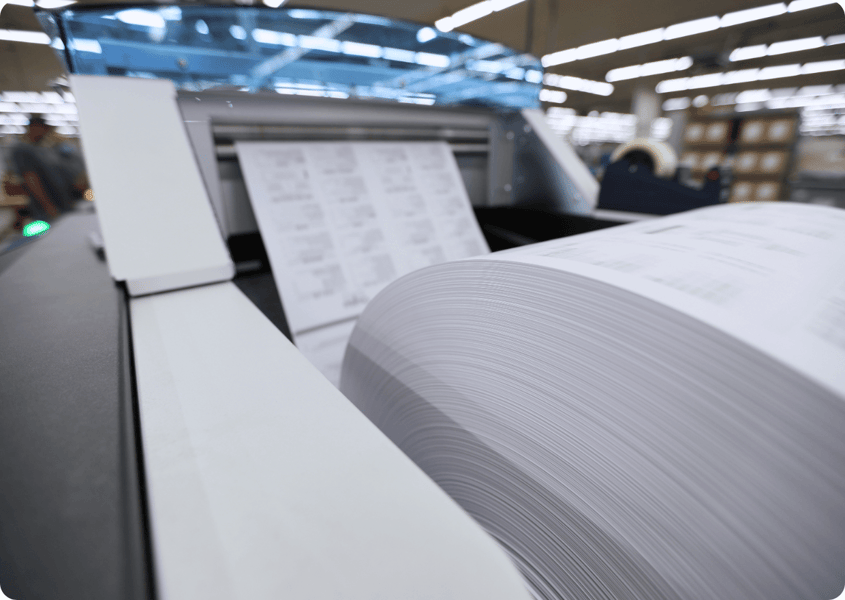
Web offset printing is a high‑volume printing process that uses continuous rolls of paper fed through a press at high speeds. Ink is transferred from plates to a rubber blanket and then onto the paper, creating highly consistent printed output. After printing, the material is often folded, cut and finished inline.
Web offset printing is most often used for magazines, catalogs, newspapers, inserts and large direct mail programs. National retailers, publishers and media companies rely on web offset to produce hundreds of thousands of identical pieces with tight color control and predictable results.
Key advantage of web offset printing: Thanks to the tight color control and predictability of the web offset process, monthly lifestyle magazines and seasonal retail catalogs are typically produced on heatset web offset presses to ensure crisp imagery, consistent brand colors and efficient delivery at scale.
What are the trade-offs between digital and offset printing?
Whether printing custom forms for businesses, tax forms or something else, choosing between digital and offset printing is rarely about which method is better overall. It is about which trade‑offs make sense for a specific project. Read below for expert guidance on the five key trade-offs between digital and offset printing.
Cost per unit
Digital printing has a higher cost per unit when compared to offset printing, particularly as quantities increase. Because each sheet or piece is produced individually, the economics do not improve dramatically with volume.
Web offset printing has a significantly lower cost per unit at scale. Once a press is running, ink and paper costs are spread across a large number of impressions, making it far more economical for long runs. This is why large publishers and national brands continue to rely on offset for core production.
Setup costs
Digital printing requires little to no setup beyond file preparation and color calibration. There are no plates, no make‑ready sheets and minimal waste at startup. This makes it attractive for smaller budgets and fast‑moving projects.
Web offset printing involves higher setup costs due to plate creation, press setup and initial calibration. These costs are largely fixed, which is why offset production becomes more efficient as volume increases. For small quantities, setup costs can outweigh any unit cost advantages.
Turnaround speed
Digital printing excels at fast turnaround. Jobs can often be produced the same day or within a few days, especially when finishing requirements are simple. This speed supports last‑minute changes, short deadlines and print‑on‑demand workflows.
Web offset printing typically requires longer lead times due to setup, scheduling and downstream finishing. While presses run extremely fast once started, the overall process favors planned, predictable production rather than rush jobs.
Print quality & consistency
Web offset printing is known for its consistency across long runs. Color, density and image quality remain stable from the first piece to the last, which is critical for brand‑sensitive materials. Spot colors and special inks can also be tightly controlled.
Digital printing quality has improved significantly and is more than sufficient for most commercial applications. However, subtle color variation can occur across runs, especially if jobs are printed at different times or on different devices. For highly color‑critical applications, offset printing still holds an edge.
Flexibility & customization
Digital printing offers unmatched flexibility and customization options. Content can be changed between pieces without slowing production or increasing setup costs. This makes it ideal for personalization, versioning and testing different messages.
Web offset printing is less flexible once plates are created. Changes require new plates or additional press adjustments, which adds cost and time. Offset workflows are best suited to static designs that remain consistent throughout the run.
What are jumbo rolls and how do they factor into the equation?
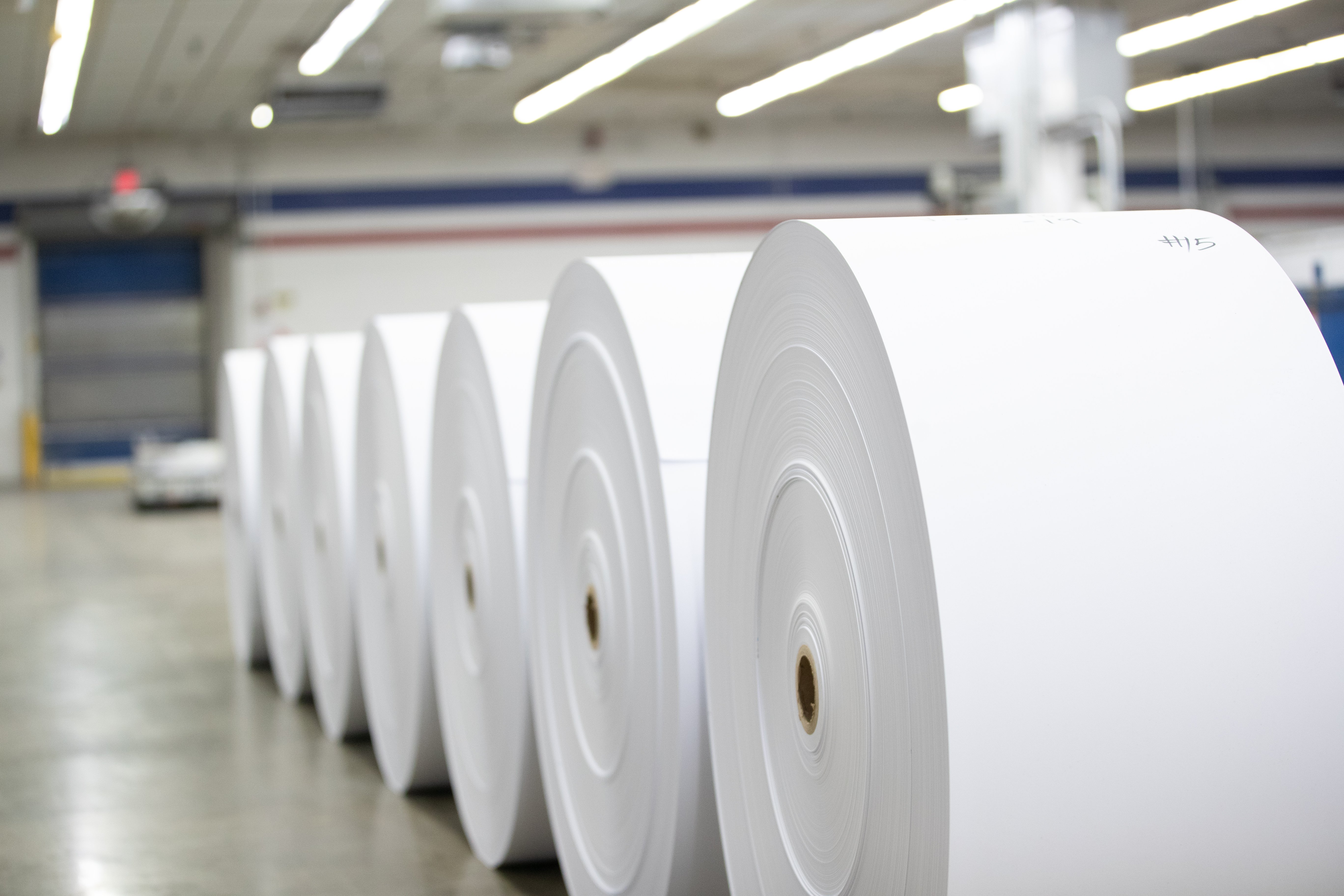
In high‑volume offset environments, web‑fed jumbo roll production plays a critical role, especially in the manufacturing of business forms and transactional documents. Instead of printing finished pieces directly, web offset presses produce massive rolls of preprinted paper, often 40‑ to 50‑inch diameter jumbo rolls, that are later fed into high‑speed laser or inkjet systems for variable imaging. This approach allows organizations to separate static content such as logos, form fields and regulatory text from variable data like names, account numbers and transaction details, preserving offset’s cost efficiency while enabling digital personalization downstream.
Key advantage of jumbo roll printing: Business forms such as invoices, statements, checks, utility bills and insurance documents are commonly produced using web-fed jumbo rolls. A financial services company, for example, may use web offset printing to create hundreds of thousands of identical statement shells on jumbo rolls — complete with branding, color bars and timing marks. Those rolls are then shipped to statement processing centers, where digital print engines add customer‑specific data at production speed.
This hybrid model maximizes throughput, reduces handling and paper changeovers, and delivers the lowest possible cost per document for mission‑critical, large‑scale communications —reinforcing why web‑fed jumbo rolls remain a cornerstone of long‑run offset printing in forms‑driven industries such as banking, utilities, healthcare and logistics. Still not sure if jumbo rolls are right for your needs? Talk to a print expert for guidance on whether to use web-fed jumbo roll production.
When should you use digital printing vs. offset printing?
Understanding the practical use cases for each method helps organizations align print strategy with business goals. Based on the information above, here is a simple way to think about offset printing vs. digital printing advantages and when each method makes the most sense. Consider these four guidelines anytime you want to match print production technology to print job requirements.
When to use digital printing
Digital printing is a strong choice when quantities are low, timelines are tight or content changes frequently. It works well for pilot campaigns, internal documents, sales collateral and targeted marketing.
Real‑world examples include personalized direct mail campaigns that adjust offers by customer segment, training manuals updated quarterly, or event signage produced days before a conference. Digital printing supports agility and reduces the risk of printing obsolete materials.
When not to use digital printing
Digital printing may not be the best choice for very large runs where cost efficiency is critical. It can also be limiting for projects that require special inks, coatings or very specific color matching across large quantities.
For example, printing 500,000 identical retail inserts digitally would be far more expensive than using a web offset press. In these cases, the speed and flexibility of digital do not offset the higher unit cost.
When to use offset printing
Web offset printing is ideal for long‑run, high‑volume projects where consistency, efficiency and cost control matter most. It is well suited for business forms, magazines, catalogs, newspapers and large direct mail programs with static content.
An insurance company in the market for large-scale custom business forms printing or a national retailer printing millions of weekly circulars likely rely on offset printing to maintain quality while keeping costs manageable. Offset printing is also preferred when special finishes or precise brand color matching are required.
When not to use offset printing
Offset printing is less effective for short runs, highly personalized content or projects that require frequent updates. The setup time and cost can outweigh the benefits when quantities are small or timelines are unpredictable.
For example, producing 750 event programs with last‑minute sponsor changes would be inefficient on a web offset press. In these scenarios, digital printing provides faster turnaround with less waste and lower risk.
Taylor: Custom business forms printing
Taylor is a leading provider of the corporate printing services and enterprise print management services like those described above. We maintain a vast fleet of both digital printing and web offset printing presses and are uniquely positioned to counsel you on when to use digital printing vs. offset printing processes.
This diverse print production capability enables us to excel at both bulk business forms and custom business forms printing. No matter the quantity required or the complexity involved, Taylor produces custom forms for businesses quickly, cost-effectively and with the print quality consistency desired. Taylor is also renowned for its expertise with business check printing and the special security and compliance requirements they entail.
Tired of corporate printing services who try to use the same printing technology for every job? Contact Taylor to learn about digital printing vs. offset printing advantages and which printing method is best for your business forms and operational documents.

.png)
.jpg)
.jpg)