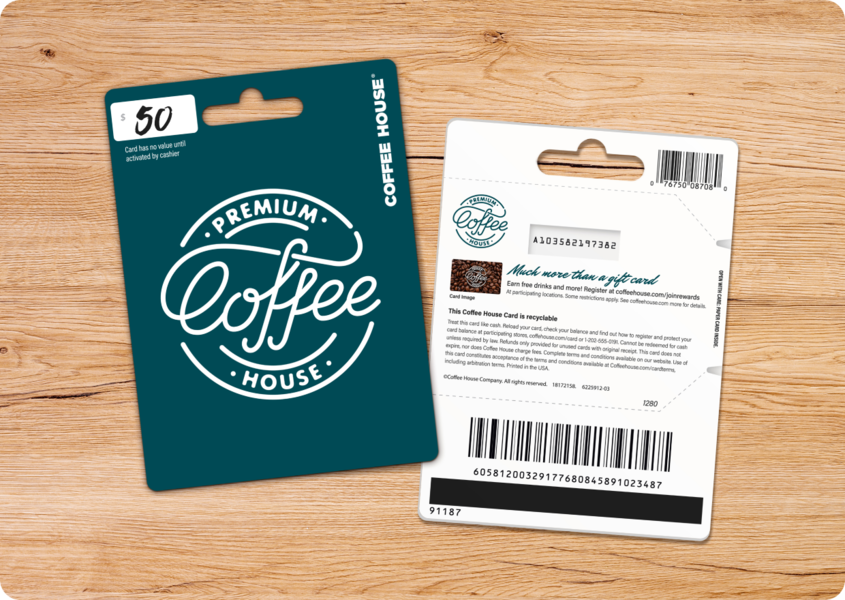
Gift cards remain one of retail's most popular products, but they have also become a favorite target for criminals. As fraudsters continue to develop new methods for stealing card credentials and draining balances, retailers, restaurants and other organizations that rely on gift card programs face increasing pressure to strengthen gift card security without creating friction for legitimate customers.
The good news is that today's market offers a wide range of gift card security solutions designed to combat theft, tampering and fraud. Keep reading to learn how to protect gift card value before, during and after the point of sale.
- Why does gift card security matter?
- What are some common types of gift card fraud?
- What is gift card draining?
- How do retailers prevent gift card fraud?
- What security technologies are used to protect gift cards from tampering?
- Tamper-evident packaging
- Scratch-off labels and PIN protection
- Heat-activated ink
- Ultra-secure packs and advanced protection
- What are some real-world examples of gift card security features in action?
- Fraud prevention in grocery and big box retail
- Large retail chains using tamper-evident packaging
- Advanced tamper-resistant gift cards
- Advanced PIN protection strategies
- What are the best gift card security solutions available today?
- The layered security strategy
- Digital watermarks
- The future of gift card security
- What trade-offs must be considered when utilizing each of the following?
- Tamper-evident gift card packaging
- Scratch-off and tamper-evident gift card labels
- Heat-activated ink
- Ultra-secure packs
- Digital watermarks
- Layered security programs
Why does gift card security matter?
Strong gift card security protects revenue, preserves customer trust and reduces operational losses. When a customer buys a gift card only to discover that the balance has already been depleted, the retailer often becomes responsible for resolving the situation even if the fraud occurred before the card was sold.
Security also plays a significant role in brand perception. Consumers who encounter compromised gift cards may lose confidence in a retailer's gift card program and become reluctant to purchase gift cards in the future. Effective gift card fraud prevention solutions help retailers safeguard both financial performance and customer relationships.
As gift card fraud continues to evolve, retailers increasingly recognize that security is not simply a packaging concern. It is an end-to-end business issue requiring a comprehensive approach to gift card tampering prevention, fraud detection and customer protection.

What are some common types of gift card fraud?
Gift card fraud can take many forms. Criminals may steal physical cards, capture card numbers, obtain PIN information, alter packaging or use stolen payment credentials to purchase gift cards that are later redeemed.
Some fraud schemes occur entirely online, while others begin in retail stores where cards are displayed on racks for public access. In many cases, the fraudster's goal is to obtain a card number and PIN before the card is purchased and activated.
Retailers seeking to understand how to prevent gift card fraud must first understand the variety of attack methods used against gift card programs. Effective defenses are typically designed around protecting both the physical card and the underlying account information.
What is gift card draining?
Gift card draining is one of the fastest-growing forms of gift card fraud and warrants a more detailed explanation.
-
- It typically occurs when a criminal gains access to a gift card number and PIN before the card is purchased by a consumer.
- The fraudster records the account information, returns the card to the display and then monitors the account until the card is activated at checkout.
- Once funds are loaded onto the card, the criminal rapidly spends the balance online or through other channels before the legitimate card owner has an opportunity to use it.
Because gift card draining often occurs before any visible signs of theft are apparent, retailers have become increasingly interested in technologies that support gift card tampering prevention and protect sensitive account information.
How do retailers prevent gift card fraud?
Retailers typically rely on a combination of physical security measures, package security technologies, account protection tools and fraud-monitoring systems. The most successful programs focus on reducing opportunities for criminals to access gift card credentials.
Many organizations also conduct regular audits of gift card displays and train employees to identify suspicious activity. Routine inspections can help detect compromised cards before they are sold to customers.
The most effective answer to “how to prevent gift card fraud” is not a single technology. Instead, retailers often combine multiple layers of protection designed to address vulnerabilities throughout the gift card lifecycle.
What security technologies are used to protect gift cards from tampering?
Today's market offers numerous gift card security technologies that help deter fraud and provide visible evidence when tampering occurs. See below for an explanation of how different technologies address different risks.
Tamper-evident packaging
Tamper-evident gift card packaging is designed to show visible signs of interference when a card has been altered or opened. These packages may tear, deform, leave residue or display warning messages when removed.
The goal of such “secure pack” technology is not necessarily to make tampering impossible. Rather, it makes unauthorized access difficult to conceal, helping retailers identify compromised cards before sale.
Many retailers consider tamper-evident gift cards and packaging systems to be a foundational component of modern gift card security features. Because secure packs combine deterrence and detection in one solution, they are frequently viewed as an important category of gift card security.
Scratch-off labels and PIN protection
Scratch-off gift card labels are one of the tamper-evident gift card labeling technologies used in the industry. Whether implemented as a scratch-off or some other design, these tamper-evident gift card labels protect sensitive information by concealing the card's PIN or redemption code until the customer is ready to use it. The labels are engineered to be difficult to replace once removed. This creates an immediate visual indicator that someone has attempted to access the hidden information.
Effective PIN and data protection is critical because many fraud schemes depend on obtaining both the card number and the associated PIN. Without both pieces of information, criminals may be unable to redeem stored value.
While relatively simple, tamper-evident gift card labels remain one of the most widely used and cost-effective gift card security features available today.
Heat-activated ink
Heat-activated ink changes appearance when exposed to specific temperatures. Security specialists may use this technology to verify authenticity or reveal evidence of tampering.
Certain inks disappear, change color or expose hidden markings when heat is applied. These features can help retailers determine whether a card or package has been subjected to manipulation.
Although less common than other methods, heat-activated ink remains one of several specialized gift card security technologies used to enhance product protection.
Ultra-secure packs and advanced protection
Ultra-secure packaging systems build upon traditional secure packs by incorporating multiple defensive technologies within a single solution. These systems often include advanced sealing mechanisms, specialized materials and enhanced authentication features.
The goal is to create multiple barriers that make card compromise more difficult, time-consuming and detectable. Criminals seeking an easy opportunity may be more likely to move on when confronted with stronger security measures.
For retailers facing elevated fraud risks, ultra-secure packaging can provide some of the most robust gift card fraud prevention solutions currently available.
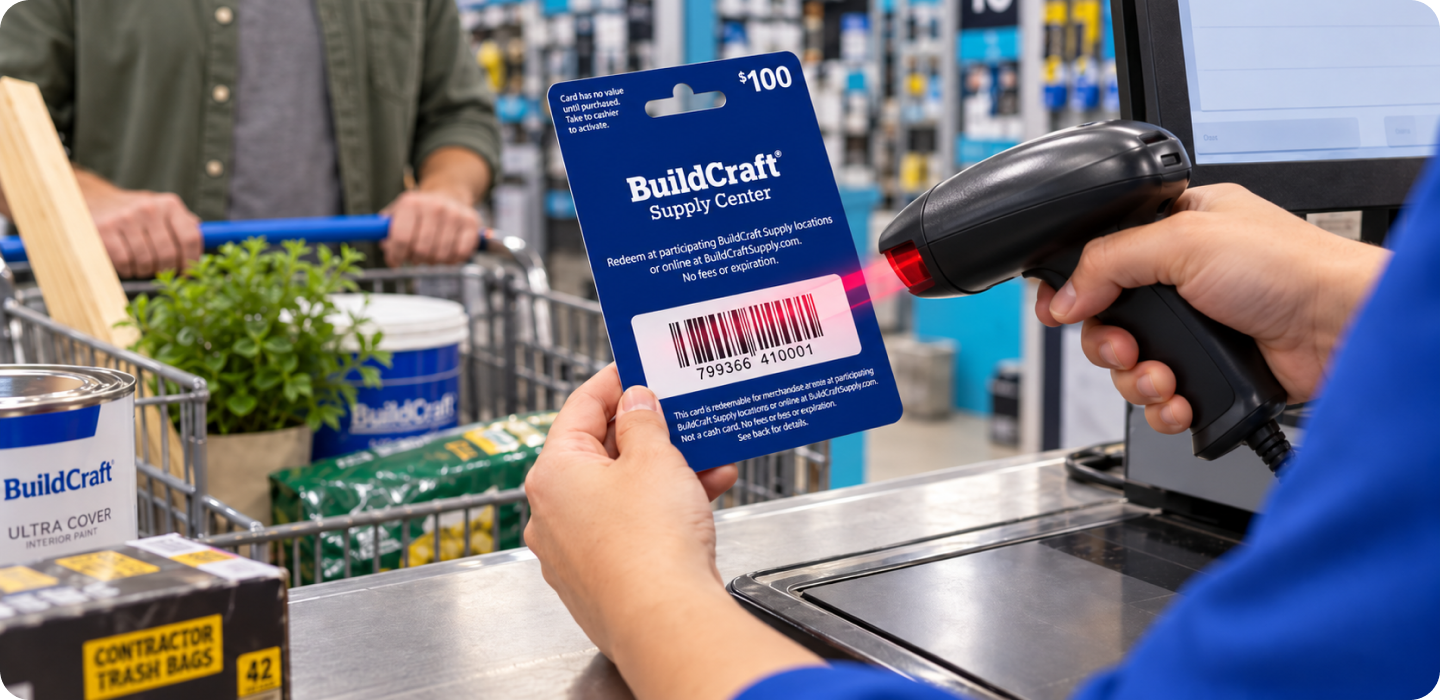
What are some real-world examples of gift card security features in action?
Security technologies are most valuable when they prevent actual losses. Read the following examples to see how retailers have applied gift card security features to reduce fraud exposure.
Fraud prevention in grocery and big box retail
Grocery stores and big box retailers often display hundreds of gift cards in high-traffic locations. These environments create opportunities for individuals attempting to harvest card numbers or manipulate packaging.
As a result, many retailers have adopted stronger secure gift card packaging and inspection procedures designed to reduce vulnerability to gift card draining and other forms of fraud.
Large retail chains using tamper-evident packaging
Many large retailers have embraced tamper-evident gift card packaging as a primary line of defense. Packages that visibly reveal tampering allow store associates and consumers to identify potentially compromised cards before purchase.
This approach helps improve confidence in gift card programs while reducing the likelihood that fraudulent cards remain on display. It also supports broader gift card tampering prevention initiatives throughout the retail environment.
Advanced tamper-resistant gift cards
Some programs go beyond packaging alone by incorporating card-level security measures. These solutions may include specialized printing techniques, authentication elements or unique manufacturing features.
The combination of card security and packaging security creates additional obstacles for criminals attempting to gain unauthorized access to stored value. These advanced approaches continue to expand the range of available gift card security solutions.
Advanced PIN protection strategies
Retailers have also refined the use of scratch-off gift card labels and other tamper-evident gift card labels by combining them with additional safeguards such as stronger adhesives, improved materials and enhanced quality-control procedures.
These measures improve PIN and data protection while helping ensure that any attempt to access account credentials becomes immediately visible. Even modest improvements in PIN security can significantly reduce fraud opportunities.
What are the best gift card security solutions available today?
The most effective security programs rarely depend on a single technology. Instead, organizations combine multiple solutions to address different vulnerabilities simultaneously.
The optimal approach depends on factors such as card value, fraud exposure, distribution methods, customer experience requirements and operating budget. However, one principle remains consistent across virtually all successful programs.
The layered security strategy
A layered security strategy combines multiple complementary safeguards rather than relying on a single control. This approach recognizes that every security technology has strengths and limitations.
For example, a retailer might combine a scratch-off or other tamper-evident gift card label, a secure gift card packaging design, employee inspections and account monitoring within a single program. If one control fails, others remain available to detect or prevent fraud.
Many industry experts view a layered security strategy as one of the best practices for a comprehensive gift card security strategy because it addresses both physical and digital vulnerabilities.
Digital watermarks
As noted previously, gift card draining is one of the biggest problems in the gift card industry today. A criminal accesses the card number and PIN before purchase, waits for the card to be activated, and then spends the balance before the consumer can use it. Traditional defenses include tamper-evident packaging, security adhesives and concealed PINs.
However, digital watermarks take a different approach:
-
- A hidden, machine-readable code is embedded directly into the artwork of the gift card. The watermark is largely invisible to consumers.
- When the card is scanned at checkout, the point-of-sale scanner reads the digital watermark as part of the card activation process.
- If the activation system determines that the card may have been altered or compromised, the card is prevented from activating at the point of sale.
- Thus, fraud is stopped before funds are loaded onto the card.
In essence, instead of relying solely on packaging to deter tampering, the retailer uses the activation process itself as a fraud-control checkpoint.
The future of gift card security
The future of gift card security technologies will likely involve greater integration between physical security features and data-driven fraud prevention systems.
Retailers are increasingly evaluating technologies that provide better visibility into card activity, stronger authentication mechanisms and faster identification of suspicious patterns. Advances in packaging materials, tracking technologies and analytics may further strengthen gift card fraud prevention solutions in the years ahead.
As fraud continues to evolve, organizations that prioritize continuous improvement will be best positioned to protect customers and reduce losses.
What trade-offs must be considered when utilizing each of the following?
Every security technology offers advantages and limitations. Before implementing gift card security features, consider your customer experience goals and compare them to your performance requirements and the total program costs expected.
Tamper-evident gift card packaging
Tamper-evident gift card packaging is highly visible and relatively straightforward to implement. However, such secure gift card packaging solutions may increase material costs and package complexity. Organizations must balance the protection that “secure packs” provide with ease of handling for both customers and store employees.
Scratch-off and tamper-evident gift card labels
Scratch-off gift card labels and other tamper-evident label designs offer strong PIN and data protection at a relatively low cost. However, poor adhesion or improper application can affect reliability. Retailers should ensure that tamper-evident gift card label materials and manufacturing processes are carefully controlled.
Heat-activated ink
Heat-activated ink adds an additional verification layer without significantly altering package design. However, specialized materials may increase production complexity.
Gift card marketing teams may determine that other security technologies provide a more favorable cost-benefit profile.
Ultra-secure packs
Ultra-secure packaging offers enhanced protection against tampering and theft. The trade-off is often higher production expense and potentially more complex packaging operations.
These solutions are typically best suited for programs facing elevated fraud risks.
Digital watermarks
Unlike traditional security measures that rely primarily on gift card packaging, digital watermarks help move fraud detection into the activation process itself. The trade-off is that this approach depends on coordination across card production, activation systems and retail scanning infrastructure. Thus, implementation requires participation from multiple stakeholders throughout the gift card ecosystem and may not serve as a standalone replacement for other physical security measures.
Layered security programs
A layered security strategy generally delivers the strongest protection because it combines multiple defenses. However, layered programs require coordination across packaging, operations, data infrastructure, training and fraud management functions. The challenge is developing a comprehensive system that enhances security while preserving a positive customer experience.
Taylor: A leader in gift card tampering prevention
Taylor provides gift card printing solutions for retailers, restaurants and marketing organizations nationwide. We offer a true end-to-end experience addressing everything from card design, manufacturing and secure gift card packaging technologies to data management and fulfillment on the back end.
Taylor applies decades of expertise in both gift cards and loyalty programs to provide a wide range of secure gift card packaging solutions, including packaging strategies that directly address the challenge of gift card draining. In addition, we are one of the few gift card manufacturers certified by Digimarc to produce digital watermarks during the card manufacturing process. A longtime member of the Retail Gift Card Association (RGCA), Taylor works tirelessly to help pioneer data-security technologies and secure, tamper-evident gift card packaging designs.
We are also a leader in the effort to make gifts cards more sustainable. Taylor was one of the first gift and loyalty card producers to adopt recyclable card stock materials that stand up to the rigors of retail use while taking tons of toxic PVC out of the waste stream.
Looking for a gift and loyalty card provider who can help you implement a layered security strategy like those described above? Contact Taylor to learn more about our gift card security technologies.