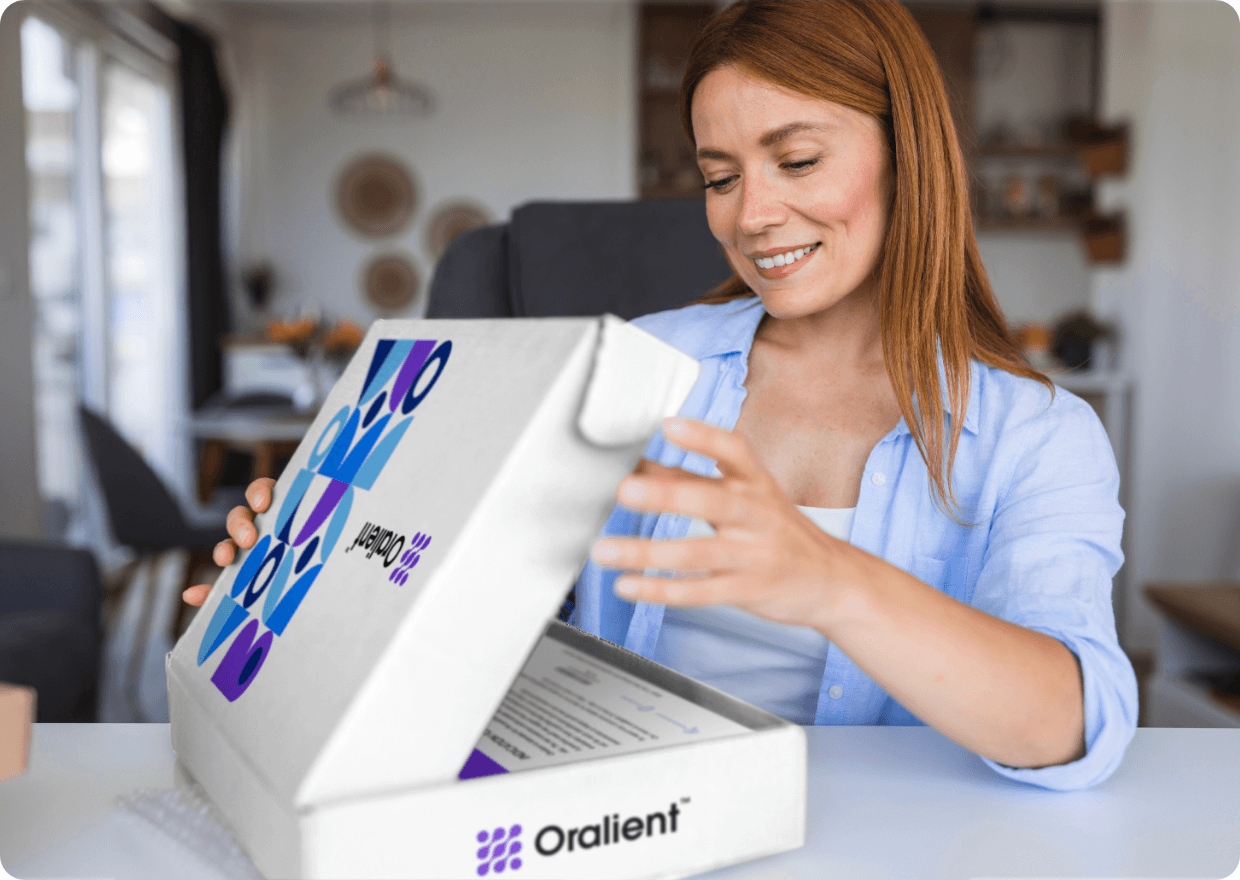
At-home medical device kitting has become a critical enabler of expanded access to care, decentralized diagnostics, and patient-centered healthcare delivery. As testing, monitoring and screening increasingly move outside hospitals and clinics, the infrastructure behind such healthcare kitting services must evolve to support accuracy, compliance and scale. Medical device kitting is no longer a downstream packaging task but a core operational capability that directly affects patient experience, clinical outcomes and program economics.
This article explores how at-home medical device kitting works, how it differs from traditional clinical kitting, and what healthcare organizations should consider as demand grows.
- What is the medical device kitting process?
- Healthcare fulfillment and logistics workflows
- Cold chain and specimen integrity management
- What are the current trends in at-home medical test kits?
- How at-home medical device kitting is different from clinical kitting
- What are some examples of custom medical packaging solutions for diagnostics?
- A diagnostic lab assembling PCR or blood collection kits for home use
- A healthcare provider shipping chronic condition monitoring kits to patients
- A screening program scaling distribution of preventive testing kits
- How does the medical device kitting process work for at-home testing?
-
- Patient-centered kit design
- Medical device kitting and assembly process best practices
- How can healthcare organizations scale at-home testing kit assembly efficiently?
- Customization vs. standardization
- Speed vs. quality control
- In-house kitting vs. outsourced kitting
- When to use scalable medical device kitting
- When it may not be necessary
What is the medical device kitting process?
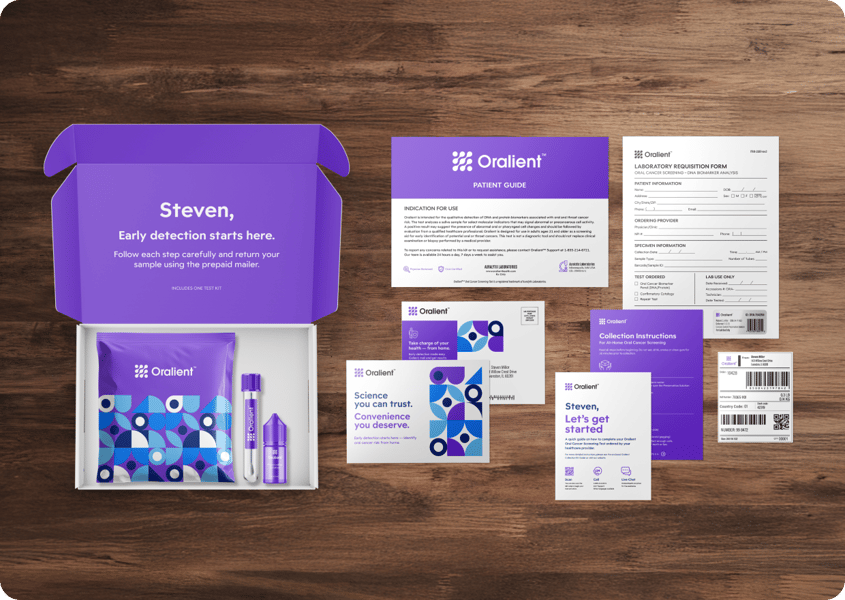
The medical device kitting process involves the assembly of multiple regulated components into a single, ready-to-use package designed to support a specific medical purpose. In the at-home setting, that purpose often includes specimen collection, self-administered testing, or longitudinal monitoring. The kit typically combines medical devices, consumables, instructions, labeling and return materials into one controlled unit.
Unlike simple product bundling, healthcare kitting and packaging solutions must follow strict quality system requirements. Components are traceable by lot, expiration dates must align, and assembly is often performed in controlled environments to reduce contamination risk. For at-home use, the kitting process must also account for variability in patient behavior and environmental conditions that do not exist in clinical settings. Keep reading to learn more about the special requirements of medical device kitting.
Healthcare fulfillment and logistics workflows
Healthcare kitting and fulfillment workflows for at-home kits differ substantially from traditional distribution to hospitals or clinics. Instead of shipping pallets to loading docks, organizations must manage individual shipments to residential addresses with limited tolerance for delivery errors. This introduces complexity related to address validation, carrier selection, shipment tracking and delivery confirmation.
Reverse logistics are equally important. Many at-home medical testing kits require specimens to be shipped back to a lab, sometimes within defined time windows. Diagnostic kit fulfillment workflows must therefore support bi-directional shipping while maintaining chain of custody and specimen integrity.
Cold chain and specimen integrity management
Certain at-home medical kits contain temperature-sensitive components such as reagents, preservatives or biological collection media. Cold chain management ensures these materials remain within defined temperature ranges from assembly through patient use and return shipment. Failure in cold chain control can compromise test validity and lead to costly recollection.
Specimen integrity management extends beyond temperature control. Patient-friendly medical kit design, absorbent materials, secondary containment, and carrier compliance all play a role in ensuring specimens arrive safely and in usable condition. Kitting workflows must integrate packaging validation and logistics planning rather than treating them as separate steps.
What are the current trends in at-home medical test kits?
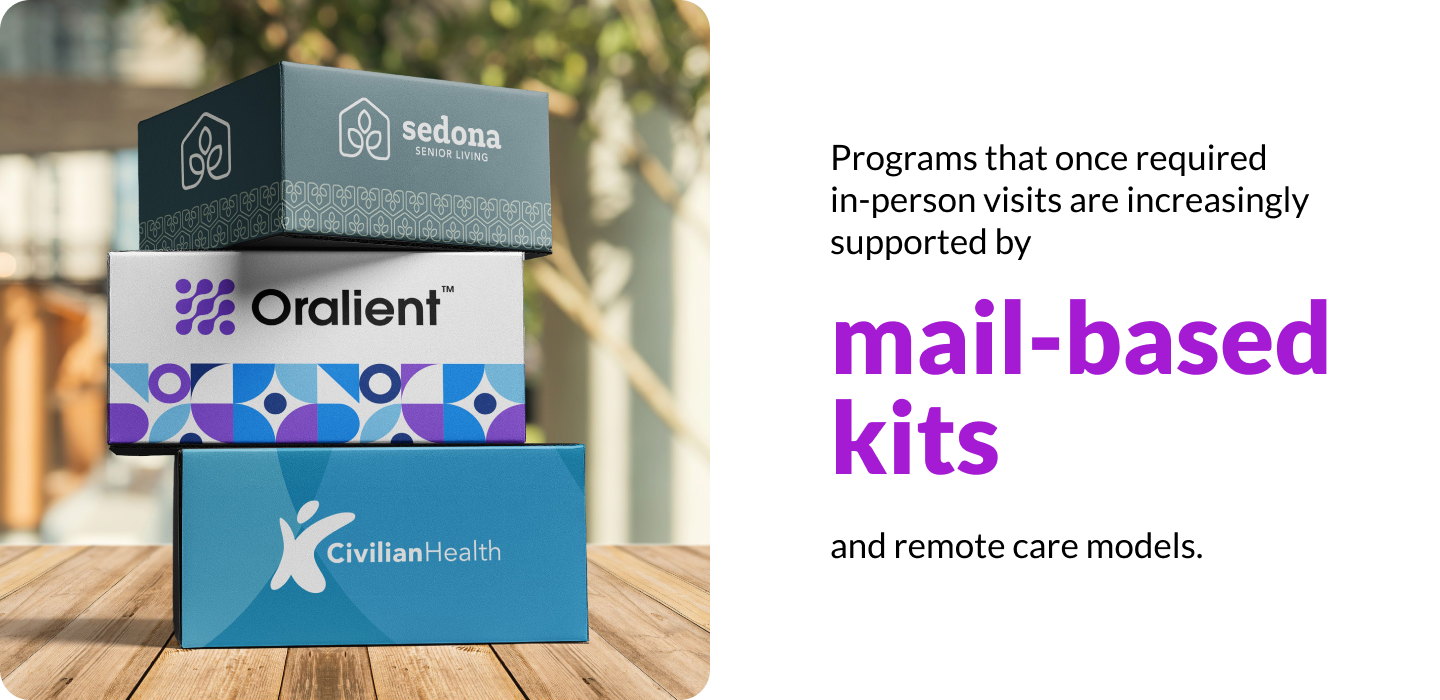
The demand for at-home medical test kits has expanded across diagnostics, screening and chronic care. Programs that once required in-person visits are increasingly supported by mail-based kits and remote care models. This shift is driven by patient convenience, system capacity constraints, and advances in diagnostic technology that enable reliable testing outside clinical environments.
At-home medical testing has moved beyond episodic use. Many organizations now deploy recurring or subscription-based kits that support ongoing monitoring. This increases pressure on kitting operations to deliver consistent quality at scale while managing evolving kit configurations.
How at-home medical device kitting is different from clinical kitting
Clinical kitting is designed for trained professionals working in controlled environments with predictable workflows. Kits are typically opened by clinicians who understand the devices and can adapt if components are missing or instructions are unclear. At-home kits lack that margin for error.
At-home medical device kitting must account for patient comprehension, usability and safety. Instructions must be clear, assembly steps must be minimal, and packaging must guide correct use without supervision. These differences fundamentally change how kits are designed, validated and assembled.
What are some examples of custom medical packaging solutions for diagnostics?
Custom medical packaging enables diagnostic programs to align kit design with test requirements, logistics constraints, and patient needs. Rather than relying on generic packaging, home healthcare kit assembly trends show that organizations are increasingly tailoring kits for specific use cases. This customization improves outcomes while reducing operational friction. See below for three real-world examples of custom medical packaging for diagnostics.
A diagnostic lab assembling PCR or blood collection kits for home use
Diagnostic labs assembling PCR or blood collection kits for home use must balance regulatory compliance with ease of use. Kits often include collection devices, preservatives, biohazard packaging, instructions and prepaid return shipping materials. Each component must work together to protect specimen viability and ensure accurate results.
Packaging layouts are often designed to guide the patient through the collection process step by step. Labs also align component expiration dates to avoid assembling kits that age out prematurely while in distribution.
A healthcare provider shipping chronic condition monitoring kits to patients
Healthcare providers managing chronic conditions may ship monitoring kits that include connected devices, consumables and onboarding materials. These kits are often part of longitudinal programs rather than one-time tests. As a result, packaging must support repeat use, device protection, and ongoing patient engagement.
Providers may also include educational materials or digital enrollment information to connect patients with care teams. Kitting processes must support these non-device components while maintaining Medical Device Quality System compliance.
A screening program scaling distribution of preventive testing kits
Population-level screening programs rely on standardized kits that can be distributed at scale. These programs often prioritize speed and geographic reach while maintaining high consistency. Healthcare kitting and fulfillment operations must therefore be highly repeatable and designed for volume.
Preventive screening kits often include simplified collection tools and robust return packaging. Custom packaging helps minimize leakage risk and reduces the likelihood of invalid specimens due to shipping conditions.
How does the medical device kitting process work for at-home testing?
The kitting process for at-home testing starts earlier than many organizations expect. Design decisions made during product development directly affect kitting complexity, cost and scalability. Successful programs treat kitting as a cross-functional process rather than a final packaging step.
Patient-centered kit design
Patient-centered kit design focuses on usability, clarity and confidence. Packaging must make it obvious what to do, what not to do, and how to complete the process correctly. This includes visual cues, logical component sequencing, and clear labeling.
Design teams often conduct usability testing to identify failure points before kits are produced at scale. These insights inform packaging configuration and assembly instructions used by kitting teams.
Medical device kitting and assembly process best practices
Healthcare kit packaging best practices for medical devices include controlled environments, documented work instructions, and rigorous quality checks. Components are typically verified at receipt, during assembly, and at kit completion. Traceability is maintained throughout the process.
For at-home kits, best practices also include simulation of real-world handling and shipping conditions. This helps ensure packaging protects devices and specimens even when subjected to delays or temperature fluctuations.
How can healthcare organizations scale at-home testing kit assembly efficiently?
Scaling at-home testing requires balancing flexibility with operational discipline. As volumes increase, small inefficiencies in kitting workflows can quickly escalate costs or compromise quality. Organizations must make structured decisions about how and where kitting is performed.
The best advice? Consult some specialized healthcare kitting services before committing to a certain medical device kitting process. Ask them about these five trade-offs.
Customization vs. standardization
Customization allows programs to tailor kits to specific populations or tests. Standardization supports efficiency and reduces error risk. Most successful organizations use a hybrid model that standardizes core kit components while allowing controlled customization at defined points.
This approach enables faster change management while preserving economies of scale. It also simplifies quality control processes across multiple kit variants.
Speed vs. quality control
Pressure to deliver kits quickly must be balanced against the risk of errors. Quality control failures in at-home medical device kits can lead to invalid tests, patient dissatisfaction, or regulatory scrutiny. Scaling calls for an investment in automation and process controls rather than reducing inspection steps.
Speed is best achieved through optimized workflows and prevalidated configurations, not by bypassing safeguards.

In-house kitting vs. outsourced kitting
In-house kitting offers greater control and faster iteration but requires investment in space, staff and quality systems. Outsourced kitting provides scalability and access to specialized infrastructure — but may limit flexibility. The right choice depends on volume, variability and internal capabilities.
Many organizations adopt a hybrid approach. Early-stage programs may start in-house, then transition high-volume assembly to experienced healthcare kitting services as demand stabilizes.
When to use scalable medical device kitting
Scalable kitting solutions are well-suited for recurring testing programs, large screening initiatives, and national distribution models. These scenarios benefit from standardized processes, validated packaging, and integrated logistics support. Third-party medical device kitting providers often excel in these environments.
Scalability becomes especially important when programs span multiple regions or require rapid volume changes.
When it may not be necessary
Not all programs require industrial-scale kitting. Pilot programs, limited trials, or highly specialized tests may be better served by small-batch assembly. In these cases, flexibility and speed may outweigh efficiency gains from scale.
When scaling healthcare kit assembly, the best guideline is simple: Reassess your kitting strategy as programs evolve. What works at launch may not be appropriate once demand increases or regulatory requirements change.
Taylor Healthcare: Custom medical packaging solutions for diagnostics
Taylor Healthcare has served the healthcare industry for nearly a century. In addition to partnering with 100 of the top IDNs and being a single-source supplier to the top 5 GPOs, Taylor Healthcare provides medical device kitting solutions like those described in the blog above.
Our sister company, Venture Solutions, is ISO 9001:2015 certified and utilizes a Quality Management System that is aligned with ISO 13485:2016 requirements applicable to medical device kitting, assembly, labeling and fulfillment activities. When combined with Venture Solutions’ expertise with customer communications management (CCM) for patient instructions, we are able to provide comprehensive warehousing, kitting and mailing services for a wide range of custom kits including:
- Drug tests
- Fertility tests
- STI tests (excluding HIV)
- Urine collection kits, and more
Looking for a partner who treats at-home medical device kitting as a strategic capability rather than just another packaging task? Contact Taylor to explore how our scalable medical device kitting solutions can support your at-home testing programs.