Packaging plays a central role in the U.S. healthcare industry. It protects products, supports regulatory compliance, and shapes patient and provider trust. Medical packaging is not simply a container or wrapper. It is a critical component of product integrity and patient safety. As healthcare systems evolve and supply chains become more complex, packaging has become a strategic asset that influences everything from sterility assurance to brand reputation.
This blog explores the essential functions of packaging in general, the unique demands of medical packaging in particular, and some medical packaging best practices to consider. We will do so by focusing on the following questions.
- What are the three most important functions of packaging?
- Why is medical packaging special?
- Does healthcare medical packaging affect brand trust?
- Does healthcare medical packaging benefit patient safety?
What are the three most important functions of packaging?
Packaging serves many purposes, but three functions rise above the rest: protection, communication and usability. In the case of healthcare labels and packaging, these functions become even more important because the stakes are higher. A failure in any of these areas can compromise product performance or patient outcomes.
Protection
Protection is the foundational purpose of any packaging system. In healthcare, this includes protection from contamination, moisture, oxygen, light, temperature fluctuations and physical damage. Medical devices and pharmaceuticals often require sterile barriers that maintain sterility from manufacturing through point of use. Packaging must withstand transportation, storage and handling without compromising the product inside.
Protection also includes tamper evidence. Patients and providers must be able to see whether a package has been opened or altered. This is essential for safety and regulatory compliance.
Communication
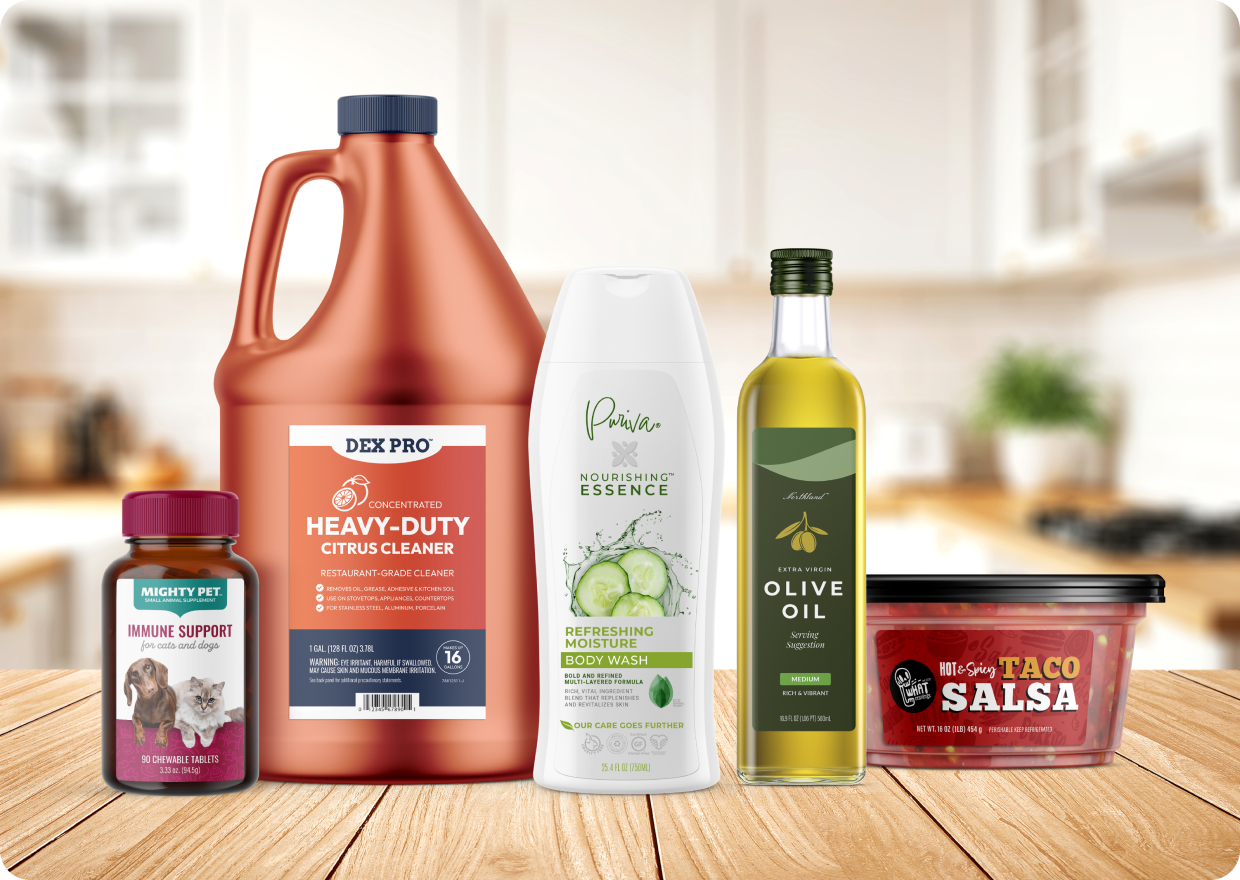
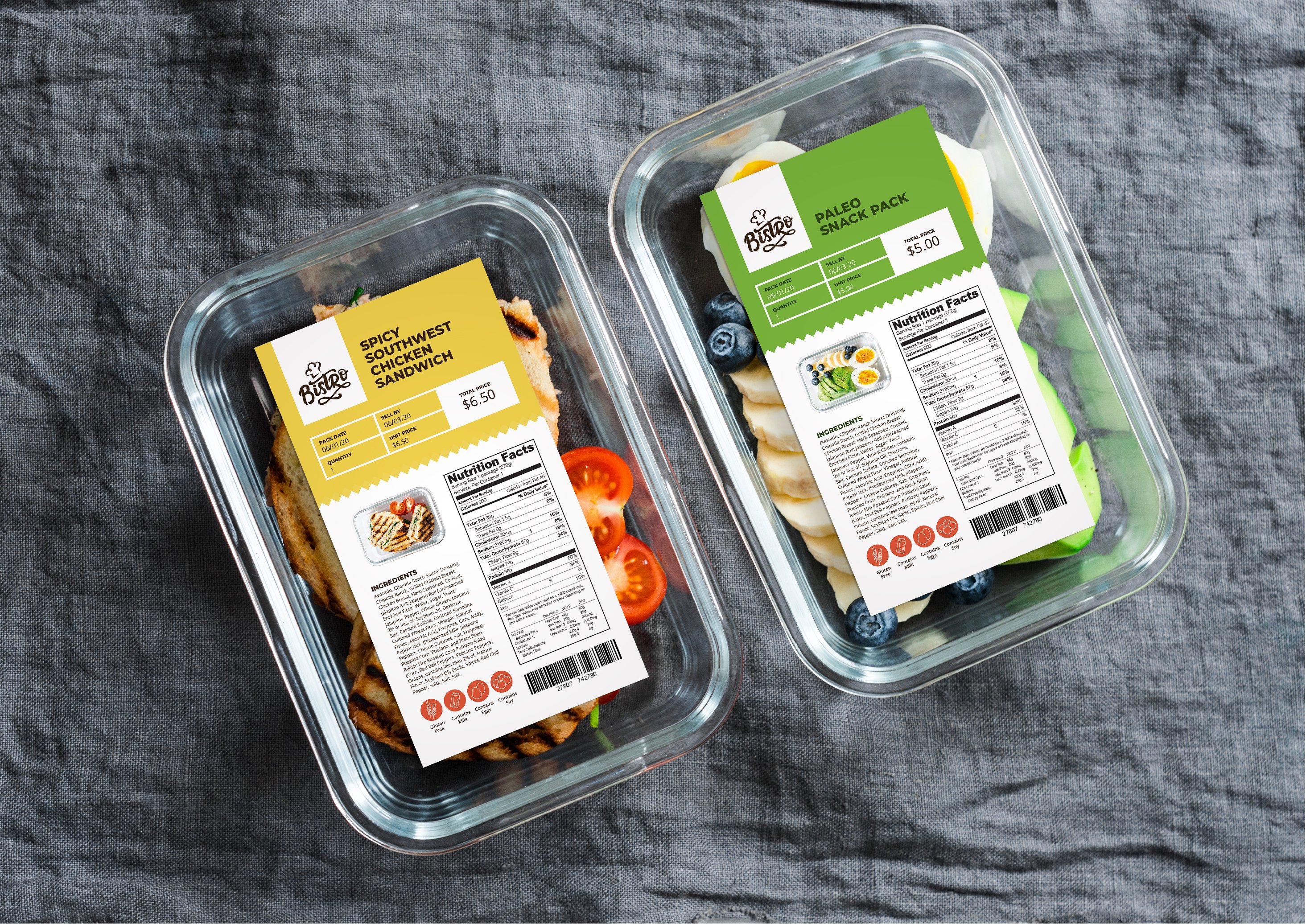
Packaging communicates critical information. In healthcare, this includes dosage instructions, expiration dates, lot numbers, storage requirements and warnings. Clear communication supports safe use and reduces the risk of medication errors or device misuse.
Regulatory bodies such as the FDA require specific labeling elements for medical devices, pharmaceuticals and over‑the‑counter products. Custom packaging must present this information in a way that is readable, accurate and compliant.
Communication also extends to branding. In the intensely competitive world of healthcare marketing, branded labels and packaging help differentiate products and reinforce brand identity. For hospitals and clinics, clear and consistent packaging supports efficient workflows and reduces confusion.
Usability
Usability refers to how easily a package can be opened, handled, stored and disposed of. In healthcare, usability is tied directly to safety. A package that is difficult to open can lead to contamination or accidental damage to the product. A package that is confusing can lead to improper use.
Usability also includes accessibility. Patients with limited dexterity, vision challenges or cognitive impairments must be able to open and understand their medications. Providers must be able to access sterile devices quickly without compromising sterility.
Why is medical packaging special?
Medical packaging is different from consumer packaging because it must meet strict regulatory, functional and safety requirements. Itis engineered to protect products that directly affect human health. Therefore, the consequences of packaging failure are far more serious than in most other industries. Medical packaging best practices rise to an entirely different level for several reasons:
It must maintain sterility
Many medical devices and supplies must remain sterile until the moment of use. As noted above, the packaging must create a sterile barrier that prevents contamination during manufacturing, shipping, storage and handling. The packaging materials themselves must also be compatible with sterilization methods such as ethylene oxide, gamma radiation or steam.
It must meet rigorous regulatory standards
The FDA, ISO and other regulatory bodies define strict requirements for medical packaging. These include performance testing, labeling rules, material specifications and validation processes. Medical packaging must be tested for seal strength, microbial barrier performance, aging and distribution durability.
It must support traceability
Traceability is an essential healthcare packaging best practice. Packaging must include lot numbers, serial numbers, barcodes and sometimes RFID tags. This supports recalls, inventory management and patient safety.
It must withstand complex supply chains
Medical products often travel long distances through temperature‑controlled environments. The packaging solutions used must maintain integrity through vibration, compression, humidity and temperature changes.
It must support patient and provider workflows
Medical packaging must be intuitive and efficient. Providers need to access sterile products quickly and patients need to understand how to use medications safely. The packaging must support both workflows without introducing risk.
Best practices for medical packaging
The current best practices for healthcare packaging involve a combination of engineering, regulatory expertise and user‑centered design. Several concepts guide the development of safe and reliable packaging systems.
Use validated materials and processes
Medical packaging materials must be compatible with sterilization methods and must maintain barrier performance over time. Manufacturers must validate sealing processes, material strength and environmental resistance. Validation ensures that packaging performs consistently across production runs.
Prioritize clarity and readability
Labels and packaging must be clear, accurate and easy to read. This includes font size, contrast, layout and hierarchy of information. Critical information such as dosage, warnings and expiration dates must be prominent.
Design for usability
Usability testing is essential. It’s a healthcare medical packaging best practice to test the packaging with real users, including clinicians and patients. This helps identify issues such as difficult‑to‑open seals, confusing instructions or poor visibility of critical information.
Ensure tamper evidence
Tamper‑evident packaging features protect patients and providers. These features must be easy to identify, difficult to defeat, and should not interfere with product usability or sterility.
Support sustainability without compromising safety
Sustainability is increasingly important in healthcare, but safety cannot be compromised. Best practices include reducing material waste, using recyclable materials where possible, and designing packaging that minimizes environmental impact while maintaining performance.
Innovations in healthcare packaging
Medical packaging trends continue to evolve as new technologies and materials emerge. Innovations commonly focus on improved safety, efficiency, sustainability and user experience.
Smart packaging
Pharmaceutical smart packaging integrates digital technologies such as RFID, NFC and QR codes. These technologies support:
- Real‑time tracking
- Anti‑counterfeiting measures
- Automated inventory management
- Patient adherence monitoring
Pharmaceutical smart packaging helps hospitals manage supplies more efficiently and helps patients follow medication schedules.
Advanced barrier materials
New materials offer improved protection against moisture, oxygen and contaminants. These materials extend shelf life and support more complex pharmaceutical formulations. Innovations include high‑barrier films, antimicrobial coatings and nanomaterial‑enhanced structures.
Sustainable packaging solutions
Healthcare organizations are under pressure to reduce waste. Innovations include recyclable blister packs, biodegradable materials and lightweight packaging that reduces transportation emissions. These solutions must still meet strict regulatory and performance requirements.
Human‑centered design
Designers are applying human‑factors engineering to create medical packaging that is easier to open, understand and use. This includes tactile cues, color coding, simplified instructions and packaging designed for patients with limited dexterity or vision.
Automation‑friendly packaging
As healthcare supply chains become more automated, packaging must be compatible with robotic handling, automated dispensing systems, and high‑speed filling lines. Innovations include standardized shapes, machine‑readable labels and packaging designed for automated sterilization processes.
Does healthcare medical packaging affect brand trust?
Packaging plays a significant role in shaping trust in healthcare brands. Patients and providers rely on packaging to signal safety, quality and authenticity. When packaging is clear, consistent and reliable, it reinforces confidence in the product and the company behind it.
Trust in medical packaging is of paramount importance because patients often cannot evaluate the product itself. They rely on cues such as packaging quality, labeling clarity and tamper evidence to judge whether a product is safe and legitimate. More specific examples are provided below.
Trust in medical packaging explained
Perceived quality
The use of high‑quality healthcare labels and packaging signals that a company invests in safety. Sturdy materials, clean design and precise labeling all contribute to a perception of professionalism and care.
Consistency
Consistent packaging across product lines reinforces brand identity and reliability. Conversely, inconsistent packaging can create confusion or raise concerns about authenticity.
Transparency
Clear labeling and honest communication build trust. Patients and providers want to understand what is inside the package, how to use it, and how to store it. Transparent communication reduces uncertainty and supports safe use.
Tamper evidence and security
Tamper‑evident features reassure users that the product has not been altered. Security features such as holograms, serialized barcodes and RFID tags help prevent counterfeiting and diversion.
Regulatory compliance
Medical packaging that meets regulatory requirements signals that a company follow industry standards and prioritizes safety. Noncompliant packaging can damage trust and lead to recalls or legal consequences.
Does healthcare medical packaging benefit patient safety?
Safety in medical packaging plays a direct and measurable role in the patient experience. It protects products from contamination, ensures accurate dosing, supports proper use and prevents tampering. Whenever packaging fails, patient safety is at risk.
In the final section below, we bring everything together and summarize how the various benefits of healthcare medical packaging influence patient safety at every stage of the product lifecycle.
Impact of packaging on safety
Sterility assurance
Sterile barrier systems prevent contamination of medical devices and supplies. Packaging must maintain sterility until the moment of use. Failures in seal integrity or material performance can lead to infections or compromised procedures.
Accurate dosing and instructions
Clear healthcare labels and packaging help patients and providers administer medications correctly. Confusing or poorly designed labels can lead to dosing errors, which are a major cause of adverse events.
Prevention of medication mix‑ups
Color coding, typography and layout help differentiate products. This reduces the risk of selecting the wrong medication or device.
Tamper evidence
Tamper‑evident packaging protects patients from adulterated or counterfeit products. It also helps providers identify compromised items before use.
Child resistance and senior friendliness
Packaging must balance child resistance with accessibility for seniors. This is essential for preventing accidental ingestion while ensuring that patients can access their medications safely.
Traceability and recall management
Serialized packaging supports rapid identification of affected products during recalls. This reduces the risk of unsafe products reaching patients.
Taylor: Ensuring safety in medical packaging
As one of the leading providers of branded labels and packaging in the nation, Taylor specializes in labels and packaging for the consumer-packaged goods industry. Taylor draws upon this expertise to stay one step ahead of the latest healthcare packaging trends as well.
Taylor Corporation supports the kitting and mailing of medical devices, including at-home test kits and in clinic convenience kits, through its relationship with Venture Solutions. FDA registration for medical device repackaging and relabeling activities is held by Venture Solutions and select Taylor facilities.
When coupled with our commercial printing and packaging, data management and warehousing capabilities, every step in the process can be managed through Taylor:
- Custom printing of patient communications
- List management of patient mailing address data
- Secure warehousing of all materials
- Turnkey kitting, labeling and shipping of assembled kits — directly to patients’ homes
See how Taylor embraces healthcare medical packaging best practices to simplify the delivery of FDA Registered testing devices. Contact Taylor to learn more.