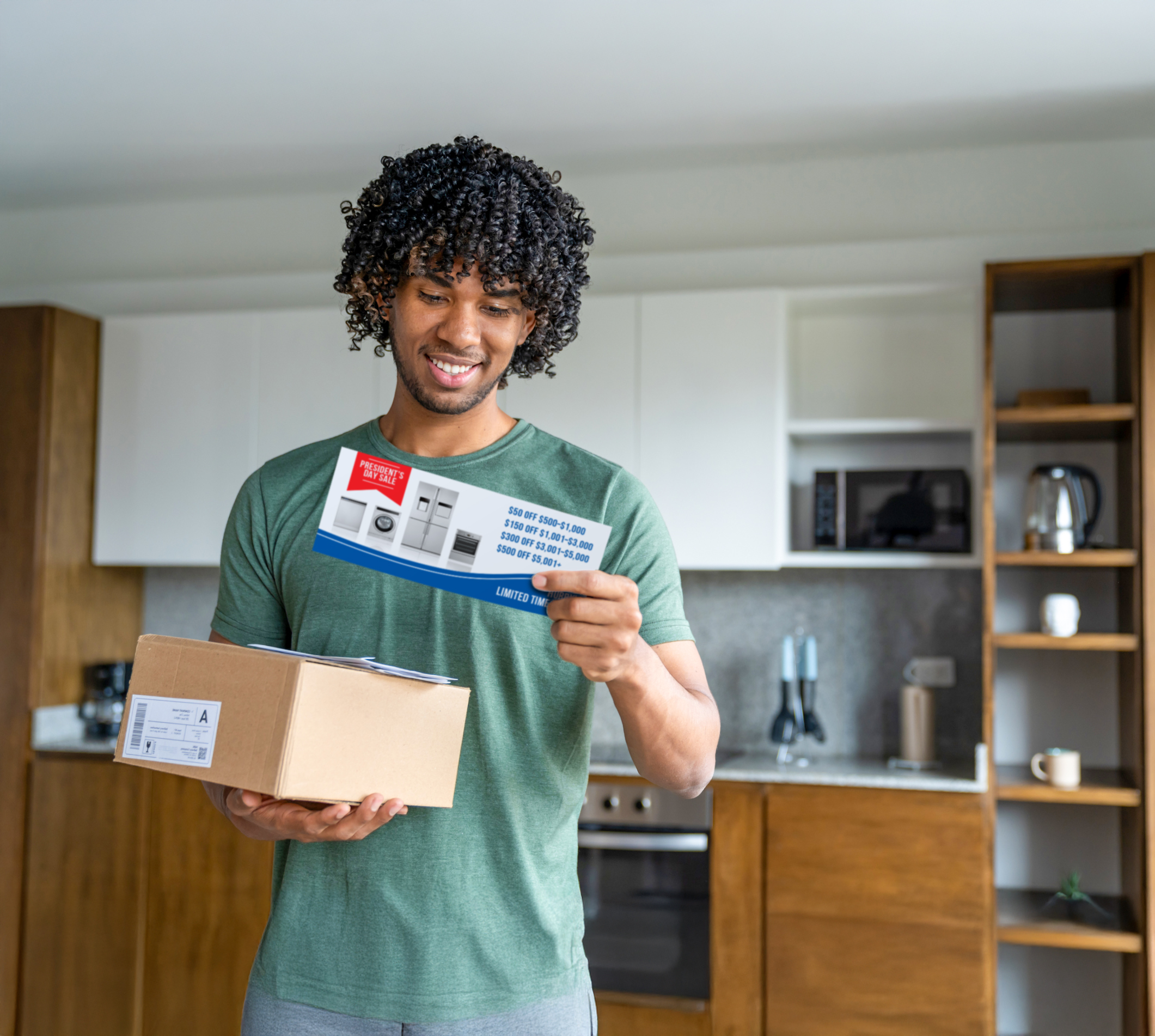
Marketers have more information about their customers than ever before, but access to data does not automatically produce better marketing. The real opportunity lies in turning that information into targeted advertising and relevant communications that reach carefully selected audiences with messages built around their needs, behaviors and preferences.
That is where targeted marketing and data-driven direct mail come together. By combining reliable customer data, strategic audience segmentation, variable print technology and campaign measurement, marketers can transform direct mail from a broad promotional channel into a highly personalized customer engagement tool.
Keep reading to learn about the concepts of targeted marketing, personalized marketing campaigns, and data-driven direct mail in particular.
- What is targeted marketing and how does it work?
- What are the benefits of targeted marketing?
- What is targeted direct mail marketing and how does it work?
- What are some examples of targeted direct mail marketing?
-
- Personalized retail offers
- Financial services acquisition campaigns
- Customer reactivation campaigns
- Local business geographic targeting
- Omnichannel direct mail campaigns
- What is data-driven direct mail?
- How does data-driven direct mail support a targeted marketing strategy?
- Does personalization impact direct mail responses?
- What are the trade-offs of targeted direct mail marketing?
- Relevance vs. reach
- Higher ROI vs. more upfront effort
- Personalization vs. data requirements
- Better customer experience vs. greater complexity
What is targeted marketing and how does it work?
At its core, targeted marketing is a strategic approach that uses demographic, geographic, behavioral or other customer information to deliver messages to groups of people who share certain characteristics. Rather than marketing to an entire population, brands focus their resources on audiences that are more likely to engage, convert or remain loyal customers.
Targeted marketing works by collecting and analyzing information from sources such as CRM systems, purchase histories, website activity, demographic databases and previous customer interactions. Marketers then use audience targeting, audience segmentation and personalization to create communications that are more relevant to each identified group.
What are the benefits of targeted marketing?
The primary advantage of targeted marketing is relevance. Consumers are more likely to notice and consider messages that relate to their interests, needs or stage in the buying journey — making targeted communications more likely to generate meaningful engagement.
Targeted marketing can also improve marketing efficiency by concentrating resources on higher-potential audiences instead of treating every prospect as equally likely to respond. That combination of relevance and efficiency can support stronger response rates, higher conversions and a better return on marketing investment.
Targeting may also contribute to a better customer experience. Well-executed personalized marketing campaigns demonstrate that a company understands its customers and is prepared to communicate with them in a more useful, individualized way.
What is targeted direct mail marketing and how does it work?
Targeted direct mail marketing uses customer or prospect data to deliver relevant printed communications to intentionally selected recipients. Instead of sending the same mail piece to every household or business on a broad mailing list, marketers determine who should receive the communication and which message, offer or creative treatment is most appropriate.
Modern targeted direct mail campaigns may use characteristics such as purchase behavior, geographic location, customer lifecycle stage, household attributes or prior engagement. Variable data printing can then personalize text, images, offers and calls to action within a single print run, creating distinct experiences for different recipients or audience segments.
What are some examples of targeted direct mail marketing?
The flexibility of targeted direct mail marketing makes it suitable for customer acquisition, retention, reactivation and cross-channel engagement campaigns. The targeting criteria and creative approach can be adapted to the marketer’s objective, the available data and the actions recipients are being encouraged to take.
Effective examples go beyond adding a customer’s name to a standard mail piece. They use customer data to determine which people receive the communication, which content they see and how the offer relates to their needs or previous interactions with the brand. Explore the possibilities below and consider which targeted direct mail applications could be relevant to your organization.
Personalized retail offers
Retailers can use personalized direct mail to deliver product recommendations, promotions or loyalty rewards informed by purchase history and customer preferences. A shopper who frequently buys products from one category may receive an offer featuring related items, while another customer receives content aligned with a different interest.
This approach makes the mail piece more useful than a generic storewide promotion. When the featured products and offers correspond to demonstrated interests, recipients have a clearer reason to engage.
Financial services acquisition campaigns
Banks, credit unions and other financial services organizations can use targeted direct mail to promote products to selected prospect segments. Campaign audiences may be developed according to geographic, demographic, household or other approved targeting criteria relevant to the offer.
The message can then reflect the needs of the intended audience, such as financing a home, managing everyday banking or preparing for future financial goals. Careful targeting helps the institution direct acquisition resources toward prospects who are more likely to find the offer relevant.
Customer reactivation campaigns
Businesses can apply targeted direct mail marketing strategies to reconnect with customers who have not purchased or engaged within a defined period. The campaign might include a tailored incentive, a reminder of the brand’s value, or recommendations informed by the customer’s previous activity.
Direct mail can be especially useful when inactive customers are no longer opening emails or responding through digital channels. A relevant physical message provides another opportunity to regain attention and encourage renewed engagement.
Local business geographic targeting
Geography is one of the most practical forms of audience targeting for local businesses. Restaurants, dental practices, fitness centers, retailers and home service providers can focus direct mail advertising on households within selected ZIP codes, neighborhoods or service areas.
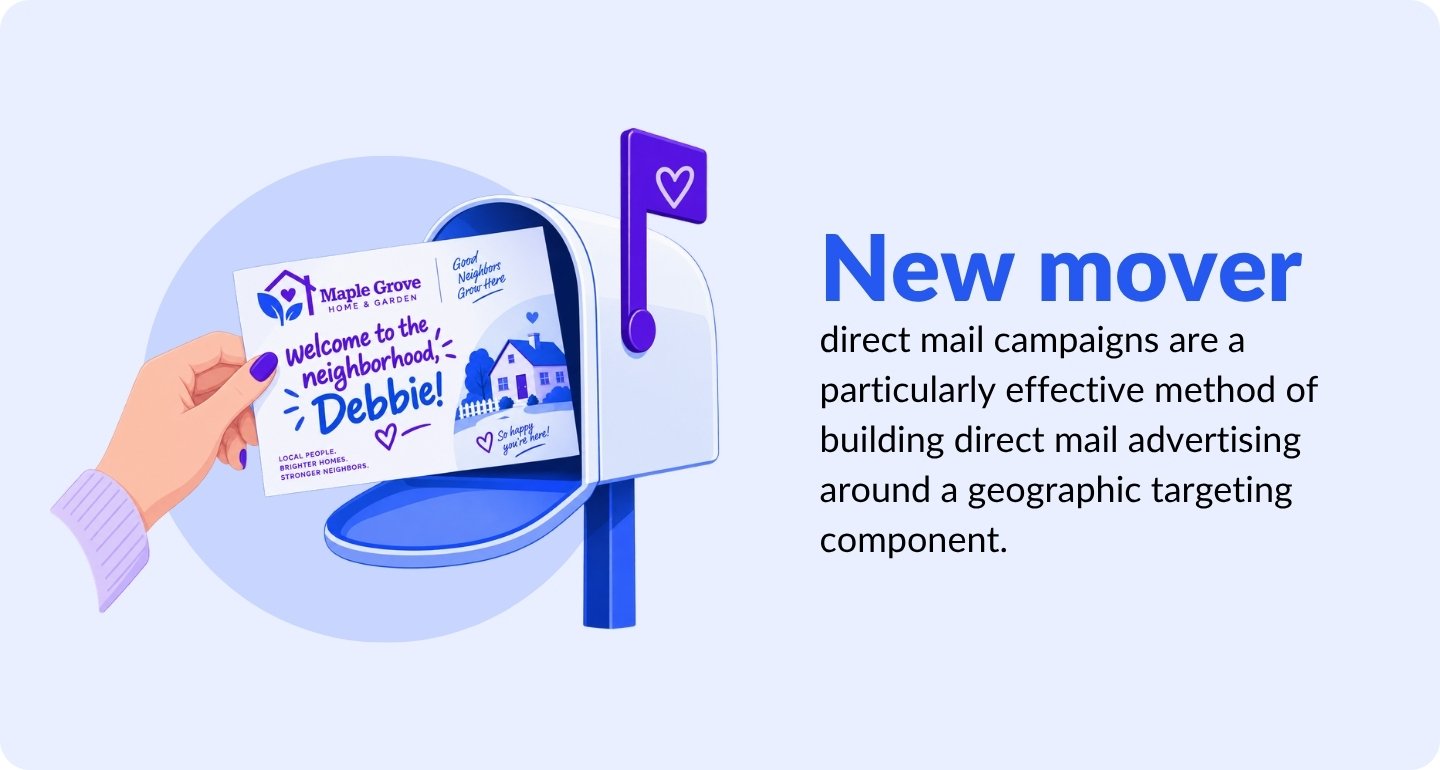
This approach prevents a business from spending marketing dollars on recipients who live outside its practical market. Geographic criteria can also be combined with household or demographic information to define a more specific audience within the service area. New mover direct mail campaigns are a particularly effective method of building direct mail advertising around a geographic targeting component.
Omnichannel direct mail campaigns
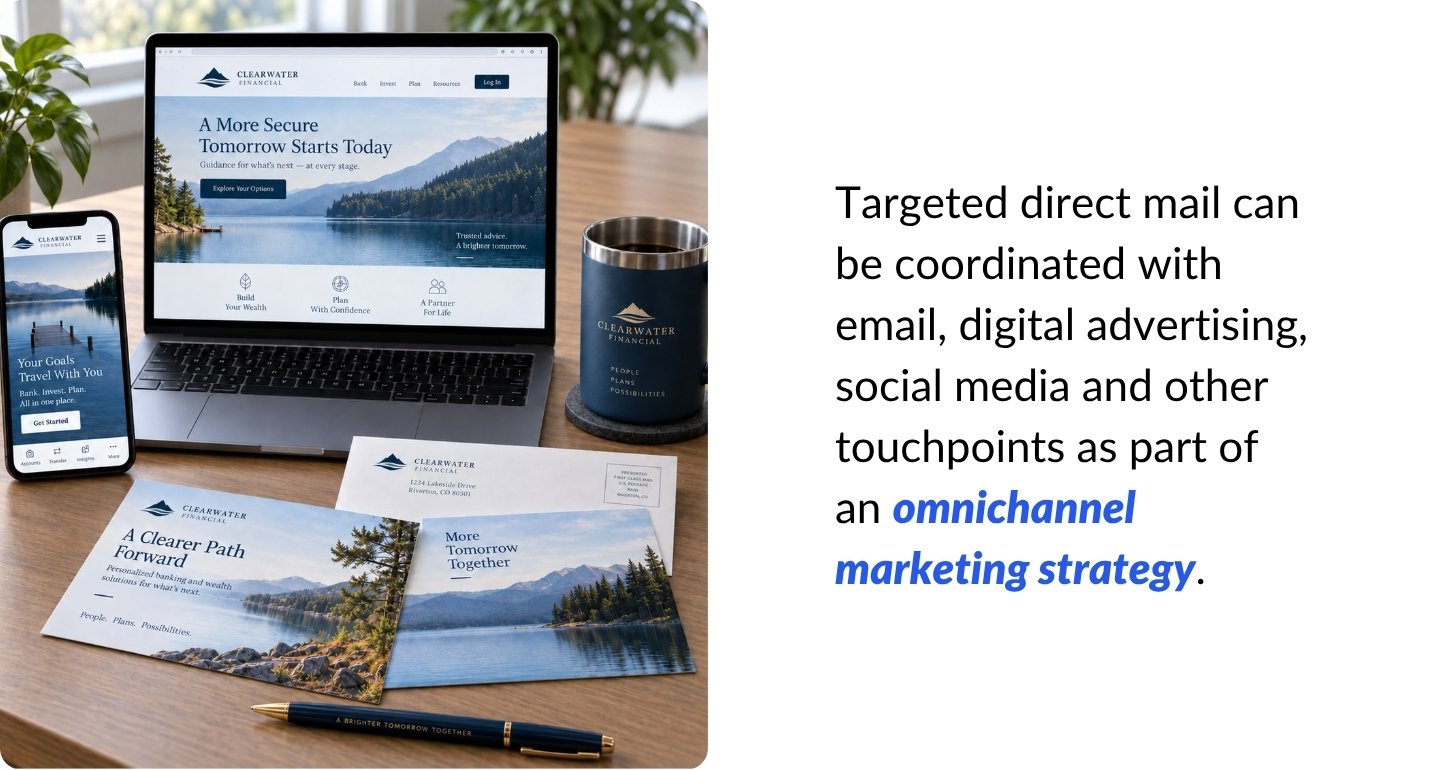
Targeted direct mail can be coordinated with email, digital advertising, social media and other touchpoints as part of an omnichannel marketing strategy. A physical mail piece can introduce an offer, reinforce a digital message or encourage recipients to visit a personalized online destination.
Direct mail does not have to compete with digital channels for ownership of the conversion. Instead, print and digital communications can be combined for integrated marketing strategies that create a more consistent experience and give customers multiple ways to respond.
What is data-driven direct mail?
Data-driven direct mail is the practice of using customer and prospect information to guide audience selection, segmentation, timing, creative development, personalization and measurement. Instead of relying primarily on broad assumptions, marketers use data to make more informed decisions throughout the campaign.
A data-driven marketing approach can help determine who receives a mail piece, which offer is presented, what imagery appears and which call to action is most relevant. As a result, direct mail becomes a more precise communication channel rather than a one-size-fits-all form of advertising.
How does data-driven direct mail support a targeted marketing strategy?
The connection between targeted marketing and data-driven direct mail is straightforward. Targeted marketing depends on understanding audiences, while data-driven direct mail gives marketers a tangible way to act on those insights.
Marketing data and analytics can help identify meaningful groups according to factors such as purchasing behavior, customer lifecycle stage, geography or previous campaign engagement. Marketers can then use customer segmentation to determine which audience should receive each message, offer or creative variation.
Once the segments have been defined, personalized direct mail can translate those insights into individualized communications. Messaging, imagery and calls to action can be varied by audience, helping the mail piece feel more relevant to the recipient.
Data also supports campaign measurement and optimization. Marketers can compare response and conversion results across segments, offers or creative approaches, then apply those findings to future campaigns.
Does personalization impact direct mail responses?
Personalization can influence direct mail effectiveness because it helps make the communication more relevant to the recipient. A mail piece that reflects a customer’s interests, previous behavior or current needs gives that person a stronger reason to pay attention.
As noted above, personalization best practices typically involve more than simply inserting the recipient’s name into otherwise generic creative. High-quality personalized direct mail may adapt the offer, imagery, message or call to action according to meaningful audience insights.
However, the extent of the personalization should reflect the campaign objective and the quality of the available data. Relevant personalization can improve the customer experience, but inaccurate or overly aggressive personalization can make a communication feel confusing or intrusive.
What are the trade-offs of targeted direct mail marketing?
Targeted direct mail marketing can improve relevance and efficiency, but it also demands more planning than a broad, uniform mailing. Marketers must evaluate data quality, audience size, production requirements, campaign complexity and expected return before deciding how precisely to target or personalize a campaign.
The goal is not necessarily to maximize personalization in every mail piece. The better objective is to apply the level of targeting that meaningfully improves the recipient experience and campaign performance without introducing unnecessary cost or operational complexity. Be sure to consider the following trade-offs before formulating a targeted direct mail marketing strategy.
Relevance vs. reach
Narrowly defined audiences can receive messages that closely reflect their characteristics and needs. However, increasingly restrictive targeting criteria also reduce the number of people reached by the campaign.
Marketers must determine whether the objective calls for precision, awareness or an appropriate balance between the two. A highly focused acquisition campaign may benefit from narrow targeting, while a market expansion campaign may require a broader audience.
Higher ROI vs. more upfront effort
Targeted direct mail marketing strategies can reduce wasted impressions and direct campaign spending toward higher-potential audiences. Better alignment among the recipient, message and offer can create stronger opportunities for response and conversion.
The trade-off is that targeted campaigns typically require more upfront work. Data preparation, list development, segmentation, creative versioning and testing all require planning before a direct mail marketing service can begin full-scale production.
Personalization vs. data requirements
The quality of personalized direct mail depends heavily on the accuracy and completeness of the underlying data. Outdated addresses, incomplete customer profiles or poorly defined segments can reduce relevance and create avoidable campaign waste.
Organizations need reliable data management and governance practices before attempting advanced personalization. In some cases, a simpler campaign based on trustworthy information may perform better than a highly complex campaign built on unreliable data.
Better customer experience vs. greater complexity
Personalized campaigns can create a better customer experience by presenting more useful content and offers. They can also become more operationally complex as the number of audience segments, creative versions and response paths increases.
Marketers must make sure that every variation serves a clear strategic purpose. Adding personalization simply because the technology allows it can increase production complexity without delivering meaningful value to the customer.
Taylor: Targeted direct mail marketing services
Taylor provides sophisticated direct mail marketing services to customers in a wide range of industries. All forms of direct mail are available through Taylor, from direct mail postcards and self-mailers to personalized letters, custom-kitted direct mail packages and everything in between.
A true end-to-end solution is offered that addresses everything from design and copywriting to data sourcing, audience segmentation strategies, mailing execution and results measurement on the back-end — all through a single marketing partner. Our specialty is omnichannel marketing campaigns that integrate direct mail with QR codes, personalized URLs (PURLs) and other tactics to deliver a seamless customer experience.
Looking for a marketing partner who specializes in personalized marketing campaigns and data-driven direct mail? Contact Taylor to learn about our comprehensive direct mail marketing services.

.jpg)